
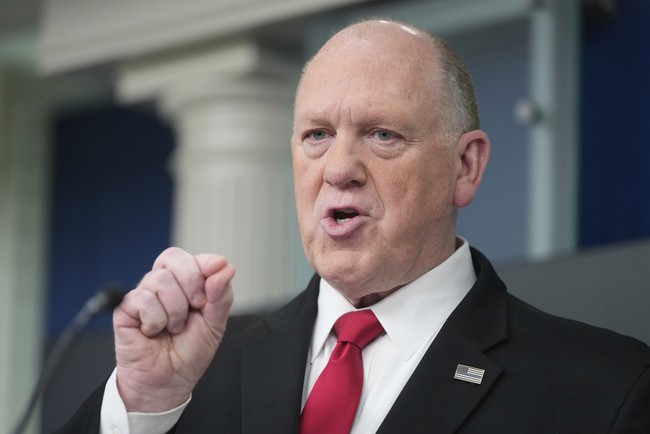
The Manhattan incident at 26 Federal Plaza and the reaction from Border Czar Tom Homan sharpen a familiar argument: inflammatory rhetoric against ICE has consequences, and critics say political leaders are responsible for normalizing attacks on law enforcement. This piece recounts the event, Homan’s forceful on-air response, his emotional remarks to reporters, and the broader political context of sanctuary city debates and public safety concerns.
A man allegedly set off an incendiary device outside the federal building that houses several agencies, including Immigration and Customs Enforcement, and threatened passersby before being taken into custody. Authorities described the scene as an “antigovernment attack” and reported only two minor injuries, but the presence of anti-ICE material on the suspect raised alarms about motive. The location and targets make this more than a local disturbance; it’s a political act aimed at federal enforcement operations. That’s why the response from officials and the tenor of political rhetoric matter so much right now.
Tom Homan didn’t hold back when he appeared on Fox & Friends, arguing that Democrats’ long-running attacks on ICE have gone beyond policy debate and into demonization. He said the sustained narrative portraying ICE as a brutal or illegitimate force teaches unstable people to view agents as enemies. Homan’s point was blunt: words from elected leaders and activists can radicalize and justify violence for some people, and that risk is being ignored by those who cheer the rhetoric.
🔥Tom Homan GOES OFF on Dem leaders after learning suspect who set off incendiary device at a NYC federal office building had “anti-ICE stuff” on him:
“Why does he think ICE is bad? Why does he want to attack ICE? Because the last year and a half all he’s heard from Democratic members of Congress and sanctuary city mayors and governors is that ICE is not a real law enforcement agency, ICE is separating families, ICE is arresting people in churches and hospitals — which is NOT true. So I’m sure he’s been educated by the wrong people and that’s why he’s chosen to take action […]
https://x.com/townhallcom/status/2079257258941161519
It’s FAKE stories. Downright LIES […] This constant lying to the American people, they think it’s a winning message going into the midterms. And they’re gonna keep it up.”
Homan highlighted what he sees as a pattern of false claims about ICE operations that have been amplified by prominent Democrats and local officials. He argues that repeated, misleading attacks on the agency undermine public understanding and put agents at risk. From his perspective, the stakes are simple: hold leaders accountable for their rhetoric if it encourages violence. That stance is at the center of the current clash between law-and-order advocates and sanctuary city proponents.
Following the incident, Homan warned that ICE will respond by increasing operations in New York City and made a direct warning to Mayor Zohran Mamdani, saying, “It’s coming.” He framed the move not as provocation but as enforcement of laws passed by Congress and a necessary step to restore order. For supporters of stronger border and immigration enforcement, that is a reassurance that federal agencies will not be pushed out of major cities by political pressure or hostile local policies. For critics, it will be seen as escalation; for Homan and allies, it’s duty.
Homan later spoke emotionally to reporters in the White House driveway about the personal toll this environment takes on ICE agents and their families. He described living with heightened security and the fear that comes with being a public face of enforcement work. Homan’s remarks emphasized that ICE agents are human beings with spouses and children, not caricatures or political props, and that attacks on them are attacks on families. His emotion underscored the human cost that he says follows from dehumanizing political speech.
Every second of this just gave me CHILLS…
Tom Homan just got emotional while talking about the attacks ICE agents and then STORMED OFF from the press.
He said he can’t even go to the grocery store for a carton of milk without a security detail.
“I can’t even get a carton of milk at a grocery store without a security detail! Why? Because I’m enforcing laws. It’s disgusting.”
He reminds the violent left that ICE agents are moms and dads too, and that attacks on them are also attacks on their families.
“It’s not just an attack on the ICE agents, it’s an attack on their spouses and children! No one knows that better than ME.”
The broader political debate is heating up as the midterms approach, with enforcement advocates warning that minimizing or condemning ICE in inflammatory terms invites real-world consequences. Opponents of ICE portray the agency as responsible for family separations and harsh tactics, which energizes their base but, critics say, also fuels hostility. That clash over framing and responsibility will likely continue to shape policy battles and public safety discussions in big cities across the country.
Both sides trade accusations about motive and effect, but the recent NYC episode serves as a stark reminder that rhetoric can have downstream impacts. Leaders on all sides face a choice: critique policy without dehumanizing the people who carry it out, or accept the possibility that words will be used by others to justify violence. The debate will play out in courts, city halls, and election cycles, and the consequences may be felt far beyond the headlines.


Add comment