
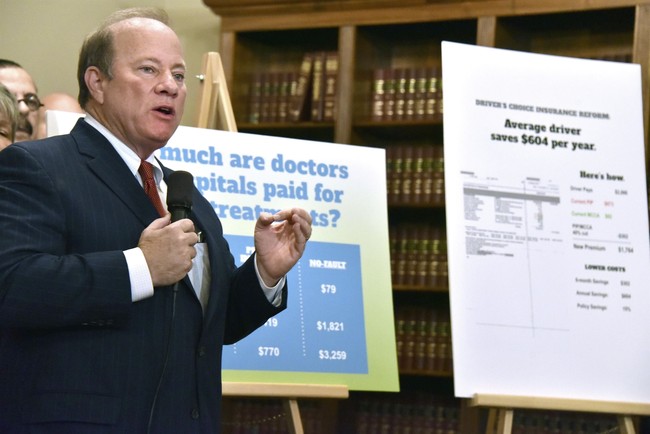
The former mayor of Detroit, Mike Duggan, quietly exiting Michigan’s governor’s race changes the dynamic Republicans were watching closely, and it reopened questions about whether an independent candidacy could have shifted enough votes to hand the state to a GOP candidate this November.
I usually use long holiday weekends to slow down, but this Memorial Day I found myself reading about Michigan politics instead of just grilling and remembering the fallen. The debate over Duggan running as an independent grabbed attention because it threatened to carve into Democratic margins in a tightly contested state. What mattered to me—and to many Republicans—was whether his presence on the ballot would make a GOP victory more realistic.
Mike Duggan had been a prominent figure in Detroit, and his decision to run outside the Democratic primary raised real strategic questions for both parties. To conservatives, an independent with name recognition in the state’s largest city looked like a potential spoiler who could siphon votes from the Democratic nominee, Jocelyn Benson. Republicans hoped that split might tip the scale in their favor in a closely watched contest.
Back when Duggan announced, some observers painted rosy scenarios for his chances despite the historical difficulty third-party or independent campaigns face in statewide contests. I stated my skepticism then, and in print made clear that I did not expect him to win outright. Still, the pragmatic take for many on the right was simple: if Duggan pulled even a modest chunk of votes from the Democrat, it would materially improve GOP prospects.
I never believed for a moment that Duggan would actually win the governorship. There were pie-in-the-sky scenarios that I had read about from supporters of his that they believed were the path forward to him winning. Quite frankly, even though he was polling higher than any third candidate of recent note on a statewide scale, I had no belief that he could actually win.
Yet some of the people that I chat with about what is happening here in the Great Lake State believed, as I did, that the former Democrat and former Mayor of the largest blue city in Michigan could pull enough votes away from the Democratic candidate for Governor (Benson) and allow the Republican to win.
That excerpt spelled out the contrast between hopeful chatter and hard realities. Independents can occasionally disrupt politics, but winning a governor’s race without a major party apparatus is a tall order. From a Republican viewpoint, Duggan’s value wasn’t in victory but in altering the arithmetic enough to hand the state to a conservative candidate.
Detroit News columnist Nolan Finley offered a different take, suggesting Duggan represented a chance to move beyond partisan rancor and build consensus. His words reflected the yearning among some voters for leaders who might bridge divides in Lansing and statewide politics. Finley’s optimism, though, sits uneasily with the cold math of electoral strategy and the rough-and-tumble of modern campaigns.
There’s a weariness in the state, and the nation, with the rancor that has taken over our political discourse. Duggan represented the hope we could move beyond bickering and into finding solutions.
Whether an independent governor could have built a consensus in a state Capitol where everyone else is either a Republican or a Democrat was never certain. But if anyone could have done it, Duggan could.
I get the appeal of a bridge-builder, but politics often rewards clear teams and organized coalitions more than good intentions. For conservatives tracking this race, Duggan dropping out removes a wildcard that could have helped the GOP in a close contest. It also forces Republicans to confront a tougher path to victory where they must win more votes outright instead of relying on a split among their opponents.
People on both sides have thoughts about Duggan’s tenure as Detroit mayor, including how he handled criticism and press scrutiny. Some respected reporters pressed him with hard questions, and his responses—or lack of them—left impressions that varied across the political spectrum. Those local dynamics mattered less to the statewide chessboard than the simple fact he was a recognizable name who could pull votes.
Ultimately, Duggan’s exit reshuffles the playbook for Michigan conservatives and Democrats alike. Republicans must now fight a cleaner two-party contest in which drawing defectors from the other side is a less likely option. That makes the campaign a purer ideological battle and forces candidates to sell their records and visions directly to voters.
I have been wrong before, and I might be wrong again, but from where I sit this development favors the Democratic nominee by narrowing the strategic avenues available to Republicans. The fall campaign will test whether grassroots organizing, messaging, and turnout can make up for the lost opportunity Duggan’s independent bid once represented.


Add comment