
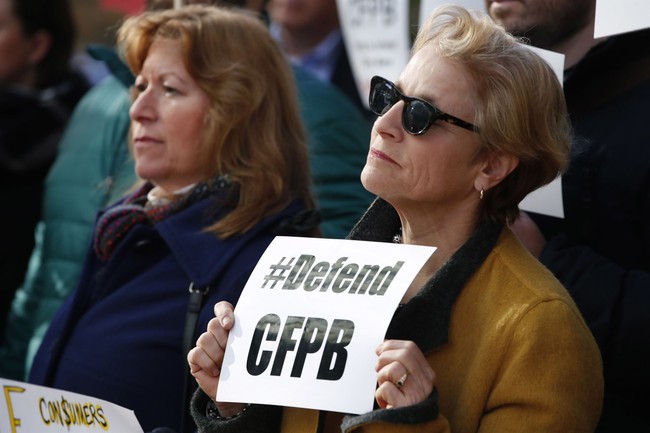
President Trump has nominated Brian Johnson to lead the Consumer Financial Protection Bureau, a move that shifts the agency toward a conservative, rule-focused approach. This article examines Johnson’s background, his regulatory philosophy, and what his nomination means for the CFPB’s future. It keeps the focus on the nominee’s record and the likely direction the bureau will take under his leadership.
Brian Johnson is a veteran of Republican policy circles with direct CFPB experience, which makes him an attractive pick for conservatives who want restraint rather than courtroom chaos. He previously served inside the agency and has since worked in industry compliance, giving him perspective from both regulators and the regulated. That blend is central to why his name is circulating as a plausible, steady hand for the CFPB.
Brian Johnson, a former CFPB senior official who is now vice president for U.S. card compliance at Capital One, was tapped this past week as Trump’s choice to become the next confirmed head of the CFPB, taking over for its current acting Director Russell Vought.
The nomination comes with time running short on Vought’s ability to continue leading the CFPB. After nearly a year and a half overseeing contentious efforts to drastically shrink the agency and curb its power, Vought faces an Aug. 1 expiration date on his acting tenure.
Johnson’s past writings, speeches and other commentary offer glimpses of the outlook he would bring to the CFPB’s top job. Taken together, they paint a picture of a deeply conservative nominee who is likely to keep pursuing deregulation, but through formal process and narrowed interpretations rather than Vought’s more bare-knuckle approach.
Conservatives who wanted the CFPB gutted outright will see Johnson as imperfect but preferable to another left-leaning director. He has Republican credentials from early Hill service and time on Trump transition teams, which shows he understands how Washington works. That knowledge matters if the goal is to limit the bureau’s reach through law and procedure rather than partisan theater.
1. He has deep Republican ties and would likely be attentive to industry concerns.
Johnson was a Republican staffer on Capitol Hill early in his career, rising to become policy director and chief financial institutions counsel for the GOP-led U.S. House Financial Services Committee. He later served on the first Trump transition team before joining the CFPB, where he was the no. 2 to Mick Mulvaney and Kathleen Kraninger, its former Trump-appointed chiefs.
Johnson has argued for narrow, market-friendly regulation rather than broad, top-down controls. That position aligns with conservative instincts to preserve consumer choice and avoid heavy-handed oversight that stifles innovation. He doesn’t advocate dismantling consumer protections, but he wants those protections delivered in ways that respect markets and private enterprise.
2. He says he believes regulations should be simple, narrow and “market-reinforcing.”
Johnson has often espoused free-market ideas, but he has not called for deregulating consumer finance altogether. Instead, he has argued regulation does have a place — just a limited one that should be guided by a “presumption in favor of consumer choice.”
Another recurring theme in Johnson’s commentary is process. He has criticized the CFPB’s use of informal guidance and public pressure to shape industry behavior, preferring transparent, notice-and-comment rulemaking. For conservatives who want limits on bureaucratic overreach, insisting on formal procedures is a sensible way to restrain agency power.
3. He favors formal rulemaking over informal guidance and flexible uses of authority.
During former Chopra’s tenure as CFPB director, Johnson was sharply critical of what he saw as the agency’s habit of shaping industry behavior through tools like guidance, supervision and public statements rather than going through official notice-and-comment rulemaking.
Johnson also pushes for disciplined policymaking: better cost-benefit analysis, consultation with small businesses, and retrospective reviews of existing rules. Those practices reduce arbitrary enforcement and force agencies to justify the economic trade-offs of regulation. For those of us who want a smaller, smarter government, procedural rigor is a practical step toward accountability.
4. He favors procedural discipline.
Johnson has argued the CFPB should be more rigorous in how it develops and maintains rules, calling for greater attention to cost-benefit analysis, consistent consultation with smaller regulated entities, and routine retrospective reviews of regulations on the books.
Still, Johnson has not called for outright defunding or elimination of the CFPB, and he supports some structural changes rather than total abolition. He has suggested the agency could work better as a multimember body, which would diffuse unilateral authority and mirror institutions like the Federal Reserve or the Federal Trade Commission. That approach trims power without producing an institutional vacuum.
5. He has supported restructuring, but not necessarily defunding, the CFPB.
If confirmed, Johnson would wield sole authority as the CFPB’s director, but he has previously suggested the agency would benefit from being reconceived as a “multimember,” panel-led body, more like the Federal Reserve or Federal Trade Commission.
For conservatives, the real argument is whether reforming the CFPB is enough or whether abolition remains the preferred course. The bureau’s critics point out constitutional and practical concerns, noting the United States functioned without such an agency for centuries. Even so, a nominee committed to narrow rules, formal processes, and accountability is a better fit for a government that should do less and do it more transparently.
Johnson’s mix of Republican experience, industry insight, and insistence on formal rulemaking means his leadership would likely reduce discretionary enforcement and favor market-based solutions. That outcome won’t satisfy abolitionists, but it does represent a meaningful shift away from activist regulation toward conservative stewardship of the bureau.



Add comment