
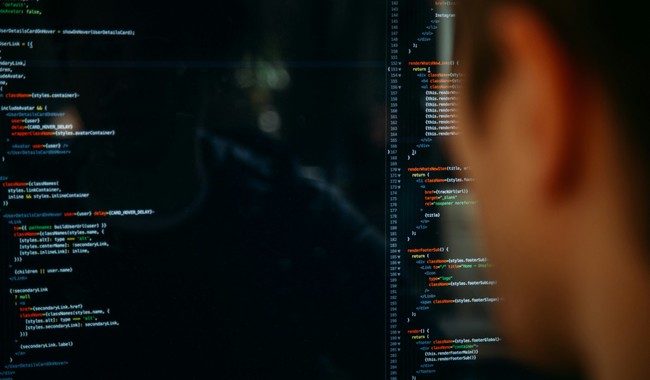
The U.S. now faces a worrying cyber episode in Minnesota that reads like a warning sign: coordinated intrusions disrupted operations across more than 30 community water systems, investigators see fingerprints consistent with an Iran-linked cyber group, and federal and state officials are racing to pin down responsibility while keeping residents safe. This piece lays out the timeline, the technical indicators that point to a state-directed actor, the stakes for infrastructure security, and the political backdrop that frames calls for firmer deterrence.
Late July saw a sweeping disruption to water and wastewater operations that touched dozens of Minnesota towns. Local crews in some places had to switch to manual procedures and take cellular-connected equipment offline to stop the intrusion from spreading. Officials emphasized that drinking water quality was not compromised and no boil-water notices were issued, but the operational impact was significant enough to expose gaps in resiliency.
Between Sunday, July 26, and Monday, July 27, 2026, a coordinated cyber attack disrupted water and wastewater utility operations across more than 30 communities in Minnesota. Four cities publicly disclosed attacks: Braham, Plymouth, South St. Paul, and Maple Plain. Minnesota IT Services described the incident as a coordinated cyber attack targeting technology at community water systems across the state.
In Braham, a community of approximately 1,700 people, the attack disabled computerized operating controls and temporarily shut down the city’s well and water treatment plant. Public works crews restored the plant within approximately two hours. In Plymouth (population approximately 80,000), the city’s IT division disconnected cellular-connected equipment at two water towers and multiple wastewater lift stations to stop the attack and prevent retargeting while equipment was reconfigured. Crews continued operating through manual procedures. South St. Paul reported that some automated water utility controls were affected, while Maple Plain declared a local state of emergency to expand its response capabilities.
In all confirmed cases, officials said drinking water quality was not affected and no boil-water advisories were issued. The Minnesota Department of Health is working directly with targeted water systems to protect public health.
When industrial controls and supervisory systems are interfered with, the risk goes beyond inconvenience. Attackers who can toggle pumps, alter chemical dosing, or disable remote monitoring can create public health dangers, infrastructure failures, and cascading social disruption. The Minnesota incident stopped short of that worst-case scenario, but it exposed how fragile everyday services can be when hostile cyber actors probe critical systems.
Federal and state cyber teams have been clear that a precise attribution has not been publicly declared, but analysts see operational patterns that echo known state-directed campaigns. The behavioral indicators and toolsets observed line up with what security firms and U.S. agencies have tracked under various names for an Iran-linked ecosystem. That resemblance has made the episode politically charged, because a foreign state meddling with essential services on U.S. soil cannot be brushed off as mere nuisance activity.
Federal and state officials have not publicly attributed the Minnesota attacks to any specific actor. However, the operational pattern is consistent with the CyberAv3ngers threat ecosystem, a state-directed group the U.S. government has formally attributed to Iran’s Islamic Revolutionary Guard Corps Cyber-Electronic Command.
In February 2024, the U.S. Treasury Department sanctioned six IRGC-CEC officials for directing CyberAv3ngers operations, and the State Department offered up to $10 million for information on the group through the Rewards for Justice program. The group has been active since at least 2020; the security community tracks it under multiple designations, including Storm-0784 (Microsoft), Bauxite (Dragos), Hydro Kitten, UNC5691 (Mandiant), and MITRE ATT&CK group ID G1027. In April 2026, Tenable Research Special Operations published a comprehensive FAQ on CyberAv3ngers detailing the group’s history, capabilities, and targeting profile.
From a Republican perspective, incidents like this underline two simple points: deterrence matters, and readiness matters. If foreign actors test U.S. infrastructure and see mild consequences, they are incentivized to try again or escalate. Strong, credible deterrence and swift accountability are essential to prevent adversaries from treating American towns as convenient targets.
On the readiness side, local utilities showed resourcefulness by switching to manual controls and isolating vulnerable connections. That hands-on response bought time and kept water safe for residents, which is exactly the kind of practical competency communities need. Still, defenders must not rely on luck or goodwill; investment in defensive measures, contingency planning, and federal support for smaller utilities is overdue.
There is also a public messaging problem when attribution is ambiguous. Bad actors have incentive to stay quiet and avoid attribution, while officials must avoid premature conclusions. That balance is necessary, but it cannot be used as an excuse for inaction. The public deserves transparency about risk, plus clear steps being taken to prevent recurrence and to strengthen deterrence against state-linked cyber campaigns.
Politically, the episode feeds into ongoing debates about strategy toward Iran and the broader contest in cyberspace. Technology gives malign regimes options that are cheaper and deniable compared with kinetic warfare, so policy must adapt. Republicans argue that decisive measures, including sanctions, cyber counter-operations, and diplomatic pressure coupled with hardening of domestic infrastructure, are the right approach to raise the cost of attacks and protect American communities.
Ultimately, Minnesota’s disruption serves as a reminder that critical infrastructure is a prime battlefield in modern conflict. The episode didn’t become a catastrophe, but it was a close shave that exposed vulnerabilities and geopolitical risks. Tougher deterrence, better preparedness at local levels, and coordinated federal action are the practical steps needed to prevent the next test from turning into a tragedy.
Editor’s Note: For decades, former presidents have been all talk and no action. Now, Donald Trump is eliminating the threat from Iran once and for all.
Help us report the truth about the Trump administration’s decisive actions to keep Americans safe and bring peace to the world. Join RedState VIP and use promo code FIGHT to get 60% off your VIP membership.

Add comment