
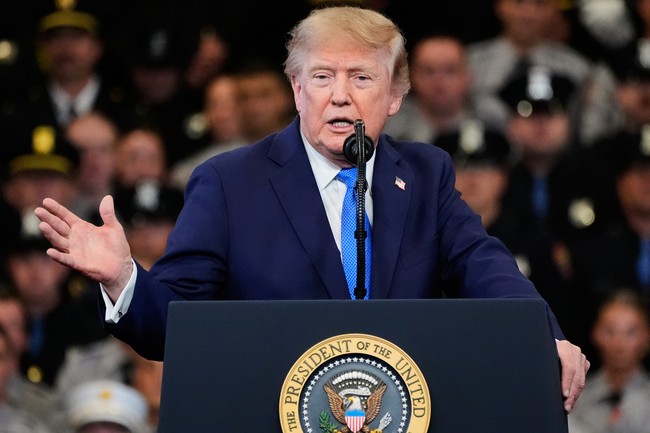
President Trump visited Myrtle Beach to rally for Sen. Darline Graham Nordine ahead of a crucial South Carolina Republican runoff, warning voters the stakes include preserving the America First agenda and keeping Congress in GOP hands.
President Trump arrived in Myrtle Beach to campaign for Sen. Darline Graham Nordine with the runoff only days away. He made his case in familiar, forceful terms, linking the Senate contest to broader national priorities and warning about the consequences of a Democratic Congress. The visit was both a policy pitch and a performance, blending issues and showmanship to keep Republican voters energized. Trump emphasized the need to hold the seat once occupied by his ally, Lindsey Graham.
The candidate at the center of the event, Darline Graham Nordine, is finishing the final months of her brother’s term and faces a runoff against Rep. Ralph Norman. Her presence in the race matters locally and symbolically, since keeping the seat in Republican hands preserves momentum for conservative policies. Trump presented her as the natural successor who would prioritize affordability and practical concerns for constituents. He contrasted that focus with what he framed as Democratic radicalism.
Early in his remarks the president referenced a debate moment when Graham Nordine admitted, “I’m not that informed on national security.” He used that exchange to highlight divisions about priorities, suggesting that her emphasis would be on everyday issues like cost of living rather than foreign policy theater. That framing allowed Trump to thread a broader argument: voters should reward candidates who will protect families and wallets first. It also underscored his point that different offices demand different focuses and strengths.
https://x.com/nicksortor/status/2090951058944032908
Trump repeatedly stressed the importance of Republicans maintaining control of both the House and Senate, arguing that losing either chamber would invite a return to policies he says Americans rejected. He warned that a Democratic majority would reopen borders, raise taxes, and resume politically motivated inquiries targeting his administration. This warning was delivered in plain terms to reinforce urgency among conservative voters. He tied local outcomes in South Carolina directly to national policy direction.
Trump did not soften his rhetoric about the current Democratic Party, calling it extreme and warning that its leaders would push the country leftward. He characterized the opposition bluntly, saying, “They’re communists, they’re radical Left lunatics.” That language echoed his broader campaign strategy: frame Democrats as out of step with mainstream Americans and present Republicans as defenders of stability and liberty. For his audience, that bluntness was a rallying cry as much as a policy pitch.
The president singled out specific Democratic figures he sees as problematic and tied them to troubling associations in order to warn voters. He brought up a Michigan Senate candidate as an example, criticizing perceived ties and questioning judgment. Those attacks were meant to sharpen contrasts ahead of November and to motivate conservative turnout in the runoff. Trump used both policy critique and personal barbs to make his case.
Amid the political fire, the rally included lighter moments that are a staple of Trump events, including a joking reference to YMCA as the “gay national anthem.” Those levities broke political tension and kept the crowd engaged, blending entertainment with persuasion. The campaign tone moved quickly between urgent warnings and crowd-pleasing quips. That mix keeps his base excited and focused on turnout.
The night in Myrtle Beach played out as two acts: a conventional campaign stop and an unscripted performance where the president spoke directly to voters about the stakes. He stressed that the fight is not merely about a single Senate seat but about holding the line on conservative wins across the federal government. Trump framed the runoff as another front in a larger battle over policy and power. He urged supporters to see the vote as part of preserving the gains of recent years.
For South Carolina Republicans, the immediate task is simple: deliver a win that keeps the Senate seat aligned with conservative priorities. Trump made clear that losing the seat would imperil efforts on border security, tax policy, and judicial confirmations. He painted the choice as practical and consequential, emphasizing results over rhetoric. Voters were reminded that down-ballot races ripple into national outcomes.
The campaign clock is running: the midterm calendar gives voters only weeks to shape who controls Congress and which policies move forward. Trump used the urgency of timing to prod action, highlighting how quickly political fortunes can shift. He presented the runoff as a test of Republican resolve and discipline at the ballot box. The message was that turnout now matters for months and years ahead.
The speech balanced attack and defense, pushing back against Democratic narratives while defending the Trump record and the GOP agenda. By tying local candidates to national consequences, the president sought to make the contest feel immediate and important to everyday voters. His approach was direct: warn about the alternative and promise continued focus on practical issues that affect families. The rally left no doubt about how he sees the stakes in South Carolina and beyond.

Add comment