
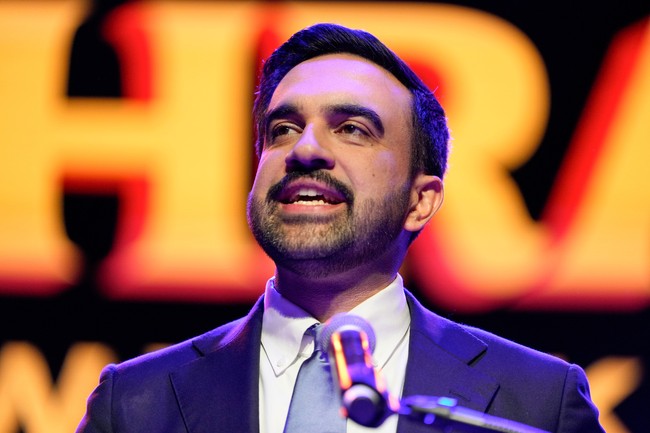
I’ll walk through why a resurfaced interview of New York City Mayor Zohran Mamdani’s younger self has people talking, lay out what the clip shows about his accent shifts, compare it to familiar political code-switching, and point out what this kind of performance says about modern Democratic politics.
I’ve watched a lot of political theater, and a video of Zohran Mamdani from years ago dropped into view like a prop on stage that wasn’t supposed to be there. In recent interviews the mayor sounds like a plainspoken New Yorker, which fits someone raised in the U.S. since 1998. But the older clip presents a very different vocal character, and that mismatch is what has tongues wagging.
The resurfaced footage shows a younger Mamdani promoting a film tied to his family and discussing his Ugandan background for an overseas outlet. In that short interview his cadence and vowel choices aren’t what New Yorkers hear today; it comes off as a purposeful shift in presentation. When public figures alter their voice so dramatically, voters have a right to ask why the performance changed.
Context matters. Mamdani was born in Uganda and has family ties to filmmaking, so there are legitimate reasons he might sound different talking to a foreign radio host about Kampala. Still, the gap between the two soundings—then and now—feels striking enough to invite suspicion rather than instant explanation. People notice patterns, and when pattern-matching produces the same result across a whole political team, the pattern becomes the story.
A fresh clip that circulated shows Mamdani speaking in a way many listeners didn’t expect, and it lit up social platforms quickly. The new-to-many footage prompted a wave of commentary and questions about authenticity and whether shifting accents are part of a deliberate public-relations toolkit. This isn’t merely entertainment; it’s about how a politician presents identity to win sympathy and votes.
https://x.com/NYCMayor/status/2048055792121618846
NYC Mayor Zohran Mamdani is setting off an online frenzy after a nearly decade-old interview resurfaced showing him speaking with a noticeably different accent while discussing his Ugandan roots.
The 2016 clip features Mamdani talking about life in Kampala while promoting his mother Mira Nair’s Disney film, ‘Queen of Katwe,’ for a South African radio station.
Some will call what we’re seeing a harmless example of code-switching, and in private life that can be a normal way to relate to different groups. But in politics it looks less like adaptation and more like a tactic: emphasize certain cultural touchpoints when they’re helpful, then emphasize other ones when those are more useful. That kind of selective authenticity is a recipe for distrust.
Republicans have long complained about theatricality from Democrats who pivot accents, anecdotes, or policy stances depending on their crowd. The phenomenon has been noticed at high levels before and described in blunt terms by critics who see it as pandering. Mamdani’s audio shift slots neatly into that critique, because the change is jarring rather than subtle.
Beyond theater, there’s a governance angle. Voters deserve to know what informs a mayor’s decisions and where his loyalties lie. If a politician crafts different personas for different audiences, it’s fair to wonder which persona shows up in the council chamber, at budget hearings, or when pressure mounts. Accent is a small piece of a larger transparency puzzle.
People also respond to authenticity on a human level. Candidates who carry consistent manner and tone make it easier for citizens to judge their motives and competence. When elected officials present themselves inconsistently, fatigue sets in; voters start to feel manipulated rather than represented, and that undermines civic trust across the board.
There could be innocent explanations for Mamdani’s vocal difference: younger people experiment, media contexts differ, and personal identity evolves. But innocence alone won’t silence reasonable questions about political performance. In the court of public opinion, consistency matters as much as competence, and political actors would do well to remember that.
Whatever the explanation, the episode reinforces a simple point: voters are paying attention to how leaders present themselves, not just what they say. When politicians shift accents the way some shift talking points, it fuels skepticism from people tired of staged authenticity. That skepticism is a legitimate part of democratic accountability and deserves acknowledgment.


Add comment