
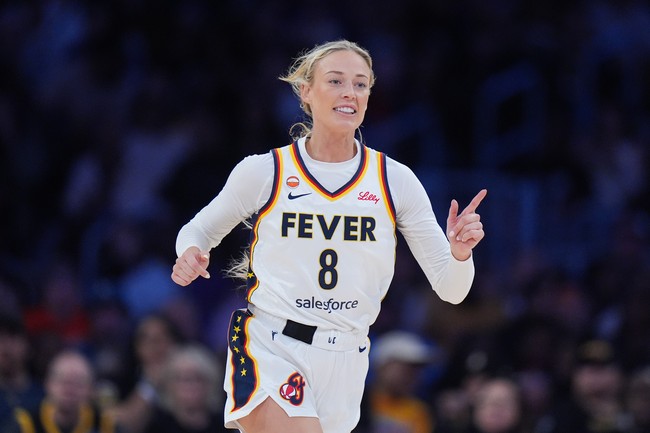
The Indiana Fever beat the Chicago Sky 90-86, but what grabbed attention was a flagrant foul that led to DiJonai Carrington’s ejection and sparked a social media reaction. Sophie Cunningham was visibly upset after being struck, the referees ruled it a flagrant 2, and the aftermath moved from the court to online posts. This piece lays out the incident, Cunningham’s response, and the broader fallout without leaning on outside links or speculation.
The play itself was rough enough that officials assessed a flagrant 2, which signals unnecessary and excessive contact. Cameras caught Cunningham reacting immediately, clearly angry and needing to be separated from her opponent. That moment, more than the score, became the focal point for commentary and reaction.
After the whistle, tensions stayed high. Cunningham jumped up furious and was held back as the ejected player left the court, making the sequence feel more like a breaking point than a single bad play. Fans and broadcasters alike noted the severity and the clear visual of Cunningham’s response.
https://x.com/BrickCenter_/status/2086179057872638333
Carrington then posted “White Privilege” on Threads and tagged the team, implying the ejection was racially motivated. That claim landed amid live-game commentary that had already described the incident as a flagrant foul. Observers pointed out that the ruling matched the action on the court: a hard, intentional-looking hit that warranted removal.
Now Cunningham has spoken up, and her comments are direct. She called the hit “intentional” and pointed to a pattern of attention-seeking behavior she feels is playing out when the Fever are on national television. Her remarks were pointed but focused on the act, not on insinuations about race.
“Clearly, I think it was like unnecessary. I’ve never really spoken to her and have no beef with her, but I guess she has some pent up stuff. So get your s— off. That’s fine. I can take it… Yeah, it’s intentional,” Cunningham said, per .
“She has no reason to be doing any of that. So good way to get her kicked out. I don’t even know her. She wasn’t even on the team last year when all that was going on. But I do think when people play the Fever, we’re nationally televised, there’s a lot of eyes on us and people just want attention. And that’s her just trying to get attention.”
Cunningham also addressed the “white privilege” claim directly, rejecting the notion that race played a role in the ejection. She reminded listeners that players get tossed for similar actions regardless of context, noting her own past ejection after an on-court incident. For her, the call was straightforward and tied to game conduct, not identity.
“I think the league is taking care of that. This has nothing to do with race. Last year, I did the same thing and I got kicked out. And I deserved to be kicked out. There’s no reason even to play that card,” Cunningham said.
The league now faces the usual mix of disciplinary procedures, media scrutiny, and social media spin that follow high-profile ejections. On-court enforcement is one part, but how the narrative plays out online often matters just as much to teams and the league office. That dual challenge is familiar: officials handle the immediate call, while communications and PR teams manage the fallout afterward.
Fans and analysts are likely to revisit the tape and the posts as the league considers any further action. Incidents like this tend to prompt conversations about physicality, intent, and consistency in officiating. Those debates can stretch beyond a single game and shape perceptions of how the league polices player conduct.
For now, the focus returns to the court and the next time these teams meet. Cunningham has been clear about what she thinks happened and why she believes the call was justified. The episode will be part of the season’s ongoing narrative about competitive intensity, discipline, and how quickly things escalate from a single play to a broader controversy.



Add comment