
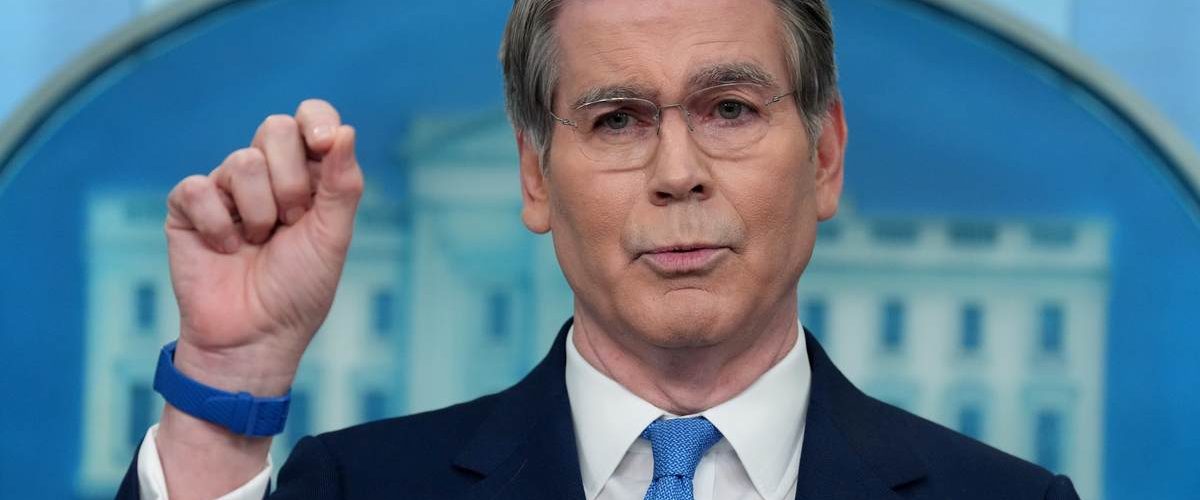
The piece examines how recent U.S. economic and military pressure is squeezing Iran’s ruling class, why that squeeze could ignite internal unrest, and how Secretary Scott Bessent described the regime’s priorities in blunt terms during a public interview.
The ruling circle in Tehran is under mounting pressure from several fronts: targeted strikes, a naval blockade, and a sustained economic campaign aimed at choking off revenue and access. Those measures are designed to increase the internal cost of staying in power for the mullahs and their enablers. From a Republican viewpoint, the strategy is deliberate and hard-nosed: apply pressure until the regime is forced to make real concessions or faces collapse from within.
Economic pain hits everyone, but it hits elites and enforcers differently when sanctions and blockades target the systems that keep them secure. The U.S. economic campaign, labelled Operation Economic Outcast, aims to isolate Iran financially and make normal governance costly for the clerical class. When the currency collapses and food and fuel prices soar, the regime’s ability to buy loyalty frays and public patience reaches a breaking point.
Military actions that degrade leadership and capabilities matter, but history shows that sustained popular unrest can topple regimes from the ground up. When ordinary people are pushed to the edge and see no peaceful path to relief, revolt becomes a real option. Republican policy prefers sensible pressure that creates space for internal change without committing ground forces to nation building.
https://x.com/townhallcom/status/2094433867113308257
On the public stage, Secretary Bessent spelled out the administration’s aims and observed what matters most to those who cling to power. He framed the campaign as creating incentives for Tehran to negotiate on core security issues while exposing the regime to the consequences of its choices. That mix of pressure and explicit expectations is meant to be clear to both Iran’s population and its ruling class.
On Monday, Secretary Bessent appeared on CNBC’s Squawk on the Street at the G20 finance ministers meeting in Asheville, North Carolina, with host Sara Eisen on a .
Secretary Bessent: I think that Operation Economic Outcast is going to make them want to make a deal. Between that and the blockade, they are cut off. We are starting to see their elected leadership openly complain about the state of the economy. They’re speaking to the Iranian hardliners in public. They’re talking to the Iranian people. The currency is collapsed. Inflation is…
Sara Eisen: Almost a hundred percent.
Secretary Bessent: Yeah. I think food inflation is much higher; we’re seeing gas lines, unbelievable, Sara.
Sara Eisen: But they don’t care about their people.
Secretary Bessent: Look. My experience with people like this, the main thing they care about is heads staying attached to their necks.
The observation about “heads staying attached to their necks” cuts to the heart of authoritarian survival tactics: fear of violent retribution and a keen focus on personal survival over public welfare. That blunt line is informative because it reveals the calculus driving Tehran’s decisions. From a conservative perspective, exposing that calculus is part of a strategy to make the cost of repression exceed the regime’s ability to maintain control.
Technically, Iran’s political system leaves all final authority in the hands of the clerical leadership rather than genuinely independent elected officials. The Supreme Leader and his inner circle control security organs and vet major appointments, which means concessions require acceptance from the very figures targeted by pressure. Still, visible fractures among elements of the governing apparatus matter because they signal weakness and open space for popular movements.
Secretary Bessent also reiterated the administration’s conditions :
Secretary Bessent: The goal here is to create the conditions that they will want to come to the table, and the president has been very clear that they have to give up their nuclear program, they have to turn over the highly enriched uranium, and they have to stop their support of proxies. And the Strait (of Hormuz) has to be open.
Those demands are straightforward and remain non-negotiable from a policy standpoint: no nuclear breakout, no regional proxy wars, and freedom of navigation in a critical international chokepoint. The clarity matters because muddled signals only prolong conflict and embolden hardliners. Republicans favor a firm, outcome-focused approach rather than vague diplomacy that leaves the regime free to regroup.
What might ultimately topple the mullahs is not a single strike but a combination of sustained economic collapse, diplomatic isolation, and the eroding legitimacy that comes when people can no longer feed their families. When elites find their networks of patronage unravel, and when security forces are stretched thin, the regime’s ability to control events declines rapidly. That is the opening Republican policy seeks to widen without committing U.S. forces to extended occupation.
For now, the pressure campaign is testing both Tehran’s resolve and its internal coherence. If clever economic and maritime measures make life unbearable for the regime while keeping pressure calibrated, those measures increase the odds of a negotiated rollback or internal collapse. The goal is clear: force real concessions and prevent a nuclear-armed, regionally aggressive Iran from reemerging stronger than before.



Add comment