
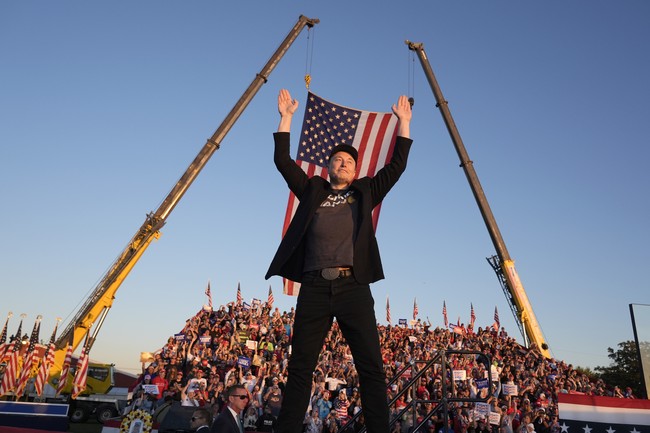
Elon Musk is proposing Terafab, a single-roof semiconductor complex of 100 million square feet that aims to centralize chip design, fabrication, packaging, and testing — a bold industrial bet on American-scale manufacturing and technological independence.
Elon Musk has a history of tackling projects that sound outrageous until they are not, and Terafab fits that pattern. The plan calls for a vertically integrated semiconductor campus that would consolidate processes usually scattered across countries and suppliers. The goal is clear: take control of key supply chains and speed up the development of advanced chips for AI, Teslas, and space systems.
The scale is almost absurd in the best possible way; 100 million square feet would dwarf familiar landmarks and rewrite records for built space. For context, the Pentagon’s roughly 6.6 million square feet would fit into Terafab about 15 times. That kind of scale isn’t just symbolic — it signals intent to dominate chip production capacity and reduce reliance on unpredictable international suppliers.
https://x.com/elonmusk/status/2085377974396752305
SpaceX previewed the project as a joint effort with Tesla, and the announcement described the facility’s scope plainly. “This facility will house the manufacturing, packaging and testing of advanced logic and memory devices,” SpaceX said in a press release Thursday. “Terafab will produce chips optimized for edge computing and inference for use in hardware like Tesla’s Optimus robots and self-driving Cybercabs, along with high-power chips designed for operating SpaceX’s space-based data centers.”
That quoted language is important because it outlines the kinds of chips the complex would make: inference chips and high-power devices for edge computing, robotics, autonomous vehicles, and space infrastructure. Those are the building blocks of the technological future, not boutique toys for corporate show. Controlling that manufacturing end-to-end gives an operator enormous advantages in iteration speed, cost control, and long-term security.
The estimated price tag is hefty — about $16.8 billion — yet for a project designed to secure decades of critical production capacity, it’s a strategic investment. Big projects require big capital, and private capital has a track record of getting complicated engineering done fast when permitted and encouraged. Terafab is positioned as a long-term play to anchor advanced manufacturing domestically rather than scatter it to the winds of global supply-chain instability.
Choosing to build in Texas over California sends a political and practical message. California’s regulatory and tax environment pushed Musk to look elsewhere, and Texas offered a friendlier climate for rapid industrial expansion. Critics who argue that those companies should stay and fight local policy miss the point that business mobility is a reality; states that foster growth win the jobs and investment, plain and simple.
Former Los Angeles mayoral candidate Spencer Pratt suggested the complex could have been built in California, but local politics and policies made that option untenable. That observation underscores a larger Republican argument: when government overreaches and burdens employers, industry votes with its feet. Building Terafab in a business-friendly jurisdiction is not a partisan victory alone, it’s an economic necessity to get the work done well and on time.
Terafab’s ambition also answers a national-security concern that transcends party talking points: dependence on distant suppliers for chips is a strategic vulnerability. A domestically concentrated, vertically integrated facility would make the United States less exposed to foreign disruptions, shipping bottlenecks, and geopolitical pressure. That’s not just good business sense — it’s common-sense defense policy for a technology-driven era.
Some will balk at calling a single corporation’s factory the natural place to house national-priority manufacturing, but practical results matter more than abstract ideology. Musk’s combination of operational daring and private resources can move projects faster than slow-moving bureaucracies. If the objective is to secure cutting-edge fabrication capacity quickly and effectively, public drama about ownership misses what’s at stake.
There will be skeptics about the timeline, costs, and technical hurdles, and those are valid topics for scrutiny. Still, when measured against the alternative — continuing to rely on fractured global supply chains and foreign fabs — Terafab represents a clear strategic pivot toward industrial self-reliance. Ambition of this size is rare, and executing it would reshape the landscape for chips and the industries that depend on them.
Musk’s proposal is straightforward in its audacity: build the largest, most capable chip complex the world has seen, place it where it will be supported, and let American engineering and private capital drive the outcome. That’s a vision aligned with pro-growth principles and a national interest in leading the next waves of technology.

Add comment