
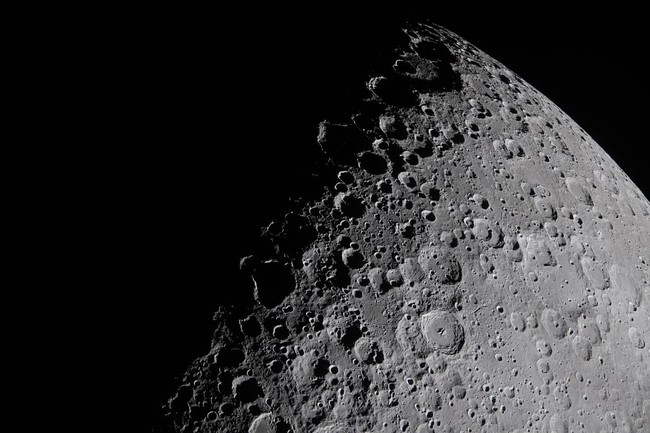
The spent upper stage from a SpaceX Falcon 9 struck the Moon at high speed, creating a modest crater but no danger to Earth; rather than a disaster, the predictable impact offered a rare scientific opportunity that showcases how private American enterprise is accelerating space access and refining our understanding of lunar impacts.
The Essex Files: Don’t Panic Over the SpaceX Moon Impact It’s Actually a Win for American Innovation
Early Wednesday, a leftover upper stage from a Falcon 9 impacted the lunar surface at roughly 5,400 miles per hour after its orbit shifted over the last year and a half. The object, about the size of a school bus and weighing four metric tons, came from a January 2025 launch that carried commercial lunar landers. Natural forces, including solar radiation and gravity, nudged the stage into a collision near Einstein Crater at about 2:35 AM Eastern.
Contrary to breathless headlines, NASA confirmed the event poses zero threat to Earth, and astronomers had the impact well tracked beforehand. The collision produced a crater roughly 60 to 90 feet across and about a dozen feet deep, kicking up a dust-and-rock plume. While the brief flash and debris were hard to spot with the naked eye, orbiting spacecraft and telescopes recorded the event in detail.
One practical upside is that this impact was predictable, which is rare for lunar strikes. Meteoroids hit the Moon all the time, but most arrive without warning and leave scars scientists only discover later. In this case, the known mass, speed, and origin of the object give researchers a controlled data point to test models of crater formation and ejecta distribution.
https://x.com/BrandyAEckroth/status/2085612249998393851
Because the vehicle and its parameters were documented before impact, researchers can compare before-and-after imagery, measure the ejecta curtain, and validate simulations of how lunar regolith responds to high-energy strikes. That kind of calibration is invaluable when controlled experiments on an airless body are nearly impossible to stage. The observations will refine techniques for detecting and characterizing future impacts on both the Moon and other airless bodies.
Those refinements have direct, practical value for planetary defense. Earth’s atmosphere burns up most small space rocks, but understanding how kinetic energy transfers into surface materials helps improve models of impact consequences. Data from a known, high-speed collision informs how dust clouds form and travel and how crater shapes reflect incoming object properties—insights that scale up to scenarios involving larger threats.
Beyond planetary defense, the data will help planners who want sustained human and robotic operations on the Moon. Future lunar infrastructure and habitats will have to contend with regular micrometeoroid strikes and regolith displacement. Real-world measurements of how the surface reacts to a calibrated hit feed into engineering choices for shielding, site selection, and maintenance of equipment left on the surface.
It’s also a reminder of how American private companies have reshaped access to space. The Falcon 9 and other commercially developed launch systems have driven costs down and flight rates up, offering researchers more frequent chances to gather useful data. That market-driven boom in capability makes events like this both more likely and more informative compared to an era when government programs alone dictated cadence and scope.
The stage followed routine passivation procedures after it delivered its payload, and the later orbital drift was the result of predictable physics and solar radiation pressure, not an intentional experiment. Treating the episode as simple negligence obscures the larger context: we now operate in an environment where commercial activity creates unplanned but scientifically valuable opportunities. That reality deserves sober assessment rather than panic.
Scientists and observers will analyze the plume and the new crater, and nearby orbiters should return clearer images in the coming days. Each measurement adds a calibrated entry to the record of lunar impacts, helping to bridge the gap between sporadic observations and controlled experimentation. In a field where known-value impacts are uncommon, a documented object arriving at a known time and place is a useful gift for planetary science.
The broader takeaway is straightforward: American free-market innovation is expanding what’s possible in space while delivering tangible scientific benefits. The predictable Moon impact offers hard data, helps validate models that protect the Earth and support future lunar operations, and highlights how private-sector momentum accelerates discovery. This episode is better read as proof of progress than as cause for alarm.



Add comment