
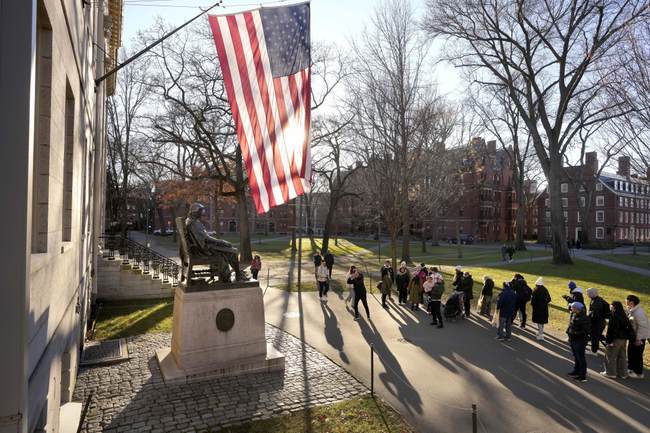
This article argues that admitting 600,000 Chinese nationals as students poses serious national security risks and outlines concerns about coercion, espionage, academic exploitation, and the role of Chinese government-linked organizations on U.S. campuses.
President Trump recently reaffirmed a plan to accept 600,000 Chinese students over two years, a proposal that has sparked sharp pushback from conservative circles. The controversy centers on national security implications and whether universities can protect sensitive research and intellectual property from foreign influence.
Allowing so many students from a geopolitical rival into American universities raises legitimate questions about exploitation and influence. China’s policies, including laws that obligate nationals to assist state intelligence efforts, provide a legal basis for worry about coercion and information sharing.
On campuses, organizations connected to Beijing have been accused of monitoring Chinese students, promoting pro-government narratives, and stifling dissent. These associations sometimes cooperate with embassy officials, which critics say facilitates transnational repression and limits free expression for students who disagree with the Chinese government.
There are documented cases where students faced pressure to support state goals or risk consequences for their families back home. That kind of leverage creates a vulnerability where academic settings can be turned into pipelines for influence operations or recruitment into intelligence activities.
Another vector of concern is scholarship programs that require regular reporting of research progress to Chinese officials. Recipients tied to those programs often have obligations that go beyond ordinary academic expectations, and critics argue those obligations can include informing on dissent or sharing sensitive technical details.
Universities are also attractive targets for intellectual property theft because they combine open collaboration with cutting-edge research. U.S. officials have repeatedly warned that certain research areas, particularly advanced STEM fields, are high-risk when it comes to exploitation by foreign actors.
Intelligence assessments label some institutions as soft targets where foreign actors can access people, labs, and proprietary work with relative ease. Losses from intellectual property theft are presented in some analyses as costing the U.S. economy hundreds of billions of dollars annually, emphasizing the scale of the threat advocates cite.
A significant share of Chinese students in the United States are enrolled in graduate STEM programs, which amplifies concerns about potential transfer of advanced knowledge. Graduate students often work directly in labs and on projects that have both civilian and military applications, increasing the stakes of any exploitation.
Law enforcement and national security officials have publicized instances where foreign nationals were indicted for activities involving spying or attempts to access restricted facilities. Those cases feed the broader argument that lax screening or unchecked enrollment can have real-world security consequences.
Another alarming scenario involves biological materials and dual-use research. Reports of individuals attempting to move risky biological agents across borders underscore the potential for nontraditional threats to be introduced through educational or research channels.
Historically, U.S. policy has at times restricted entry for foreign nationals tied to military-civil fusion or other state-directed technology transfer programs. Proclamations and policy actions have aimed to shield sensitive research from exploitation while preserving legitimate academic exchanges.
Some argue that cutting admissions would hurt university budgets and academic programs, but proponents of restrictions counter that national security must take precedence over short-term financial gain. They contend institutions should be willing to sacrifice certain revenue streams to protect strategic advantage and public safety.
Polling cited by advocates shows widespread concern among certain voter groups about Chinese influence and support for limits on student numbers and related activities. Those attitudes shape the political context for any decision about visa policy and academic collaboration.
There is also debate over whether broad enrollment increases could be a bargaining chip in larger geopolitical negotiations, such as supply chain decoupling or trade talks. Whatever the strategic calculus, critics insist that any plan to expand admissions should be carefully weighed against the security risks.
In sum, the proposal to bring 600,000 Chinese students to American campuses is framed by opponents as a potential gift to a rival power, one that could enhance Beijing’s technological and military goals at America’s expense. The argument urges policymakers to prioritize national security when setting education and visa policy.
When it comes to keeping America safe, the United States, I further can say here, will not tolerate the CCP’s exploitation of U.S. universities or theft of U.S. research intellectual property or technologies to grow its military power, conduct intelligence collection or repress voices of opposition.

ᴍᴀᴋɪɴɢ ᴏɴʟɪɴᴇ ᴊᴏʙ ᴛʜᴀᴛ ꜰʟᴏᴏᴅꜱ ʏᴏᴜʀ ʙᴀɴᴋ ᴀᴄᴄᴏᴜɴᴛ ᴡɪᴛʜ ᴄᴀꜱʜ ᴇᴠᴇʀʏ ᴡᴇᴇᴋ. ʙʏ ᴡᴏʀᴋɪɴɢ ᴊᴜꜱᴛ 2 ʜᴏᴜʀꜱ ᴀ ᴅᴀʏ ᴀꜰᴛᴇʀ ᴄᴏʟʟᴇɢᴇ, ɪ ᴍᴀᴅᴇ $17,529 ʟᴀꜱᴛ ᴍᴏɴᴛʜ. ɪ ʜᴀᴅ ᴢᴇʀᴏ ᴇxᴘᴇʀɪᴇɴᴄᴇ ᴡʜᴇɴ ɪ ꜱᴛᴀʀᴛᴇᴅ, ᴀɴᴅ ɪɴ ᴍʏ ꜰɪʀꜱᴛ ᴍᴏɴᴛʜ, ɪ ᴇᴀꜱɪʟʏ ᴇᴀʀɴᴇᴅ $11,854. ᴛʜɪꜱ ᴊᴏʙ ɪꜱ ɪɴᴄʀᴇᴅɪʙʟʏ ᴇᴀꜱʏ ᴛᴏ ᴅᴏ, ᴀɴᴅ ᴛʜᴇ ʀᴇɢᴜʟᴀʀ ɪɴᴄᴏᴍᴇ ɪꜱ ꜰᴀɴᴛᴀꜱᴛɪᴄ. ᴡᴀɴᴛ ᴛᴏ ᴊᴏɪɴ ʀɪɢʜᴛ ɴᴏᴡ? ᴊᴜꜱᴛ ᴠɪꜱɪᴛ ᴛʜɪꜱ ᴡᴇʙᴘᴀɢᴇ ꜰᴏʀ ᴍᴏʀᴇ ɪɴꜰᴏ…
ᴇᴀʀɴɪɴɢꜱ ᴀʀᴇ ꜰᴀɴᴛᴀꜱᴛɪᴄ.Open This➤➤ Www.PayAtHome1.Com