
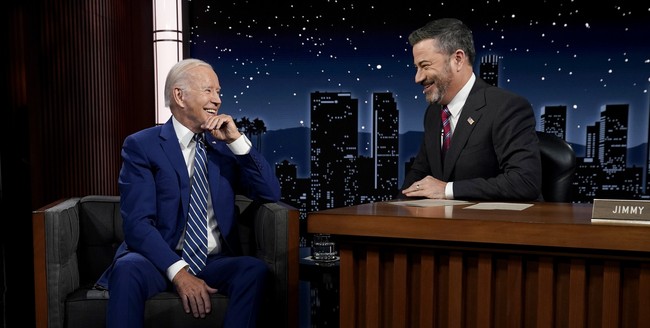
The FCC has moved to call eight ABC station licenses in for early renewal after a controversy sparked by Jimmy Kimmel’s on-air comment about Melania Trump and a subsequent threat near the White House Correspondents’ Dinner. This piece lays out what the FCC did, why it matters, the legal and political stakes, how Disney and ABC are responding, and what this could mean for broadcast accountability and regulatory precedent.
The controversy began when Jimmy Kimmel joked that Melania Trump was an “expectant widow.” The line landed badly after a gunman opened fire outside the White House Correspondents’ Dinner, an incident that made the joke look reckless and tone-deaf to many Americans. President Trump and the First Lady publicly demanded action, and the situation quickly escalated from late-night banter to a formal regulatory confrontation.
Rather than viewing this as a simple ratings flap, the Federal Communications Commission moved decisively. On Tuesday the agency ordered early license renewal reviews for eight Disney-owned ABC stations, demanding renewal filings by May 28, 2026, years ahead of their scheduled 2028 reviews. The stations affected include ABC outlets in New York, Los Angeles, Chicago, San Francisco, Philadelphia, Houston, Fresno, and Durham, North Carolina.
The FCC’s step grew out of a longer investigation into Disney’s compliance with the Communications Act of 1934, including potential unlawful discrimination. The filing states plainly: “The FCC has been investigating The Walt Disney Company, its American Broadcasting Company, and its subsidiaries for possible violations of the Communications Act of 1934, including the agency’s prohibition on unlawful discrimination.” That language anchors the agency’s move in a broader enforcement context, not merely a reaction to a single late-night comment.
“The FCC has been investigating The Walt Disney Company, its American Broadcasting Company, and its subsidiaries for possible violations of the Communications Act of 1934, including the agency’s prohibition on unlawful discrimination.”
The FCC made clear it believes it has authority to elevate enforcement. Its filing continues: “The FCC has determined that additional actions are appropriate and has the authority to call the broadcaster’s licenses in for early renewal.” Those words signal a willingness to use seldom-invoked tools to hold a major media company accountable for how it runs powerful broadcast outlets.
“The FCC has determined that additional actions are appropriate and has the authority to call the broadcaster’s licenses in for early renewal.”
Republicans have long argued that broadcasters operating on public airwaves owe the public transparency and basic standards of fairness. Early renewal is not the same as revocation, but it is a public, formal process that forces the company to document how its stations meet public interest obligations under federal law. That reality matters when a network seems unwilling to explain editorial choices that have safety and civic implications.
This particular mechanism is rare: the FCC had not issued an early-renewal order in decades before recently using it against a small licensee, and applying it to eight major-market ABC affiliates represents a serious escalation. FCC Chairman Brendan Carr has warned for months that the agency would use its full toolbox, and he has publicly suggested that license consequences are on the table. For those who believe broadcast licenses are privileges tied to public-interest performance, this is a predictable course of action.
Disney and ABC say they will comply with the process and contest the action in court. A company spokesperson declared: “ABC and its stations have a long record of operating in full compliance with FCC rules,” and said the company is “prepared to show that through the appropriate legal channels.” That defense frames the dispute as one that will play out both administratively and judicially.
“ABC and its stations have a long record of operating in full compliance with FCC rules,” a company spokesperson said, “and are prepared to show that through the appropriate legal channels.”
Not everyone agrees with the FCC’s approach. The agency’s lone Democratic commissioner described the move as “unprecedented, unlawful, and going nowhere,” arguing First Amendment concerns favor Disney. Courts have historically been wary of government action that looks like content-based retaliation, and that legal backdrop will shape the outcome. Still, the regulatory process itself imposes costs and creates an on-the-record accountability step that did not exist before the order.
The bigger fight will be over precedent. If the FCC can call major licenses early over editorial decisions or internal practices tied to diversity and employment, future administrations may expand the policy in ways this country has not seen. That is why this matters beyond a late-night joke: it is a test of whether broadcasters who operate on public airwaves will face more rigorous public-interest scrutiny when political pressure mounts.
For now, the process will take months and generate substantial legal bills. ABC will be required to file in thirty days and then defend its record publicly. The dispute will play out in filings and courtrooms, but in the short term the message is clear: regulators are ready to enforce public-interest obligations on powerful media companies when political and public scrutiny converge.

Add comment