
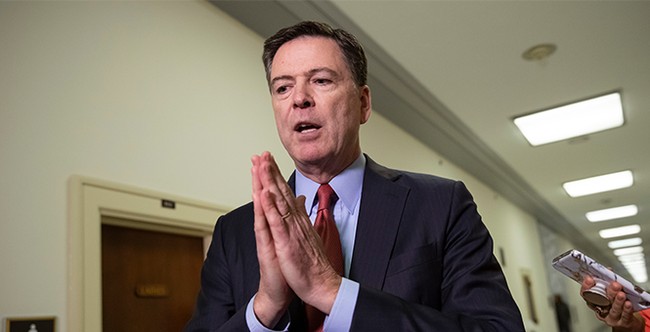
Former FBI Director James Comey has been indicted by a grand jury in the Eastern District of North Carolina on charges tied to an Instagram post that displayed “86 47,” which prosecutors say amounted to a threat against the President. The indictment alleges two counts: threatening the President and transmitting an interstate threat, and a warrant has been issued for Comey’s arrest where he was located at the time of the post. This article walks through the charges, the legal language quoted in the public filings, juror dynamics tied to the North Carolina venue, and early reactions from Justice Department officials. Embedded material from the original reporting is retained in place for context .
We can now report some more specifics on the latest indictment of former FBI Director James Comey, this time over alleged.
The public language around the case is stark and precise, and the two counts carry clear statutory references that map to real penalties. The first count accuses Comey of “knowingly and willfully making a threat to take the life of, and to inflict bodily harm upon, the President of the United States.” The second count addresses transmission in interstate commerce of communications containing a threat, which can be pursued separately and carries its own penalties.
“Today, a grand jury sitting in the Eastern District of North Carolina returned an indictment against James Comey on two counts.”
Count one: Knowingly and willfully making a threat to take the life of, and to inflict bodily harm upon, the President of the United States
Count two: Knowingly and willfully transmitting an interstate commerce of communication that contained a threat to kill the President of the United States
“It’s fair to say that threatening the life of anybody is dangerous and potentially a crime; threatening the life of the President of the United States will never be tolerated by the Department of Justice.”
A U.S. Department of Justice press release included more detail about the facts the grand jury relied on and the statutory bases for the charges. The Indictment alleges the specific act occurred on May 15, 2025, when Comey publicly posted an image depicting “86 47” on Instagram. Prosecutors contend that a reasonable recipient familiar with the circumstances would interpret that post as a serious expression of an intent to harm the President of the United States.
The Indictment includes two counts, first in violation of 18 U.S.C. § 871, alleging that James Comey, 65, knowingly and willfully made a threat to take the life of, and to inflict bodily harm upon the President of the United States. This charge alleges that on May 15, 2025, by publicly posting an image over the internet via Instagram depicting “86 47”, which a reasonable recipient who is familiar with the circumstances would interpret as a serious expression of an intent to do harm to the President of the United States.
The Indictment also charges Comey in violation of 18 U.S.C. § 875(c), that James Comey consciously disregarded a substantial risk that his communication would be viewed as threatening violence, and that he knowingly transmitted a communication in interstate commerce that contained a threat to injure the person of another, which a reasonable recipient who is familiar with the circumstances would interpret as a serious expression of an intent to do harm to a person.
The venue is a politically relevant fact in this case: the grand jury and arrest warrant are located in Eastern North Carolina, not in Washington, D.C. That matters because jury pools reflect local attitudes and regional experiences. Much of the Eastern District voted strongly for President Trump in 2024, and prosecutors may see this setting as more receptive to their presentation of evidence than the hard-to-seat juries sometimes found in the Washington metropolitan area.
If convicted on the charged statutes, the statutory maximums are significant and meant to be taken seriously by anyone who publicly directs violent language at public officials. The indictment notes that the charges under 18 U.S.C. § 871(a) and 18 U.S.C. § 875(c) carry a combined maximum exposure of up to 10 years in prison for these offenses. That is the statutory ceiling; sentencing would depend on a host of trial and post-trial factors.
At the public announcement, reporters asked how prosecutors would prove intent, given that the defendant has acknowledged different meanings for the symbols he used. The Acting Attorney General described a traditional approach to proving intent that relies on witnesses, documents, and the defendant’s own statements. Those are standard prosecutorial tools and the Justice Department said it has conducted a “tremendous amount of investigation” before returning the indictment.
Question: Sir, how will you prove intent when, as the director had acknowledged, Mr. Comey said he did not associate “86” with doing harm, and he took it down promptly saying that was political speech, not an intent to do harm to the president?
Acting Attorney General Todd Blanche: Well, this case is indicted today. This conduct occurred about a year ago, May 15th of last year. There has been a tremendous amount of investigation in this case. You prove intent with witnesses, documents, and the defendant himself — to an extent appropriate. That is how we will prove it in this case. I think talking about what Mr. Comey would or would not do if there was a trial… when it happens… it’s very premature for me today.
These are factual matters that a jury will sort through with evidence and testimony, not in press events or public opinion columns. The prosecution will need to connect the symbols, the context, any supporting statements, and Comey’s own explanations to establish the required mental state beyond a reasonable doubt. Defense strategy may lean on political expression claims and alternative interpretations of the post.
Expect the national media to frame this in highly charged terms, but venue and facts will control the legal path forward. For those watching from a law-and-order perspective, the case is a straightforward application of statutes that protect the person of the President, and the choice of an Eastern North Carolina forum could prove decisive in jury selection and trial dynamics.
After the announcement, a brief Q&A followed and further video and transcripts are part of the record for anyone tracking the initial statements from officials involved. The case is now moving from investigation into the formal trial process, and each procedural step will reveal more about the evidence the grand jury credited.
The broader implications touch on how political figures and former officials use social platforms and the legal lines between provocative speech and criminal threats. The indictment is the starting point of a courtroom process that will test those boundaries under established federal statutes.

He was involved in many Deep State Nefarious Designs with characters such as Hillary, Obama and Biden! He is a TRAITOR and should be tried and executed with those others involved at GITMO!