
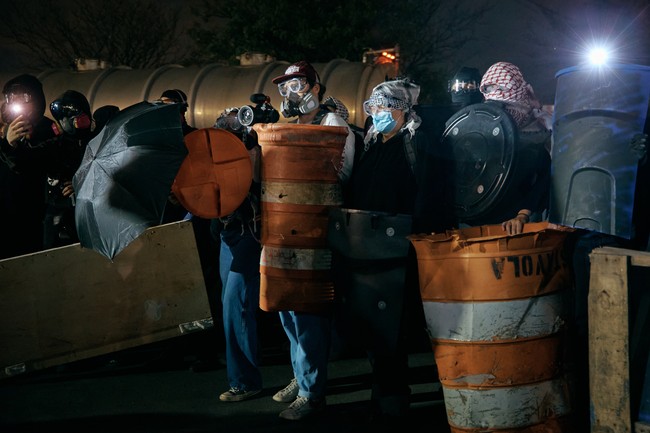
The Delaney Hall ICE facility in Newark has become ground zero for a large, organized anti-ICE encampment that has drawn activists from multiple states, nightly clashes with law enforcement, and questions about who is funding and supporting the operation. This article takes an on-the-ground look into what was found inside the camp, the risks posed to officers and the public, and the broader political implications now playing out around the site.
Reports show that hundreds of protesters gathered at the facility over several days, and confrontations with ICE agents escalated into physical assaults and serious threats. One officer was reportedly told by an agitator that “he would kill him and his entire family,” a chilling reminder that these scenes are not just noisy protests but dangerous encounters. The pattern of nightly harassment of law enforcement has strained local response resources and raised alarms among residents and officials.
A journalist working undercover managed to penetrate the encampment and documented a surprising level of organization and supply. What he found reads less like a spontaneous protest and more like a semi-permanent operation, with large tents, lighting, seating, and a steady flow of food. Observers noted items such as hot lasagna being distributed, commissary-style snacks, and basic comfort supplies—evidence that this is a sustained, well-resourced presence rather than a brief demonstration.
Inside the camp, volunteers directed the undercover reporter to a “medical tent” and other designated stations serving practical needs of the occupiers. There were hand wipes, eyewash stations for pepper spray exposure, and even chairs where people ate in groups, implying a level of planning normally associated with long-term encampments. The presence of such infrastructure suggests donors or organizations provided money, equipment, and logistical support to maintain the operation.
That raises a central question: who is bankrolling this effort, and what are their ties to broader activist networks? It is one thing for locals to protest; it is another when tents, generators, and supplies arrive to keep dozens or hundreds on site for days. Law enforcement and taxpayers deserve transparency about whether outside groups are funding these tactics and whether coordination extends beyond spontaneous, local outrage.
The activists claim they are protesting detainee treatment, citing issues like food and hunger strikes. Available reporting casts doubt on some of those claims, noting that menus at the facility and access to a commissary indicate detainees are receiving food and options that, in some cases, compare favorably to what many Americans have. These points do not dismiss concerns about detainee welfare, but they do call for careful verification before amplifying allegations that could inflame protests and put officers at risk.
Political figures from the Democratic Party have visited the site, which critics argue amounts to encouragement of the disruptive behavior. When elected officials show up and use charged language, it changes the dynamic and can embolden hardline protesters. From a Republican perspective, that kind of political stoking needs to be criticized because it undermines law and order and diverts attention from constructive oversight and solutions.
There are practical public safety worries as well. A camp with generators, lighting, and large tents brings fire, sanitation, and medical risks. Crowded conditions and makeshift medical stations cannot replace regulated care, and the potential for escalation looms when police confrontations become routine. Municipal authorities have to balance constitutional protest rights with their duty to protect staff, detainees, and residents from harm.
https://x.com/nicksortor/status/2060538398373228638
The undercover visit also underscores how easy it can be for a determined reporter or agitator to get inside a sprawling, loosely organized operation. That ability to embed raises questions for both sides: activists about security and privacy of their efforts, and officials about infiltration by bad actors who might escalate violence. Either way, the level of access documented in the camp points to organizational gaps on both ends that deserve attention.
Moving forward, scrutiny should focus on coordination and funding behind the encampment, the accuracy of claims about detainee conditions, and the ongoing safety of ICE staff and local law enforcement. Authorities should investigate any credible threats against agents and ensure protests do not devolve into sustained assaults on public safety. At the same time, legitimate oversight of detention conditions should continue through proper channels so facts, not rumors or theatrics, guide policy and response.


Of course Soros and all of the usual devils are behind all of this evil!
You know that Soros and Singhams finger prints and money are all over these rioter camps. Leftists aren’t smart enough or organized enough to pull off such riots without the Soros and Singham money.
That’s absolutely true!