
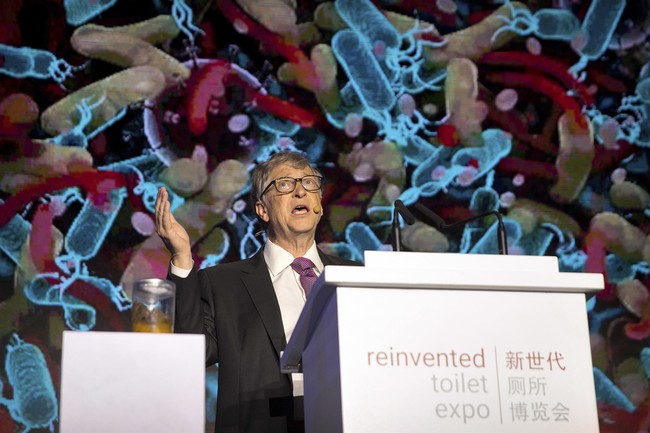
Rand Paul released 1,375 pages showing Bill Gates had unusually deep access to federal institutions, including a DOE Q clearance, private exchanges with Anthony Fauci where Fauci edited Gates’ pandemic manuscript, and internal NIH concerns that Gates might be operating outside normal channels.
The newly public documents show Gates held a Department of Energy Q-level clearance for years, a designation comparable to Top Secret that permits access to sensitive nuclear information. The DOE’s response confirmed the clearance was reciprocally granted in June 2014 and terminated in December 2021, but it did not explain why Gates needed that level of authorization. This raises immediate questions about why a private philanthropist would receive such access to national-security information.
Beyond security clearances, the records reveal a much more personal relationship between Gates and senior health officials. In April 2020 Gates shared a “Pandemic Innovation” memo with Anthony Fauci before it went to international bodies and policy makers, and in January 2022 Gates sent a prepublication draft of a book titled “How to Prevent the Next Pandemic” directly to Fauci. Paul summarized the situation bluntly: Gates had a private editor inside NIH, which is exactly the kind of influence voters should know about.
Fauci’s response came back with tracked edits and an explanation that he had shared the manuscript with a colleague, Dr. David Morens, who reviewed and returned notes. Fauci described the book as having “crisp and clear messages” and attached both his edits and Morens’ chapter-by-chapter comments. Those exchanges read more like insider policy vetting than routine academic feedback, and they show a private channel shaping a public agenda.
“I gave the manuscript in close confidence to a trusted colleague who destroyed it after reading it. His name is Dr. David Morens and he has read the entire book and provided comments on every chapter.”
Internal NIH correspondence also captured unease about Gates’ role. In May 2018 then-NIH Director Francis Collins asked Fauci whether Gates was “going rogue” after Gates met with the president and announced a personal $12 million push toward a universal flu vaccine. Collins emphasized the agency’s own investments and wondered whether Gates’ public promises were coordinated with NIH efforts or operating independently.
https://x.com/SenRandPaul/status/2083295536732336425?ref_src=twsrc%5Etfw
Collins noted Gates had reportedly told the president the nation needed $5 billion to $6 billion to prepare for a global flu pandemic, while Fauci pointed to existing NIAID funding and numbers in the low hundreds of millions. That financial mismatch prompted Collins to ask NIH officials for a full accounting of any Gates Foundation ties to the agency. The answers revealed joint studies, foundation funding for NIH components, and overlapping working groups that were not always easy to trace.
Another section of the release covers Gates’ access to Defense Advanced Research Projects Agency briefings on military biological research programs. On May 3, 2022, DARPA’s Biological Technologies Office hosted a 90-minute session for Gates Foundation representatives on programs with names like INTERCEPT, PREEMPT, Friend or Foe, and ReVector. Slides described PREEMPT’s goal of targeting viruses in animals before they emerge in humans, and included material on transmissible vaccine research.
One DARPA slide listed a scalable transmissible Lassa vaccine with an internal “off switch” and mentioned potential deployment in West African countries. The document notes the DARPA slide had been approved for public release, but the broader pattern of briefings and privileged access to program details remains concerning. Even with individual items cleared for release, the cumulative access of a single foundation to defense, energy, and health programs warrants scrutiny.
The records do not allege a direct quid pro quo or prove Gates used one channel to gain others, and some material was already marked for public distribution. Still, the combination of a Q clearance, editorial exchanges with top NIH officials, and DARPA briefings paints a picture of far more influence than most citizens would expect from a private donor. That asymmetry is what propelled Senator Paul’s disclosure and why interested parties are demanding explanations.
NIH leadership also publicly framed the Gates relationship differently at times, with language thanking the foundation for collaboration and noting long-term partnerships. Private memos, however, show staff asking for clarification and searching for funding sources that were “not easily sourced.” Those internal questions underscore a gap between public statements and internal record-keeping.
No private citizen should be able to circulate influence across the federal government without clear, documented reasons and oversight. The document release forces a conversation about how access was granted, who authorized it, and whether current rules around clearances and advisory contacts are adequate to prevent undue influence. For Republicans and conservatives, the broader point is simple: transparency and accountability matter when private power meets public policy.


Add comment