
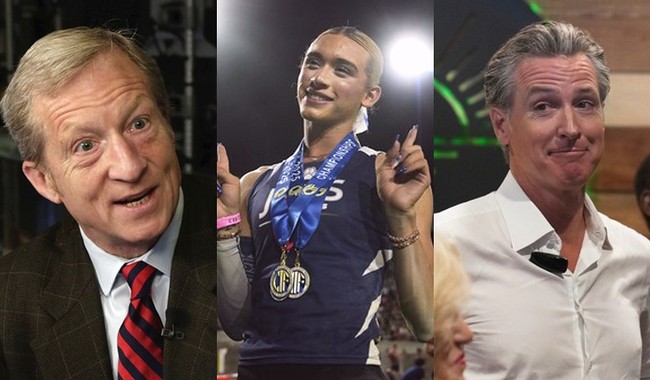
This article argues that allowing biological males to compete in girls’ sports is unfair and examines Tom Steyer’s public support for a trans male athlete, reactions from Republican candidate Steve Hilton, and the perceived failures of California leadership to protect women’s athletics.
We are watching a cultural fight play out on high school tracks and in state politics, and it matters because girls’ sports are on the line. A billionaire candidate publicly cheered for a trans athlete who will compete against biological girls, and that moment has lit up parents and conservatives across California. The debate is not just cultural theater; it has real consequences for trophies, scholarships, and young athletes’ safety.
Tom Steyer’s video praising AB Hernandez grabbed attention because it celebrates a result many see as fundamentally unfair. “I’m so proud of you,” Steyer says on camera, cheering a male-bodied athlete who will face female competitors. That clip looks less like support and more like an endorsement of a practice that strips girls of earned victories.
Parents watch their daughters train for years and then see wins taken away by someone with obvious biological advantages. That frustration is not hysteria; it’s a response to measurable differences in performance that show up repeatedly in competition. When the rules reward biological males in women’s categories, girls lose more than trophies — they lose chances at scholarships and the validation that comes from fair competition.
https://x.com/JackThompsonFOX/status/2060407315132797154
Steve Hilton, speaking as a Republican candidate, framed the issue around majoritarian rights and the courts. “People’s rights must be protected, but they can not be protected at the cost of the vast majority… you have a tiny tiny number of people who are imposing their view on the majority, and hurting them in the process, and that’s got to stop.” That line hits a clear conservative note: protect rights, but not by trampling the majority.
Hilton promises to take legal action to roll back the framework that enabled these outcomes. “The first thing we have to do is overturn the law that set all this in motion, AB 1266, that was passed in 2013, that’s why we’ve been living with this for so long,” he said. “That law violates the California state constitution… I will immediately suspend the law while we begin legal proceedings to overturn it.”
Moving this fight into the courts aligns with conservative principles about rule of law and equal protection. It’s not about denying anyone dignity or care; it’s about preserving categories that make women’s sports meaningful and safe. When policy favors a small, vocal interest over the majority of female athletes, it demands a legal and political response.
Governor Gavin Newsom has described male participation in girls’ sports as “deeply unfair,” yet concrete action has been absent. Words on a podcast do not replace enforcement or legislative change, and the lack of leadership has left local athletes to suffer the consequences. That gap between rhetoric and results fuels the perception of hypocrisy among voters who expect protection for their daughters.
These incidents are not isolated. Across the state, similar stories show a pattern where biological males enter female competitions and come away with titles and hardware that used to belong to girls. That pattern creates a sense of systemic bias that conservative voters find intolerable and ready to fix through ballot measures, legislation, and lawsuits.
Fathers and mothers see this as an issue of basic fairness and parental obligation. They do not object to people living as they choose, but they demand that schools and athletic associations preserve fair play in women’s categories. The emotional stake is high: girls who trained and sacrificed deserve a level playing field, not one tilted by policies that ignore biology.
Politics will decide this in California because the state’s leaders have the power to change rules and laws. Voters will have to weigh who will protect girls’ sports and who will keep championing policies that many see as harmful. The coming months will show whether conservative candidates can turn this anger into reforms that restore fairness in competition.


Steyer is quite an evil freak and wicked man just like Newsom!
This should not be allowed at all!!!~
Period and END OF STORY!!!