
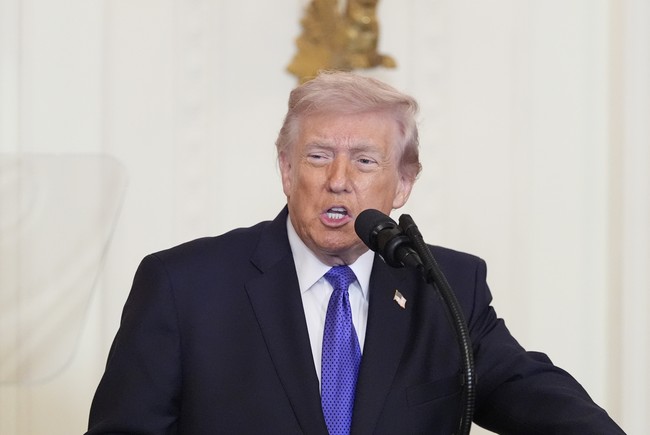
The latest polling shows a clear wake-up call: Republicans are surging and could plausibly blunt the usual midterm losses for the president’s party. A recent Harvard Harris survey found a 50/50 split and an eight-point swing to Republicans since January, and political operatives say momentum from President Trump’s messaging and a shifting economy could keep the GOP in control. What follows is a straight-ahead look at the numbers, the political dynamics at play, and why this moment matters for the November midterms.
The Harvard Harris poll of 1,999 registered voters on February 25 and 26 landed squarely in the Republicans’ favor compared with January. The survey shows an even split, 50 percent Republican and 50 percent Democrat, and marks roughly an eight-point shift toward Republicans. That kind of movement in a short span is noteworthy, especially when voters are reacting to weekly headlines and presidential appearances.
What matters is not just raw percentages but the narrative voters carry into the voting booth. Economic indicators that improved under the current administration—mortgage rates falling from around 8 percent to under 6 percent and average gasoline prices dropping from about $5 to under $2.50—are tangible changes people feel. When combined with wage gains that outpace inflation, those facts make a persuasive case to independent and swing voters who decide close elections.
History shows it is rare for the president’s party to gain or simply hold Congress in a midterm year. Only three presidents in the last century achieved that: Franklin D. Roosevelt in 1934, Bill Clinton in 1998, and George W. Bush in 2002. Those were exceptional moments tied to specific national moods—economic crisis, political backlash, and post-9/11 unity. The current environment is different, but the potential is there if the GOP can capitalize on the contrast voters are now seeing between responsible governance and partisan chaos.
White House Deputy Chief of Staff for Legislative, Political, and Public Affairs James Blair laid out the case plainly on the record when he argued the GOP has the elements needed to defy history. He emphasized clear contrasts with the previous two years and cited measurable improvements that voters understand. Those talking points are the kind that translate into votes when campaigns tie them to everyday experiences like home affordability and family budgets.
“I do believe the Republicans can defy history, and we have a couple important elements to that. First and foremost, we have a record and a clear contrast. We can point very clearly to what things were like two years ago, and the American people remember that: 8 percent interest rates for a 30-year fixed-rate mortgage; now they’re under 6 percent. Five dollar an average gallon of gas. Now it’s under $2.50. We have real wages increasing, outpacing inflation. Joe Biden had real wages decreasing $3,000 a year, you know, with inflation far outstripping wage growth and price hikes and all of that. The Democrats gave us this economic nightmare that we inherited, and we are now turning around.”
Beyond numbers, optics from recent high-profile events have shaped public perception in ways that favor Republicans. President Trump’s State of the Union showcased a stark contrast between the parties, and reactions in the chamber highlighted divisions that swing voters noticed. Moments where large segments of one party refuse to stand or applaud become shorthand for the electorate when they consider which side reflects mainstream concerns.
The Democratic Party’s loud, performative responses to major policy points risk alienating voters who want steady leadership over spectacle. When rhetoric shifts from policy critique to personal attacks, undecided voters tend to lean toward stability. The GOP message pointing to practical outcomes—lower rates, cheaper gas, rising wages—is built to appeal to those voters looking for measurable improvement rather than political theater.
Republicans should avoid complacency; a lead in a poll is not a guarantee of victory. But the combination of improved economic markers, favorable short-term polling trends, and public reactions to high-profile events gives the GOP a real chance to hold both chambers. Winning in November will depend on disciplined messaging that keeps the focus on results rather than distraction.
Campaigns will need to translate national trends into local wins, emphasizing the ways federal policy affects everyday life in each district and state. Ground operations, candidate quality, and turnout efforts still matter and will determine whether the theoretical advantage becomes practical control. The stakes are high for preserving the policy direction that has produced the improved numbers the GOP is touting.
If Republicans can keep the narrative tightly focused on concrete improvements and hold voters’ attention through November, the math suggests they could defy the usual midterm trend. That path will require both political discipline and continued evidence that the country is on a better trajectory than two years ago. For now, the polls give Republicans reason to press the advantage and make the midterms a referendum on real results, not partisan noise.


Add comment