
This piece examines President Trump’s response to claims that Israel forced the United States into strikes on Iran, clarifies Marco Rubio’s remarks about timing and responsibility, and looks at how some commentators have taken those statements out of context while the administration stresses a deliberate, strategic decision to act now rather than wait.
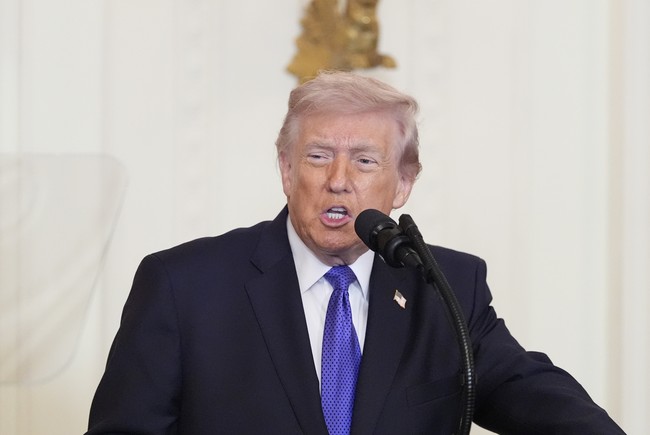
At a White House press event, President Trump was asked directly whether Israel forced the U.S. to launch strikes against Iran. He answered plainly and used the moment to explain that the choice was his and his team’s, not the result of being pushed into conflict by an ally. The President framed the strikes as preventive and based on assessments of imminent Iranian action.
“No. I might have forced their hand.
“You see, we were having negotiations with these lunatics, and it was my opinion that they were going to attack first. They were going to attack. If we didn’t do it, they were going to attack first. I felt strongly about that. And we have great negotiators, great people, people that do this very successfully and have done it all their lives very successfully. And based on the way the negotiation was doing, I think they were going to attack first, and I didn’t want that to happen.
“So, if anything, I might have forced Israel’s hand, but Israel was ready, and we were ready, and we’ve had a very, very powerful impact.”
Media and pundits immediately began parsing Marco Rubio’s remarks for any hint that Israel dragged the United States into a fight. Some conservative commentators amplified a narrow reading of Rubio, and that spurred swift pushback from people pointing out the fuller context. The debate became less about what was said and more about how quickly clips can be edited to support a preexisting narrative.
Rubio was clear in his own comments about the mission’s purpose and the timing behind it. He described the operation as aimed at eliminating Iran’s short-range ballistic missile threat and curbing dangers posed by Iranian naval forces, and he left operational details to the Pentagon. His focus was on strategic objective and the reasoning for choosing to act when the U.S. did.
“The United States conducted this operation with a clear goal in mind. I haven’t had a chance to see a lot of reporting – I don’t understand what the confusion is. Let me explain it to you, and I’ll do it, once again, as clearly as possible; perhaps you’ll report it that way.
“The United States is conducting an operation to eliminate the threat of Iran’s short-range ballistic missiles and the threat caused by their Navy, particularly to naval assets. That is what it is focused on doing right now, and it’s doing quite successfully. I’ll leave it to the Pentagon and the Department of War to discuss the tactics behind that and the progress that’s being made. That is the clear objective of this mission.
“The second question I’ve been asked is, why now? Well, there’s two reasons why now. The first is, it was abundantly clear that if Iran came under attack by anyone — the United States or Israel or anyone — they were going to respond, and respond against the United States. The orders had been delegated down to the field commanders. It was automatic. And, in fact, it beared to be true, because in fact within an hour of the initial attack on the leadership compound the missile forces in the south, and in the north, for that matter, had already been activated to launch. In fact, those had already been pre-positioned.
“The third is the assessment that was made, that if we stood and waited for that attack to come first, before we hit them, we would suffer much higher casualties. And so the President made the very wise decision. We knew that there was going to be an Israeli action. We knew that that would precipitate an attack against American forces, and we knew that if we didn’t preemptively go after them before they launched those attacks, we would suffer higher casualties and perhaps even higher those killed, and then we would all be here answering questions about why we knew that and didn’t act.”
That fuller explanation undercuts the simpler claim that the U.S. was dragged into war by an ally. Rubio repeatedly emphasized that the operation “needed to happen” and that leaders were acting to prevent a far worse situation later on. The argument rests on deterrence and timing: act now to degrade capabilities before they become uncontrollable.
After the initial back-and-forth, the White House posted additional footage showing Rubio answering follow-up questions about Israeli intentions and U.S. readiness. His follow-up reinforced the same point: awareness of Israel’s plans mattered, but the mission was inevitable based on Iran’s growing arsenal and its potential to put the wider world at risk. That context is what critics say is routinely omitted when short clips circulate.
“No… No matter what, ultimately, this operation needed to happen — that’s the question of ‘why now?’ But this operation needed to happen, because Iran, in about a year or a year and a half, would cross the line of immunity, meaning they would have so many short-range missiles, so many drones, that no one could do anything about it, because they could hold the whole world hostage.
“Look at the damage they’re doing now — and this is a weakened Iran. Imagine a year from now. So, that had to happen. Obviously, we were aware of Israeli intentions and understood what that would mean for us, and we had to be prepared to act as a result of it — but this had to happen no matter what.”
There is a pattern whenever sensitive military choices are explained publicly: clips get trimmed, narratives harden, and the nuance evaporates. Officials argue that their job is to prevent escalation and protect forces, and their public explanations aim to show why timing matters as much as capability. The exchange in the Oval Office was meant to do exactly that.
Ultimately, the administration’s line is straightforward: this was not an instance of being forced into conflict by Israel. It was a preemptive decision made in Washington to reduce a looming threat and save American lives. Critics will keep spinning, but the record of the press exchanges shows a consistent explanation for why leaders chose to strike when they did.


Add comment