
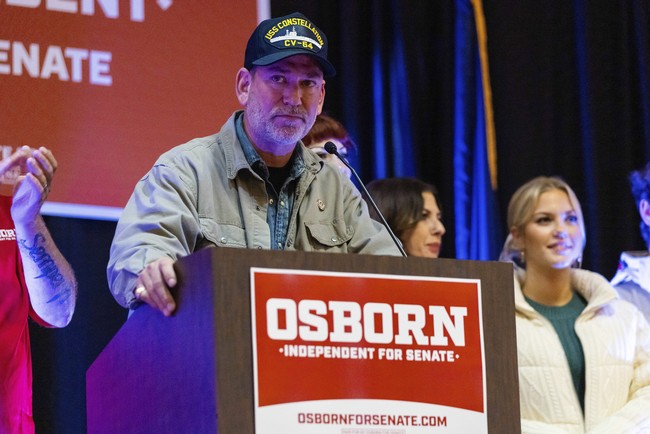
The Nebraska Senate race has exploded into accusations of coordinated deception, with criminal complaints alleging that at least two non-Republican candidates ran sham campaigns to boost an ostensible independent, Dan Osborn. The filings claim those candidates signed an oath saying “I will serve if elected” while secretly planning to quit and hand their support to Osborn, and the complaints ask state authorities to investigate possible election falsification, perjury, and false sworn statements.
Two complaints were delivered to Nebraska Attorney General Mike Hilgers alleging that Democrat Cindy Burbank and Legal Marijuana NOW nominee Mike Marvin never intended to follow through on their candidacies if victorious. The allegations hinge on the filing oath candidates must sign and the claim that both lacked any good-faith intention to serve, turning ballot access into a strategic props game to help Osborn eclipse Republican incumbent Pete Ricketts.
The filings were brought by former Republican state senator Lydia Brasch and La Vista police officer and former legislative candidate Derek Schwartz, who say the candidates violated statutes tied to sworn statements and election integrity. The complaints outline potential criminal exposure—offenses that, if proven, could carry prison time—while arguing the oath’s plain language is central to any probe.
At issue is the unmistakable phrase “I will serve if elected.” Complainants say that phrase is not mere formality but a legal promise, and they point to public statements and campaign materials indicating Burbank planned to withdraw after the Democratic primary and throw her support to Osborn. Those admissions, critics argue, undercut any claim of a sincere run for office and tie the campaign choices to a deliberate tactic, not an earnest bid for the Senate.
The Nebraska Democratic apparatus and Osborn backers did not hide their strategy of boosting Burbank in the primary to improve Osborn’s chances in the general election, according to the complaints. Critics note party activity and spending around the maneuver as evidence of coordination, and they see the involvement of high-profile progressive strategists and lawyers in defending ballot access as further proof the endgame was engineered, not organic.
Legal questions remain wide open: can intent be proven beyond a reasonable doubt in a case built around campaign rhetoric and internal strategy? Defense attorneys will challenge the idea that a campaign promise equates to criminal intent, and courts will need to sort out where political maneuvering crosses the line into falsifying sworn filings. Still, the complaints have forced political observers to take a harder look at whether ballot rules were exploited to manufacture an independent vehicle for a partisan objective.
From a Republican perspective, this is less about partisan scorekeeping and more about protecting the integrity of our elections from manipulation. Voters must know whether candidates genuinely seek office or are being used as placeholders to game ballot mechanics. When the system allows staged candidacies that threaten transparency, it’s reasonable to demand enforcement of laws that make the oath meaningful.
https://x.com/Rusty_Weiss/status/2060433515808743712
Osborn presents himself as an independent with a working-class playbook, but critics portray him as a Democratic Trojan horse who benefits from soft coordination and funding channels that favor left-leaning operatives. The complaints point to outside groups and strategists who have supported fringe and progressive campaigns elsewhere, suggesting a broader pattern of tactics used to cloak partisan intentions behind an independent label.
The Nebraska Attorney General’s office now holds the complaints and will decide whether to open a formal investigation. For voters watching this unfold, the central question is simple: were these candidates bona fide contenders who later changed course, or did they enter races as part of a manufactured plan to manipulate ballot outcomes? The state’s response will test both legal standards and political norms in how candidacies are expected to operate.
These allegations raise the stakes for election law and for the upcoming fight over control of Congress, where every Senate seat matters. If the complaints lead to charges, courts will be asked to define the line between acceptable political strategy and criminal deception. If they do not, the episode still adds fuel to calls for clearer rules that prevent using ballot access as a strategic prop rather than a genuine bid for office.



Add comment