
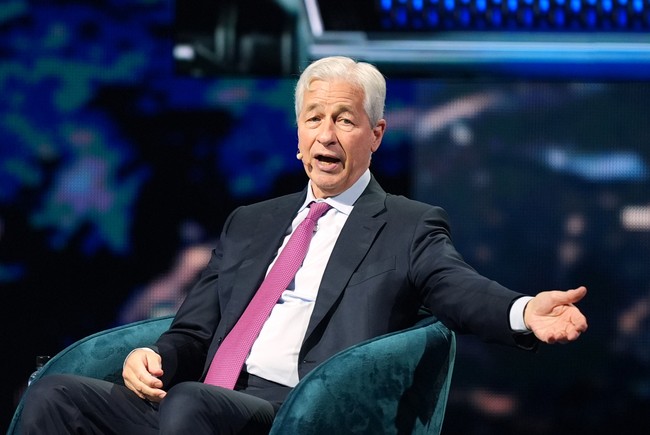
I’ll lay out why Jamie Dimon met with New York City Mayor Zohran Mamdani, what Dimon said about governing a complex city, where their priorities clashed, and why this encounter matters for taxpayers and business confidence in the city.
JPMorgan Chase CEO Jamie Dimon met privately with Mayor Zohran Mamdani at the bank’s Manhattan headquarters on May 18 to talk about running New York. Dimon described the meeting to Fox Business as pleasant and insisted he “said everything I wanted to say,” signaling he tried to offer pragmatic advice to a mayor newly tasked with overseeing a massive municipal machine. The conversation came at a tense moment as Mamdani has openly argued for higher taxes and radical changes to housing policy.
https://x.com/Forbes/status/2060336637221974045
Dimon framed his counsel around practical governance rather than ideology, warning that some mayors “fail abysmally because they can’t administer themselves out of a paper bag, or ideology blinds them to practical, realistic, real-world policy.” He emphasized the operational realities of running a city with hundreds of thousands of employees and pointed to mundane but crucial issues like sanitation, public safety, and hospital operations as policy areas divorced from political theory. That emphasis reflects a conservative preference for competence, efficiency, and market-friendly approaches to urban problems.
According to Dimon, the topics on the table included reducing government waste, easing regulatory obstacles to development, expanding public-private partnerships, and improving the city’s competitiveness. He argued that “Good policy is free” and urged politicians to “sit down and fix policy” rather than reflexively raising taxes or expanding spending. That message is straightforward: focus on making government work better so taxpayers and businesses can flourish without being further burdened by higher levies.
Bartiromo reminded viewers of Mamdani’s public gestures that have rattled some business leaders, including a tax-day video outside the home of a major finance CEO and talk of a pied-a-terre tax on properties worth more than $5 million. Those public stances contributed to headlines about capital flight and companies moving jobs elsewhere, and they set the backdrop for Dimon’s outreach. Private meetings between financiers and city leaders often try to translate public posturing into workable policy trade-offs.
“I had a great meeting with Mamdani, meaning it was pleasant, you know, but I said everything I wanted to say. I’ve seen mayors grow into the job.”
Dimon also tackled affordable housing and childcare, arguing that these popular goals can become “a disaster” if implemented poorly. He urged Mamdani to “Get people who know what they’re doing and implement proper policies,” positioning evidence-based solutions over ideological experiments. That point echoes a Republican concern that good intentions require competent administration and respect for private property if they are to deliver results.
“Good policy is free. I feel like telling the politicians, ‘Don’t try to raise more taxes or spend more money, sit down and fix policy. And I think you can go 1% faster.’ I literally believe that.”
The gulf between Dimon’s pragmatic checklist and Mamdani’s ideological commitments became clearer when Mamdani unveiled plans that critics say would effectively seize property from landlords and transfer ownership to renter-controlled cooperatives. That sort of top-down redistribution is exactly what worries business leaders and investors who look at New York’s future and weigh whether to expand, contract, or relocate. When policy signals suggest property rights and market norms will be overridden, capital becomes nervous and people follow the money.
Dimon tried to spell out the competitive calculus that matters to employers: a mix of taxes, hidden fees, quality-of-life factors such as crime and sanitation, and regulatory hurdles that slow development. He told the mayor that fixing policy can accelerate progress and save money in the long run, an argument rooted in the idea that smarter government can unlock private-sector productivity rather than suppress it. That’s the core of the conservative case for stewardship over expansion of government control.
Whether Mamdani will heed those warnings is the big question. Dimon said he wants the mayor to succeed and offered to help implement “the good stuff,” but he also warned that ideology can blind leaders to practical solutions. For taxpayers and business owners watching this play out, the stakes are simple: either the city adopts policies that invite investment and growth, or it doubles down on experiments that risk driving talent and capital away.
In the end, the meeting showcased two competing visions for New York: one focused on operational competence, partnerships, and preserving the conditions for private enterprise to thrive, and another rooted in redistributive ideology and sweeping structural change. Dimon’s outreach was an attempt to nudge city leadership toward the former, but time will tell whether that nudge becomes real policy or just another photo op.



Add comment