
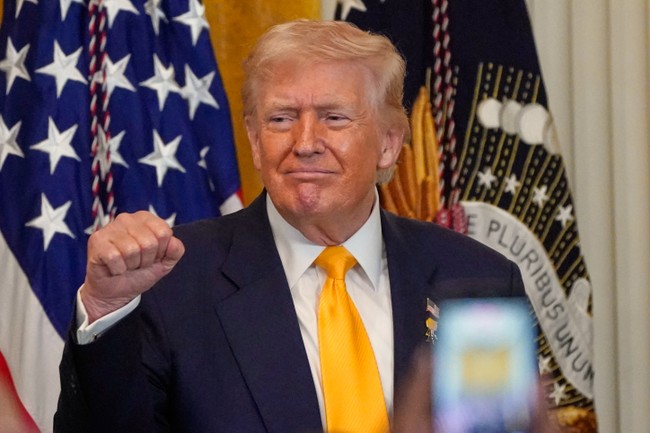
President Trump has publicly urged Iran to free eight women reportedly sentenced to hanging, using his platform to push for goodwill ahead of negotiations and spotlighting a larger pattern of repression in Iran’s response to anti-regime protests.
Freedom of speech and assembly are things Americans assume will be protected, but Iran operates under a very different set of rules. Reports say eight women face execution by hanging, prompting a rare direct appeal from President Trump. At least one of those women is associated with anti-regime demonstrations that began earlier this year.
President Trump publicly implored Iran Tuesday to build goodwill with the United States by releasing eight women whom the Islamic regime reportedly is set to execute.
“To the Iranian leaders, who will soon be in negotiations with my representatives: I would greatly appreciate the release of these women,” Trump posted on Truth Social.
“I am sure that they will respect the fact that you did so. Please do them no harm! Would be a great start to our negotiations!!!”
Trump’s post cribbed from a message by American pro-Israel activist Eyal Yakoby, which claimed that Tehran was preparing to hang the octet.
While the post did not identify the women, it included a photo of Bita Hemmati, a protester arrested during anti-regime demonstrations in January.
Eyal Yakobi also released some details on who is reported to be one of the women to be executed; she is, according to Yakobi, .
There’s outrage among many observers, but notice the silence from some on the American left who loudly champion women’s rights at home. The inconsistency is striking when activists and media either ignore or downplay state violence in Tehran. That selective attention undermines the universal claim of defending human rights.
President Trump made this appeal public and unmistakable, pushing a clear leverage point into the opening of talks. He framed the release as a straightforward gesture that could set a better tone for negotiations. The message was precise and unapologetic, a Republican-style directness aimed at achieving real concessions rather than theatrical statements.
As this unfolded, Iran’s record grows darker: hundreds executed since the protests began and vast numbers detained. Estimates suggest about 300 were executed in January alone, while over 50,000 arrests followed peaceful expressions of dissent. Those numbers paint a regime that treats basic political protest as a criminal act rather than a right.
President Trump posted his plea to Iran, as he generally does, on his .
The president wrote:
To the Iranian leaders, who will soon be in negotiations with my representatives: I would greatly appreciate the release of these women. I am sure that they will respect the fact that you did so. Please do them no harm! Would be a great start to our negotiations!!! Thank you for your attention to this matter. President DONALD J. TRUMP
Iran’s silence so far is no surprise to many who study the regime’s behavior. Negotiations with governments that routinely flout human decency require both moral clarity and firm leverage. The risk is that words without consequences become bargaining chips for regimes that do not respect basic human dignity.
Making a public plea is a deliberate tactic: it increases international scrutiny and raises the political cost of carrying out the executions. When the world watches, tyrants find it harder to act in secret. That visibility can provide breathing room for those who lack a voice inside Iran.
Calling out hypocrisy matters, too. If advocates of women’s rights abroad expect credibility, they must call out abuses regardless of where they occur or who commits them. The defense of liberty should not bend to partisan comfort or selective outrage.
There is also a practical side: releasing prisoners can be a concrete goodwill gesture that eases tensions and opens the door to more substantive talks. Trump framed the request exactly that way, offering a measurable step that Tehran could take to prove it wants a different relationship.
But there is a deeper point about dealing with regimes that repeatedly break promises. Trust must be earned, not assumed. For Americans who value liberty, the choice is not between naivete and endless confrontation, but between clear demands backed by firm consequences and hollow statements that change nothing.
For the families of those detained and for the women facing execution, the stakes are immediate and grave. Public pressure and diplomatic leverage can save lives. That is why voices willing to tell the truth matter, even when the world prefers comfortable silence.



Add comment