
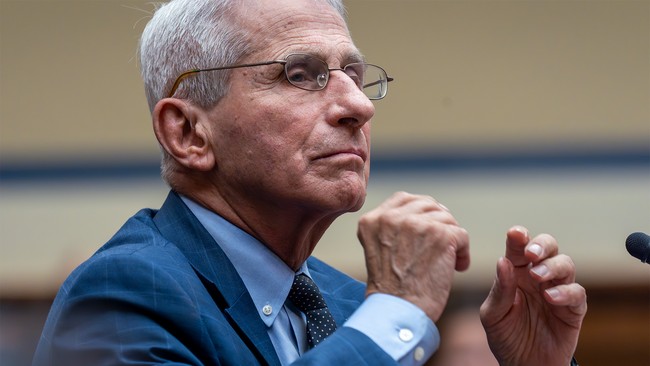
The Senate hearing led by Sen. Rand Paul brought a CIA officer into public view who says Dr. Anthony Fauci steered intelligence work on COVID origins away from a lab-leak conclusion, alleging a coordinated effort to shape expert input and suppress internal analytic findings; the testimony, the agency reaction, and the broader web of funding and personnel raise questions about how decisions were made and why a significant body of material remains classified.
James Erdman III, a veteran CIA special operations officer, testified under subpoena after his agency tried to block him from appearing. He told the committee that management influenced analysts by directing which experts the intelligence community would consult, suggesting those choices tilted conclusions toward a natural origin. Erdman’s claim is specific and damning: that institutional ties, not open inquiry, determined the narrative.
“Dr. Fauci’s role in the cover-up was intentional,” Erdman testified. “Dr. Fauci influenced the analytical process and findings by leveraging his position to ensure the IC consulted with a conflicted list of curated subject matter experts, public health officials and scientists.”
The testimony paints a picture of hand-picked experts who were predisposed against the lab-leak theory, naming authors of the 2020 “Proximal Origin” paper as examples of those whose views changed after discussions with NIH officials. Erdman described an environment where grant relationships and institutional loyalties created a feedback loop, with some researchers receiving substantial funding soon after adjusting their public positions. That kind of interchange between funders and analysts undermines confidence in independent review.
According to Erdman, internal CIA analysts repeatedly judged a lab leak to be the most likely origin in reports between 2021 and 2023, yet those findings never made it to Congress or the public. He rejected allegations of direct bribery but said management altered the analytic line despite technical experts holding firm. If true, analysts were sidelined in favor of a narrative crafted by people outside core intelligence analysis.
CIA analysts reached the same conclusion repeatedly between 2021 and 2023: a lab leak was the most likely origin. Those findings never reached Congress or the public. Erdman rejected reports of direct bribes but said the outcome was arguably worse: “Six of the seven technical experts say, ‘Yep, we still think it’s a lab leak.’ And they were sticking to their guns. Management changed the analytic line.”
The structural conflicts extend beyond a single individual. Erdman highlighted researchers who collaborated with Wuhan Institute scientists, and he noted that some of those same figures later played advisory roles or led investigations. That overlap — funders, collaborators, and investigators occupying interconnected roles — creates what he called a closed loop rather than an independent inquiry. When the people who built and funded the work also evaluate its consequences, accountability frays.
Sen. Paul asserted that the outgoing administration directed the CIA to issue an assessment after the 2024 election to allow officials to leave office claiming the matter was closed. He characterized that move as a tidy cleanup rather than genuine analysis, arguing the timing and motive were political. Such timing fuels the perception that institutional priorities, not truth-seeking, guided the final public posture.
“It was not until after the 2024 election that the outgoing Biden Administration directed the CIA to issue an assessment — not because of new intelligence, but so officials could walk out the door claiming there was nothing left to find,” Paul said. “That is not analysis. That is a cleanup operation.”
The CIA’s public response framed the hearing as political theater and questioned Erdman’s status as a subpoena witness, but officials also included a line acknowledging that the agency assessed COVID-19 most likely originated from a lab leak. That internal contradiction only intensified scrutiny and left lawmakers demanding answers the agency has not fully provided. The clash exposed both procedural fights and substantive disagreements about the evidence.
Erdman further testified that the CIA is withholding up to 2,000 pages of classified material on COVID origins in apparent violation of disclosure requirements and that whistleblowers involved in review efforts were surveilled by the agency they were examining. Those allegations suggest not just analytic bias but potential legal and ethical breaches in how sensitive information and dissenting voices were handled. If accurate, the implications for oversight and public trust are substantial.
More than a million Americans died and the nation endured sweeping policy shifts during the pandemic, consequences that were shaped by official narratives about origins and risk. Witnesses at the hearing argued that the public deserves the full record and accountability for those who obscured it. The questions raised demand more transparency and a clearer separation between scientific funding, policy influence, and intelligence analysis.


Add comment