
The Pacific Palisades fire left a landscape that reads like a warning: charred foundations, missing neighborhoods, and slow, painful rebuilding under California’s stifling bureaucracy. I went back with a photographer in the family to document what remained and what was already being reconstructed, and what I saw pointed a finger at policy failures and political choices that helped make this disaster worse. The destruction is both intimate and enormous, and the aftermath feels like a test of whether communities and common sense can come back faster than mandates and mismanagement. What follows are on-the-ground impressions, preserved phrases from witnesses, and photos that tell the story better than any official statement.
In January 2025, nearly 7,000 structures were destroyed and at least 12 people died, leaving behind 6,837 buildings and homes turned to smoke. Walking those streets months later, the scale of loss still hits you—entire blocks wiped out, blackened girders jutting up like broken monuments, and now fences and lots where porches and gardens used to be. “You haven’t seen it,” someone told me, and they were right: reading about numbers does not prepare you for the quiet, hollow spaces where families once lived. The smell of burned wood and plastic lingers in the air, an acrid reminder that recovery is a long, physical process, not a soundbite.
One survivor who visited the week after the fires described it bluntly: “It was as if Godzilla had flattened half the town.” That image stuck with me as we moved from lot to lot, camera in hand, trying to capture the mixture of devastation and surprising survivals—homes left intact amid ruin that feels almost random and therefore cruel. My son, an accomplished photographer, agreed to bring better gear than my phone so these scenes could be documented with the dignity they deserve. Even with good equipment, some scenes resist any trite comparison; calling it war feels cheap, but the physical toll on neighborhoods is undeniable.
Reconstruction is happening, but it’s painfully slow and messy. Hammers pound and trucks haul materials, yet permitting delays and insurance disputes make progress glacial in many places. You see job sites that look hopeful next to lots where nothing has started, which highlights a tension: homeowners who want to rebuild versus a regulatory environment that often slows everything to a crawl. The result is a disjointed, stop-and-go recovery where hope and frustration sit side by side.
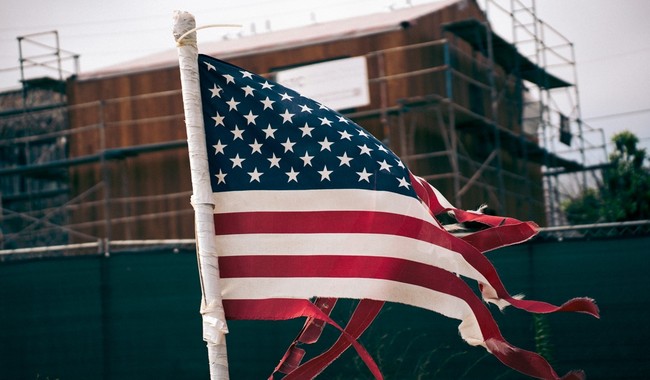
Some odd juxtapositions stood out—intact pools and slides beside collapsed roofs, a door to nowhere leading to an empty hillside, and indoor/outdoor kitchens rendered indistinguishable by ash. As Jeff Goldblum’s scientist character says in Jurassic Park, “Life finds a way,” and small signs of regrowth poke through the black soil and concrete rubble. American flags that survived the flames still fly in a few spots, deliberate reminders of resilience that locals insist on preserving; one business kept a tattered flag that “survived the fire. It stays.” That stubbornness matters in a community trying to stitch itself back together.
The historic downtown, once anchored by a 1924 business block in Spanish Colonial Revival style, is dramatically altered. What endured through wars and earlier fires was consumed this time, and the loss is cultural as well as personal. Many residents worry about long-term changes: rumors and reports about investors and developers eyeing properties, and talk of denser housing replacing the low-rise, family-oriented neighborhood fabric. Those concerns tie disaster recovery to policy choices, land use debates, and who benefits when rebuilding money moves through the system.
There’s a political layer that cannot be ignored. Local and state leadership choices affected preparedness and response, and that feeds anger and a demand for accountability among residents. Some point to emptied reservoirs, bureaucratic delays, and shifts in firefighting priorities as factors that amplified the damage. When people lose their homes and livelihoods, policy arguments move from abstract to personal, and that fuels a broader push for different leaders and different priorities at every level of government.
Beyond politics, the human aftermath is wrenching: long-time residents facing eviction from the recovery timeline, retirees who can’t afford to rebuild, and families piecing together memories from charred photo frames. Reports suggest a notable share of former residents may never return, which would permanently alter the community’s character. For those who stay, the recovery will mean not only rebuilding structures but also reknitting social ties and local traditions that defined this slice of California life.
Driving through the Palisades now is an exercise in contrasts: construction noise and fresh lumber, empty lots and memorial flags, high-end vehicles parked near ruined storefronts. The visual evidence is stark, but so is the political conclusion drawn by many locals: choices made by leaders, and the frameworks they set, either mitigate disasters or magnify them. The images and the stories here are a call to consider how policy shapes safety, resilience, and the future of neighborhoods that still deserve to thrive.



Add comment