
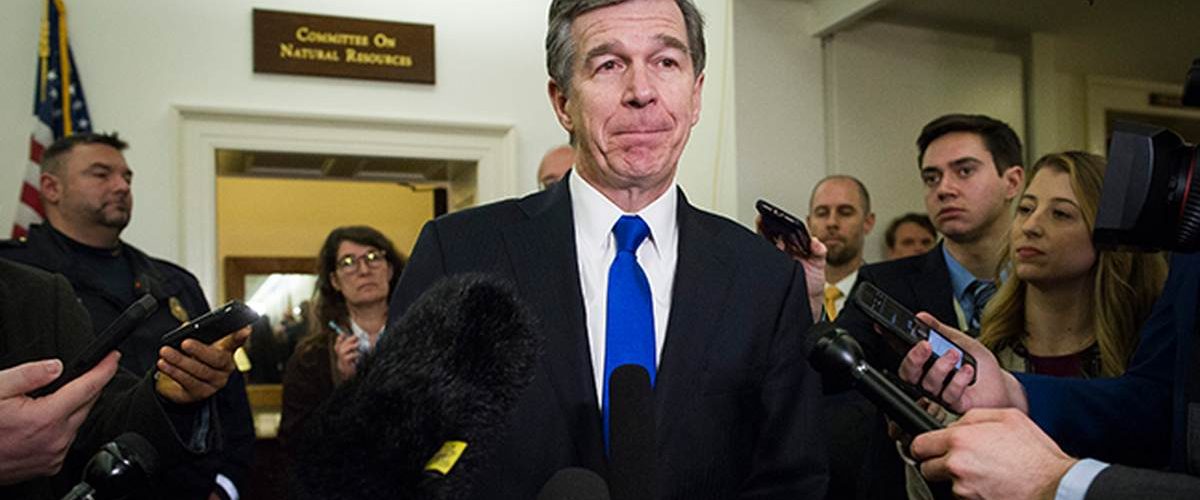
I’ll outline how a longtime public official preached against ESG while his own filings show substantial investments tied to firms central to that movement, detail the assets and the disclosure, recall his 2023 veto and the GOP override, include exact quotations made at the time, and note the political backdrop as he pursues a Senate seat.
Roy Cooper spent years warning North Carolinians about the dangers of ESG politics, yet his federal Senate financial disclosure paints a different picture. The filing, submitted on Aug. 13, 2026, shows millions steered into major index providers and fund families that have been central to the ESG debate. Those investments, reported in ranges, are sizable enough to invite questions about the consistency between public rhetoric and private financial choices. For voters and critics, the numbers matter as much as the message.
The disclosure lists holdings through Vanguard and Charles Schwab that together total in the millions. Public reporting by analysts put the Vanguard- and Schwab-associated positions between $2.6 million and $5.9 million overall. Vanguard positions alone include $500,001 to $1,000,000 in the Vanguard Total Stock Market Index Fund, $250,001 to $500,000 in the Vanguard Total International Stock Index Fund, and $250,001 to $500,000 jointly held in the Vanguard High Dividend Yield ETF. Those bracketed totals show considerable exposure to passive products managed by firms that have drawn conservative pushback over ESG integration.
Schwab funds appear across the disclosure, too, with Cooper reporting $100,001 to $250,000 in the Schwab U.S. Dividend Equity ETF and another $100,001 to $250,000 in the Schwab U.S. Aggregate Bond ETF. His rollover IRA lists a mix of Schwab large-cap, small-cap and international equity funds plus Treasury, corporate bond and mortgage-backed securities funds. Taken together, the anonymity of bracketed ranges doesn’t hide the cumulative heft of the positions and how concentrated they are with the two firms most associated with ESG-driven scrutiny.
There is no fund in the file explicitly labeled “ESG,” which is the narrow defense the filing can offer. Still, critics point out that many broad index funds and ETFs use screens or sit in ecosystems where ESG considerations shape company indexes and engagement. Political opponents will argue that participation in that ecosystem undercuts the governor’s public warnings that ESG restrictions are political and harmful. The optics are straightforward: a politician warns against a practice while his own capital remains invested in funds linked to it.
The financial disclosure arrives on the backdrop of a high-profile policy fight in Raleigh. In June 2023, Cooper vetoed legislation that would have barred state agencies from using ESG standards in investments, contracts, or employment decisions and required the state treasurer to focus on factors expected to materially affect financial risk or return for pensions. He framed the veto as a defense of fiduciary decision-making and objected to what he saw as a politicized limit on the treasurer’s authority.
Cooper’s statement on that veto remains on record: “For political reasons only, it unnecessarily limits the Treasurer’s ability to make decisions based on the best interest of state retirees and the fiscal health of the retirement fund.” When Republicans overrode the veto, then-State Treasurer Dale Folwell pushed back with a different framing of the stakes. Folwell said, “The best interests of North Carolina taxpayers and retirees will be served through legislative passage of House Bill 750, which requires investment decisions to be made on the basis of the highest financial returns, not social and political ‘wacktivism,'” Folwell said. “We are grateful to those lawmakers who understand the need to shield the state pension plan against the movement to weaponize public retirement systems to achieve extreme agendas.”
Those clashing statements encapsulate the political split: Democrats defended discretion for pension managers, while Republicans insisted on strict financial-only criteria. Now Cooper is running for North Carolina’s open U.S. Senate seat, and the disclosure will almost certainly be used by opponents to question his messaging and priorities. Campaign records show he has substantial war chest resources, with nearly $35 million in receipts and about $20.7 million cash on hand through June 30, 2026, giving him the means to defend against attacks but not insulating him from scrutiny.
Beyond the policy and political theater, the particulars of the disclosure matter to voters concerned about consistency and transparency. Comparisons run by analysts between Cooper’s Vanguard holdings and alternative funds found that some benchmarks, such as Invesco’s QQQ, outperformed selected Vanguard choices in the periods examined. These performance comparisons feed the argument that claimed fiduciary concerns did not prevent Cooper from holding a diversified, market-heavy portfolio managed by the very firms conservatives have targeted over ESG practices.
Cooper’s filing does not settle the debate over how passive funds should be judged for ESG influence, nor does it by itself prove intent. It does, however, provide tangible numbers that opponents can use in a campaign narrative about mixed messages. As the Senate race unfolds, the disclosure will live alongside the 2023 veto in the public record, supplying the receipts that critics say explain the policy fight in concrete financial terms.



Add comment