
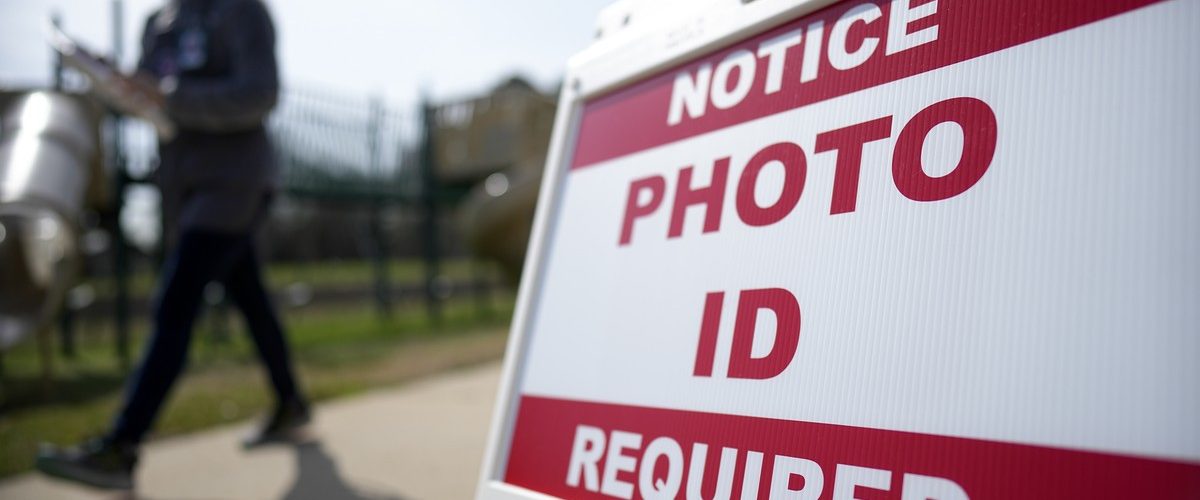
The Supreme Court will soon hear a major election-integrity dispute from Arizona over whether states can require proof of citizenship when people register to vote, a case that could reshape how voter rolls are verified nationwide. The Republican National Committee is pressing the issue, arguing states must be allowed to confirm the basic legal qualification of U.S. citizenship before adding people to ballots. This fight ties into broader efforts on voter ID, federal data access, and state authority over elections.
One of the biggest election-integrity battles in the country has reached the highest court, and the stakes are straightforward. The RNC has announced it will take the Arizona proof-of-citizenship dispute to the Supreme Court this fall, aiming to resolve whether states can check citizenship before registering voters. That question sounds basic because it is basic: who may lawfully participate in our elections.
Arizona long required documentary proof of citizenship when registering to vote after Proposition 200 passed with roughly 56 percent of the vote in 2004. The Supreme Court’s 2013 decision in Arizona v. Inter Tribal Council complicated the picture by holding the federal voter-registration form could not be burdened with additional state documentary requirements. The result is Arizona’s two-track system that treats some registrants as full-ballot voters and others as federal-only voters.
Republican leaders argue federal law already makes voting by noncitizens unlawful, so states should be able to verify the citizenship qualification before adding someone to the rolls. “At stake is a principle so basic that most Americans would be shocked it is even being debated: Can states verify citizenship before someone is added to their voter rolls?” RNC Chairman Joe Gruters wrote. “The answer should be obvious.”
The dispute reignited after Arizona lawmakers passed H.B. 2492 in 2022 to strengthen citizenship-verification practices, prompting fresh legal challenges from the Democratic National Committee and civil-rights groups. Those opponents claim the provisions, including documentary-proof rules and handling procedures for uncertain registrants, harm voters and amount to suppression. Critics from the other side call that claim absurd, insisting it is illegal to let noncitizens vote and sensible to check citizenship, not suppress turnout.
Now the RNC is asking the Supreme Court to weigh in and settle the competing interpretations of federal and state power over voter qualifications. “The Supreme Court must now decide whether states have the authority to enforce one of the most fundamental qualifications for voting: American citizenship,” Gruters wrote. “The RNC is leading the legal battle to defend Arizona’s proof-of-citizenship requirement after Democrats went to court to block the law and prevent the state from removing noncitizens from its voter rolls.”
The implication for election law across the country is significant. If the Court gives states broader authority to verify citizenship at registration, that ruling would shape how other states craft voter ID, registration, and roll maintenance rules. The question is not academic: citizenship verification is among the most contested issues in current election-policy debates, and a national decision would affect ongoing reform efforts.
The case lands amid other high-profile election-law fights, including recent Supreme Court action in Trump v. California over an executive order on election integrity and federal data sharing. That order sought to direct Homeland Security to provide states with citizenship information for voting-age residents, and to push other federal agencies to support election integrity efforts. The Court stayed a lower-court injunction against parts of the order, but did not decide the ultimate legality of the policies.
Lower-court skirmishes followed, including a temporary restraining order against portions of a Postal Service mail-ballot rule, demonstrating how quickly these legal disputes can cascade. The Arizona fight, however, goes to a more foundational issue than mail procedures: who is legally entitled to vote. Congressional proposals like the SAVE Act aim to standardize federal access to citizenship data, but legislative progress has stalled, leaving the courts to sort things out.
Election-integrity advocates point to international norms and basic administrative principles: accurate rolls, voter identification, paper trails, and clear procedures. Opponents warn about burdens on voters, but supporters note judicial findings showing ID rules can reduce ballot rejections and improve confidence in outcomes. The RNC says it is now involved in more than around the country as part of that broader effort.
Proving citizenship before voting is framed by proponents as common-sense governance rather than partisan attack. “States should not be forced to ignore evidence that registrants may be ineligible,” Gruters wrote. “Election officials should not be prevented from verifying citizenship.” With midterms approaching and election-law issues multiplying, the Supreme Court’s decision in the Arizona case could determine how far states may go to secure the basic legal qualification for the franchise.
https://x.com/ChairmanGruters/status/2087310960700653926


Add comment