
Checklist: Summarize the courtroom scene and charges, report Maduro and Flores’ pleas and quotes, describe the judge’s response and legal posture, outline the allegations of narco-terrorism and flight risk, and assess the bail request and its implications.
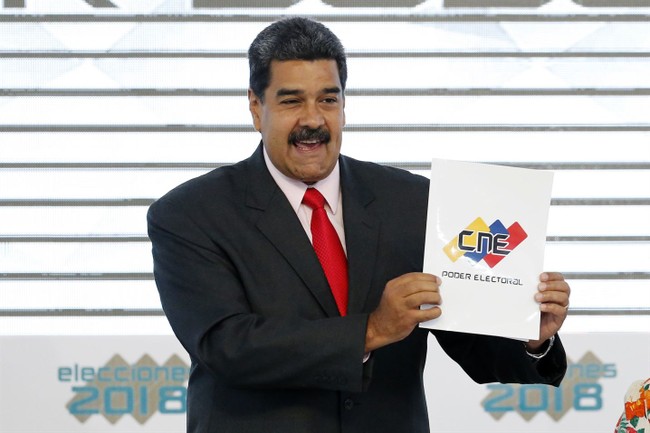
Former Venezuelan president Nicolás Maduro and his wife Cilia Flores made a high-profile court appearance in Manhattan after facing federal charges tied to narco-terrorism, cocaine smuggling, and the accumulation of weapons and explosives. The arraignment was dramatic, with Maduro protesting loudly and the judge swiftly steering the proceeding back to basics. This was not a routine hearing; it set a firm tone about how the U.S. courts intend to handle allegations of international criminal conduct and threats to American security.
Maduro entered the courtroom in orange jail clothes and shackles, insisting loudly that he was the legitimate president of Venezuela and that his presence in the U.S. court was the result of an unlawful capture. He declared in Spanish:
I’m the president of the republic of Venezuela. … I am here kidnapped … I was captured at my home in Caracas, Venezuela.
The judge cut through that narrative immediately, reminding Maduro that the court’s job is to follow process and that his counsel would have opportunities to raise motions at the proper time. Judge Alvin Hellerstein asked a key, simple question to confirm identity and move the docket forward:
Let me interfere — there will be a time and a place to go into all of this. Your counsel will be able to make motions. … At this time, I just want to know one thing: Are you Nicolás Maduro Moros?
Maduro answered the procedural prompt plainly: “I am Nicolás Maduro Moros.” He later repeated his innocence and framed himself as both a victim and a man of faith, asserting, “I am innocent. I am not guilty. I am a decent man. I am still president of my country. I am not guilty of anything that is mentioned here.” Those statements echoed a familiar playbook: deny the accusations, cast the process as politically motivated, and appeal to legitimacy.
The judge then read the federal charge the government filed, a serious narco-terrorism count that spans decades and alleges intentional support to terrorist activity. The court recited the indictment language detailing a conspiracy from 1999 to 2025 in which Maduro is accused of knowingly conspiring and of providing something of pecuniary value to an organization engaged in terrorism. The bare facts of the indictment make clear why the U.S. took the step of charging him in Manhattan.
Cilia Flores also appeared and entered a plea of not guilty, asserting she was “completely innocent” when asked for her response to the charges. Both defendants face allegations that go beyond routine criminality and touch on state behavior, cartel ties, and long-term international trafficking networks. Those are not simple garden-variety offenses; they carry severe penalties and raise red flags about the likelihood of flight.
The issue of bail was raised, and Maduro’s legal team signaled they might seek bail later, framing the move as preserving options rather than an immediate bid for freedom. From a practical standpoint, asking a Manhattan judge to consider bail for an accused narco-terrorism conspirator who once led a nation and reportedly used state resources to smuggle drugs and arm militias strains credulity. The charges allege years of evasion and access to state mechanisms that facilitate escape, which squarely positions the defendants as flight risks.
Republicans and national security-minded observers will focus on the substance: alleged narco-terrorism, cocaine trafficking, and conspiracy against the United States are grave accusations that implicate regime-level behavior. The indictment suggests a sustained pattern: using official power to further illicit networks while shielding culpable actors from accountability. That background explains the courtroom firmness and the skepticism about lenient bail conditions.
Beyond the legal mechanics, the appearance served a political purpose for both sides. Maduro used the platform to denounce his treatment and to claim moral authority, while U.S. authorities demonstrated resolve in bringing charges and moving swiftly through initial proceedings. The judge’s insistence on procedure over performance underscored a basic point: courtroom drama may play to crowds, but in federal court, identity, charges, and legal rights come first.
The procedural posture now moves into pretrial motions, discovery, and potential extradition matters depending on how detention and future requests for bail are handled. Meanwhile, the public record now contains Maduro’s courtroom denials, the judge’s measured responses, and an indictment that frames the issues as national security and criminal justice concerns. The next legal steps will test claims of innocence against the weight of the allegations and the evidence the prosecution intends to present.
Add comment