
The Trump administration executed a bold overnight operation to seize Nicolás Maduro and bring him to New York for trial, and the move appears to have jolted Venezuela’s interim leadership into a new posture toward the United States.
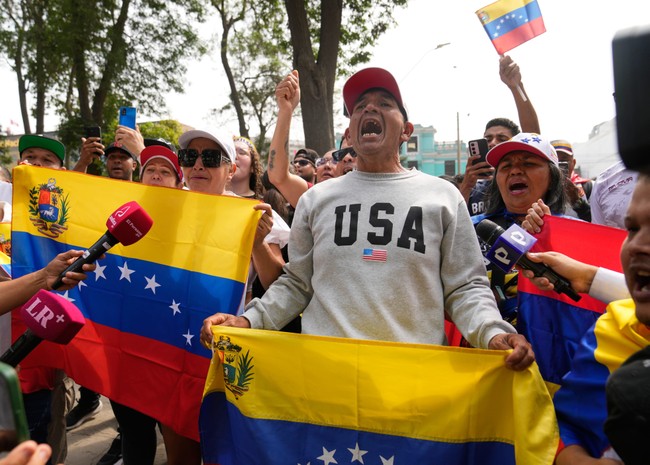
News of Maduro’s capture sparked immediate jubilation among Venezuelans at home and abroad, who saw the mission as a dramatic blow against a brutal, narco-linked regime. That initial victory is straightforward to celebrate, but what comes next — stabilizing Venezuela and restoring legitimate governance — will be far more complex. The operation demonstrated decisive U.S. capability and willingness to act, a contrast to the hesitancy many feared under previous administrations.
President Trump made clear he expected cooperation from Venezuela’s acting president, Delcy Rodríguez, even though she was long part of Maduro’s inner circle. He did not couch his expectations in vague diplomatic language; he issued blunt warnings about consequences for noncompliance. That kind of direct pressure changes calculations in real time when the U.S. shows it can follow words with action.
Trump’s remarks were explicit and unmistakable: she could “pay a very big price, probably bigger than Maduro.” He doubled down on that message, telling reporters that if she didn’t do what was right, “she will face a situation probably worse than Maduro.” Those exact words left no room for misinterpretation and signaled a readiness to escalate beyond arrests if necessary.
Almost immediately after the capture, Rodríguez shifted her tone, moving away from fiery condemnation toward a language of cooperation with the United States. That change was visible in her public posts, including statements offered in English, which read as an attempt to signal willingness to engage without surrendering political dignity. The timing suggests the U.S. posture had an immediate strategic effect.
The real test now is turning that tactical success into a sustainable political transition that respects Venezuelan sovereignty while dismantling the corrupt networks that enriched Maduro’s circle. Using limited military power as leverage, rather than as a constant presence, lets the U.S. maintain pressure while giving domestic and regional actors space to step up. That approach treats Saudi-style maximum-force rhetoric as a tool to force negotiations, not a permanent occupation plan.
Rodríguez’s public language included a diplomatic appeal framed around mutual respect and non-interference, and she invited Washington to “collaborate” on development goals under international law. The exact wording of her statement is reproduced below to preserve its nuance and tone.
We prioritise moving towards balanced and respectful international relations between the United States and Venezuela, and between Venezuela and other countries in the region, premised on sovereign equality and non-interference. These principles guide our diplomacy with the rest of the world.
We invite the US government to collaborate with us on an agenda of cooperation oriented towards shared development within the framework of international law to strengthen lasting community coexistence.
That text tries to reclaim agency and present Rodríguez as a responsible actor seeking orderly engagement, but Washington knows how to read the subtext: a regime member offering cooperation under duress is not the same as a voluntary partner in reform. The Trump team appears to be treating her as an interim manager of the transition, backed by a clear threat that she could be removed if she obstructs true change. Political placeholders rarely last when a decisive actor is willing to remove them.
From a conservative perspective, the effectiveness of pressure and the credibility of deterrence matter most. When the United States demonstrates it will punish illicit behavior and back its demands with capability, leverage increases without the need for indefinite boots on the ground. That mix of firmness and restraint can create a space where Venezuelan opposition forces and regional partners can pursue recovery without a prolonged U.S. occupation.
There’s still real risk: internal factions, criminal networks, and foreign backers could try to exploit the chaos, and the U.S. must be ready to protect its gains and shore up institutions. But the message sent by taking Maduro into custody was clear: actions have consequences, and those who enabled or profited from tyranny should expect accountability. That clarity, combined with careful follow-through, gives Venezuela a chance it hasn’t had in years.

Add comment