
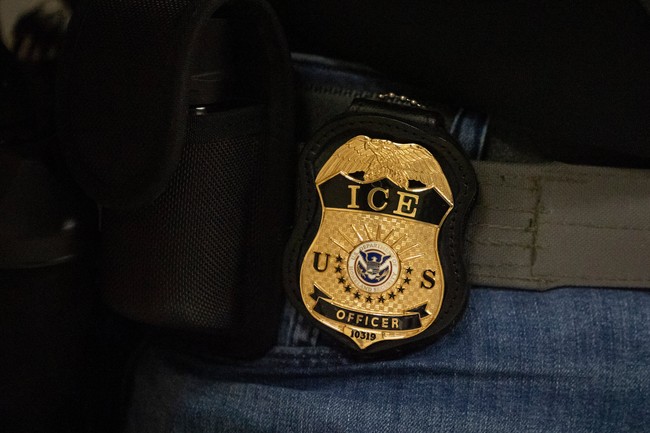
The Department of Homeland Security has ordered ICE officers to resume traffic stops, reversing a brief pause that followed violent incidents, while officials promise broader adoption of body cameras and insist the tactic is essential to removing dangerous criminal aliens from American streets.
ICE paused many vehicle stops after two separate deadly encounters where agents were reportedly struck by vehicles during detention attempts. That temporary halt sparked immediate pushback from conservative leaders who argued that traffic stops are a vital enforcement tool that prevents dangerous people from roaming free. The reversal makes clear the administration is prioritizing aggressive border and immigration enforcement ahead of critics who pushed for a pause.
https://x.com/DHSgov/status/2077818711495397794?ref_src=twsrc%5Etfw
The administration framed the decision as a balance between officer safety and public safety, noting progress on accountability measures. Karoline Leavitt, speaking for DHS, emphasized a commitment to equipping field offices with body cameras to document encounters and protect officers from false narratives. “Over half of all ICE field offices now do have body cameras, and the remainder of the field offices are expected within 60 days,” she said, pointing to a near-term rollout that was delayed by congressional obstruction.
That emphasis on cameras accompanied a clear message from the White House and DHS that traffic stops are a necessary tactic to disrupt criminal activity. The official press line made the intent plain: vehicle stops will continue and are viewed as a key part of ICE’s ability to deport dangerous individuals. Conservatives argue that stopping traffic to identify people with criminal records or outstanding removal orders is commonsense policing that protects communities.
— Homeland Security (@DHSgov)
.@PressSec: “Vehicle stops are continuing. Verbal guidance has been given to all field offices across the country by the Department of Homeland Security.
The President and @SecMullinDHS are on the same page that vehicle stops are a necessary tool that ICE agents need in order to continue their deportation campaign of the worst of the worst illegal alien criminals from our country.”
Critics of the restart warned that traffic stops can escalate and that better safeguards are necessary to prevent unnecessary violence. Conservatives responded by highlighting the importance of removing the “worst of the worst” criminals and argued that abandoning traffic stops would cede control of neighborhoods to those same criminals. The public safety argument is straightforward: enforcement tools that work should remain available, with appropriate oversight.
The administration also pointed to systemic delays caused by partisan fights as a reason the body camera rollout was slowed. Leavitt noted that recent partisan clashes in Congress interrupted DHS operations, which in turn delayed distributing cameras to every ICE office. With those delays now behind them, officials say every field office will be outfitted within the promised 60-day timeframe.
President Trump himself weighed in on the matter, using direct language to argue against relinquishing traffic stops as a tactic. “we CANNOT give up one of I.C.E.’s most important and effective Crime Fighting tools, THE TRAFFIC STOP! Once we do, we are playing right into the criminal’s hands.” His statement framed the pause as a political mistake that would reduce the government’s ability to remove dangerous foreign criminals.
Supporters of the move see it as restoring a practical enforcement posture that was weakened by high-profile incidents and political pressure. They stress that enforcement agencies operating without essential tactics would leave citizens exposed to avoidable threats. At the same time, they accept that better recording technology and clear procedures are needed to protect both officers and civilians when stops happen.
Operationally, the guidance to resume stops came as a verbal directive from DHS to field offices, signaling urgency and a desire for consistent practice across the country. Officials want ICE agents to have clarity so they can resume targeting fugitives, violent offenders, and others who pose risks to communities. The goal is plainly stated: use the tools law enforcement has to enforce immigration laws and prioritize the removal of dangerous individuals.
As body camera deployment accelerates, accountability and evidence collection should improve, reducing disputes over what occurred during contentious stops. Conservatives expect that combining aggressive enforcement with better documentation will strengthen public trust and reduce the political controversy around tactics. The conversation now shifts to implementation details inside agencies, but the top-line direction—traffic stops resume—has been set and defended by the administration.

Add comment