
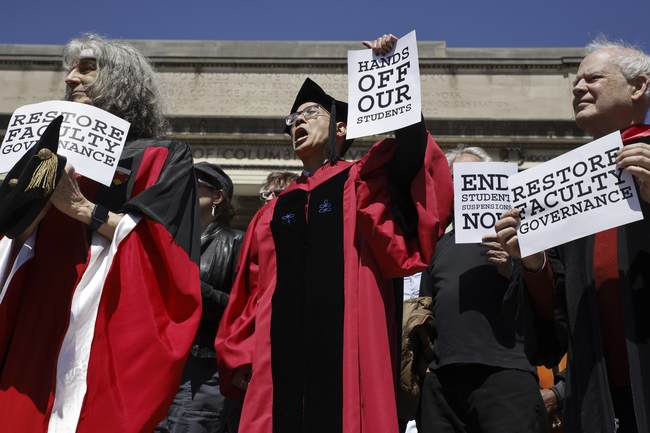
The Department of Homeland Security has finalized a rule that limits how long certain foreign visitors can remain in the United States, tightening durations for student, cultural exchange, and media visas and restoring more active enforcement by immigration authorities.
The rule makes a clear point: entering and living in the United States is a privilege with responsibilities, not an open-ended permission to stay indefinitely. DHS now sets fixed time periods for F, J, and I visas instead of allowing admission for the entire duration of a program or employment. That shift is designed to stop long-term overstay and give officials better tools to track who is in the country and why.
https://x.com/DHSgov/status/2077800331048554581
For decades, foreign students have been admitted into the U.S. for an unspecified period, enabling thousands to abuse the system and become “forever students” by perpetually enrolling in courses to avoid leaving our nation.
By implementing clear, finite limits on these visas, the United States is reclaiming its ability to properly screen, vet, and monitor individuals within our borders.
Under the new policy, student and exchange visitor periods would generally be capped at four years, and journalist visas would be limited to up to 240 days, with a shorter 90-day term for nationals of certain countries. Those limits aim to prevent visa categories from becoming permanent residency backdoors and to reduce the administrative burden of tracking people who change schools, programs, or employers without oversight. The administration is emphasizing clear end dates so extensions and renewals become deliberate decisions reviewed by DHS.
The Trump administration moved on Thursday to tighten the duration of visas for foreign students, cultural exchange visitors and journalists.
The new final rule from the Department of Homeland Security creates a fixed time period for F visas for international students, J visas that allow visitors on cultural exchange programs to work in the U.S., and I visas for members of the media. Those visas are currently available for the duration of the program or employment in the U.S.
…
Under the new regulations, the student and exchange visa periods would be no longer than four years. The visa for journalists – which currently can last years – would be up to 240 days or, in the case of Chinese nationals, 90 days.
Critics overseas complained when the rule was proposed, calling parts of it discriminatory, and that pushback was expected. The administration responded that national security and orderly immigration policy must take priority over diplomatic complaints. Those pushing for looser rules often ignore how long-term overstays complicate enforcement and strain local systems.
DHS also clarified how visa holders can remain legally: by applying for extensions or by departing and seeking readmission after travel abroad. That process restores clear checkpoints for eligibility rather than allowing indefinite presence on the basis of enrollment or employment alone. The change forces periodic checks and paperwork that should cut down on shadow populations who remain in the country without current authorization.
Visa holders who want to stay in the United States beyond their fixed period of admission will need to apply to DHS for an extension or gain readmission by traveling abroad and then re-entering the United States, DHS said.
Enforcement is getting attention beyond visas: immigration agents will resume traffic stops with updated guidance, returning a visible tool for identifying individuals out of status. That move acknowledges that enforcement must be proactive in public spaces to deter illegal presence and to locate people who fall out of legal standing. Lawmakers and communities have clashed over tactics before, but the administration argues practical enforcement is necessary to uphold law and order at the border and inside the country.
DHS highlighted data showing a significant rise in student visa admissions, noting more than 1.8 million admissions in 2024, an increase of over 11 percent from the previous year. The department also pointed to more than half a million exchange visitors and tens of thousands of media visa admissions in the same year. Those numbers are part of the rationale for policy change: large flows of temporary entrants require clearer rules to prevent long-term stays that skirt immigration controls.
The final rule also tightens academic transfers and post-completion grace periods, limiting graduate students from switching educational objectives or moving between institutions without authorization and shortening the window to depart after finishing studies from 60 to 30 days. Those limits are intended to stop indefinite program hopping and give officials a predictable timeline for departures. DHS said it has documented cases of long-term stays that stretched into decades under looser rules.
The regulations prohibit graduate students from changing their “educational objectives” at any point or from transferring to another school without authorization. They halve the amount of time students have to leave the United States after completing their degree or training from 60 to 30 days.
…
The department cited a dramatic rise in such visas in the posting. It said there were more than 1.8 million student visa admissions in 2024, a more than 11% increase over the previous year.
The U.S. granted visas to more than 500,000 exchange visitors and 37,300 members of the media in fiscal year 2024, which began on October 1, 2023, it said.
…
DHS said it has many examples of students and exchange visitors staying for decades on their visas.
Congress must now review the policy changes as part of the normal rulemaking and oversight process. That step gives elected representatives a chance to question details and ensure due process, while the administration presses its case for stricter, clearer limits. For supporters, the rule restores basic control and accountability to immigration policy in service of national security and fairness.
This policy sets a new expectation: temporary visas stay temporary unless renewed through formal, reviewed processes. The change is a firm statement that the United States will enforce the terms of admission and demand responsibility from visitors who choose to come here.
Add comment