
The Department of War has funded a $43.4 million push to build an all-Alaska antimony supply chain, aiming to break China’s chokehold on a metal vital to ammunition, night vision, and other defense gear; this move leverages Alaska’s mineral riches and advances a domestic industrial base that bolsters national security.
Antimony matters because it’s a small but critical piece of military readiness, used in everything from flame retardants to infrared sensors and ammunition. For decades more than 90 percent of metallic antimony flowed from China, Russia, and Tajikistan, leaving the United States exposed to supply shocks and strategic manipulation. The current effort frames mineral policy as national security policy, and it reflects a broader Republican push to re-shore critical industry rather than rely on geopolitical rivals.
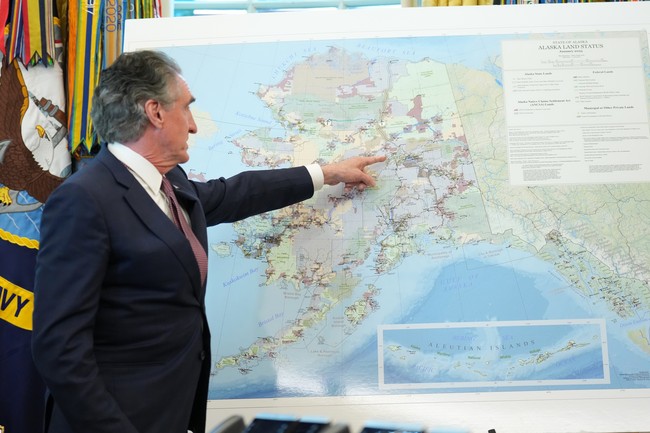
The Defense Production Act award to Nova Mineral Corporation’s Alaska Range Resources subsidiary is clear-cut: $43.4 million to speed engineering, design, and pilot production tied to the Estelle project about 100 miles northwest of Anchorage. The objective is an integrated, all-Alaska chain so ore doesn’t leave the state for processing and refinement. That domestic focus aims to keep control of both feedstock and finished product inside U.S. borders.
Completion of engineering and design for Nova Minerals Corp.’s antimony pilot plant provides a clearer picture of an emerging all-Alaska supply chain that will deliver a metalloid that is highly critical to national security.
“We continue to make rapid progress on the antimony project and remain ahead of schedule, with another major milestone now completed,” said Nova Minerals CEO Christopher Gerteisen.
The urgency is being spurred by China, Russia, and Tajikistan, which currently control more than 90% of the global supply of this critical metalloid used for ammunition, night vision equipment, flame-proofing compounds, and other military and commercial applications.
To help establish a domestic source, the U.S. Department of War awarded Nova’s U.S. subsidiary, Alaska Range Resources (ARR), a $43.4 million Defense Production Act (DPA) Title III grant to accelerate the development of an antimony supply chain anchored by the company’s Estelle project about 100 miles northwest of Anchorage.
Instead of exporting raw ore, the plan calls for Alaskan ores to be processed within the state at two sites for crushing, screening, and refining, meaning jobs and value stay local. Port MacKenzie is slated to host a refinery using a proprietary process intended to produce military-grade antimony. That sort of vertical integration reduces vulnerability and builds capacity for future scale-up.
The pilot plant will initially make antimony trisulfide, with modular design that lets Nova add circuits for antimony trioxide and antimony metal as demand increases. The company sees the Port MacKenzie hub eventually handling feedstock from Estelle and other nearby deposits. That road map turns a pilot project into an expanding industrial backbone for the region.
Beyond immediate military needs, antimony has wide commercial use in electronics, batteries, flame retardants, and specialty chemicals. The material’s role in both civilian and defense systems means a domestic source pays strategic and economic dividends. Securing that supply reduces leverage wielded by hostile or indifferent nations and stabilizes costs for American manufacturers.
Antimony is only one piece of a larger mineral puzzle. Alaska hosts deposits of rare earths and other critical minerals—places like Bokan Mountain and Graphite Creek hold heavy and light rare earths that matter for magnets, sensors, and advanced electronics. Those resources offer the U.S. a competitive chance to take back supply chains that have been offshored for too long.
Policy choices matter. The shift toward onshore production follows a “mine more at home” philosophy that prioritizes domestic resilience over dependence on foreign suppliers. Republicans favor aggressive, practical moves that turn national resources into national strength, and investing in critical minerals infrastructure is exactly that kind of move. It’s about ensuring the United States can arm, see, and power its forces without begging foreign suppliers for favors.
The economics are straightforward: when you mine gold you literally dig up money, and the same logic applies to strategic metals. Building processing capacity in Alaska creates jobs, keeps investment local, and strengthens defense supply chains. It also sends a signal to global markets that the U.S. intends to compete, not cede, in key materials.
China remains the dominant producer of antimony and many rare earths, but an Alaskan supply chain will introduce meaningful competition and resilience. This is not a quick fix; it’s a deliberate, strategic effort to diversify supply and undermine single-source dependencies. For a nation that depends on reliable access to critical materials, that kind of muscular policy is overdue.
Expect modular growth, staged expansion, and steady follow-through as engineering and pilot work move to production. The DPA funding accelerates that timeline and reduces commercial risk for companies willing to commit to domestic processing. If the project succeeds, it will be a textbook case of defense-driven industrial policy that yields peacetime economic benefits and wartime readiness.



Add comment