
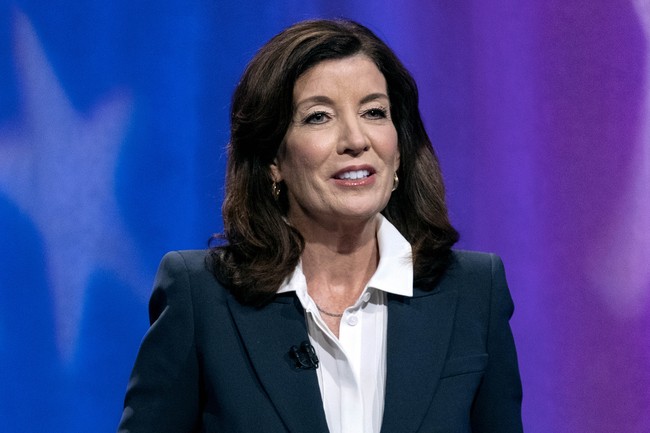
New York is losing wealthy residents and the state’s governor offered a mix of blame — federal tax changes, COVID, and national figures — instead of clear policy fixes, leaving questions about budget shortfalls and who will pay for the state’s big spending plans.
The conversation began with a straightforward question on a local morning show: is the exodus of affluent people and businesses still a problem? The host pointed to a recent Citizens Budget Commission report and an $8 billion state bailout for New York City, plus a projected $10 billion deficit. That set the stage for a governor’s answer that wandered through multiple explanations without naming a concrete remedy.
When pressed about the data, the governor first dismissed the timing, saying, “Well, first of all, the data that came out is from 2022.” That response sidestepped the current policy choices Albany has made since the pandemic and offered no assurance that the trends have been reversed. Questioning the relevance of the data does not change the fiscal math facing the state.
The host summarized the problem plainly, quoting the report and asking how to stop the trend: “Their latest report basically said wealthy individuals are moving out, families are moving out, and single filers are coming in. People who really can’t afford New York City are coming here. You had to bail out New York City $8 billion this budget. They’re saying they see a $10 billion budget deficit. What do you think? How do we stop this?”
The governor then pointed to federal policy, blaming a 2017 change in the state and local tax deduction for making New York more expensive. She framed it as a shift that altered long-standing tax treatment, saying, “All of a sudden, everybody in New York paid higher taxes because we used to, since Abraham Lincoln was president, they started the tax code. You never were double taxed. They changed that, so states like New York, you lost that deduction. So it got more expensive to be here just with the signing of that law, 2017, 2019.” That history lesson was used to argue that external forces pushed people away.
https://x.com/WesternLensman/status/2077397565100658898
She also blamed the pandemic, noting that outmigration accelerated when COVID hit in 2020 and people shifted to second homes like those in Palm Beach. The governor said, “Those were the years when people started the outmigration of businesses and individuals. And then what happens in 2020? [New York] gets slammed with the pandemic. So people who maybe had a vacation home or a temporary home in Palm Beach said, ‘I’m moving my whole family here.’” That explanation points to temporary behavior becoming permanent for some residents.
But the interview left a large gap: no acknowledgement that Albany controls state tax rates, spending levels, and budget priorities. Blaming Congress and the pandemic overlooks the fact that state officials have years of authority to change policies that affect affordability. Voters and taxpayers watching the exchange were left wondering what, exactly, the governor has done to make New York more competitive.
The governor’s closing line on the show boiled down to presence rather than policy: “But I’m here. I am today. I am doing what I can to stop that.” Being physically present in a studio is not the same as producing measurable reforms that stop people and businesses from leaving. The remark satisfied a soundbite need but offered no plan for tax relief, spending restraint, or economic incentives.
The Citizens Budget Commission study referenced found a sharp drop in New York’s share of U.S. millionaires since 2010, creating a multi-billion-dollar gap in revenue from high earners. That kind of concentration means losing a relatively small number of households can translate into a huge hit to taxable income and budget stability. States that relied on a shrinking group of high earners face a fragile fiscal future if migration continues.
When the host pointed out the demographic shift — wealthy families leaving while lower-earning single filers arrive — the implication was clear: New York is losing the taxpayers who can shoulder the large public costs and gaining residents who are more likely to need costly services. That reality matters because budgets are zero-sum; if revenue drops, either services get cut or taxes go up on the people who remain.
Instead of detailing reforms, the governor reiterated the federal blame and pandemic timeline but did not identify policy moves that would reverse the exodus. New Yorkers keep hearing calls for more spending and higher taxes on top earners even as those earners depart. Without concrete changes to make the state more affordable, the fiscal squeeze will continue.
Public officials who want to keep and attract high earners need clear, credible plans that address taxes, regulatory burdens, and the cost of living. Blame can explain why trends began but it cannot pay a shrinking tax base or restore the revenue lost when millionaires move their residences and businesses to states with friendlier economic climates. Right now, many of the taxpayers New York depends on are not here anymore; the challenge is turning that around with policies rather than rhetoric.
Hochul is nothing but a lying evil bitch! She promoted with a vengeance the Jabs during the Covid Plan-demic saying she had to gather disciples to get any of those resistant to taking it to accept it; and she wasn’t elected into office when Andrew Cuomo got the boot she was installed! Se is a plant by the Communist/Marxist/Globalist Cabal and is as rotten to the core as they come!
Hopefully NY wakes up and votes some quality common sense people in to office. It’s going to take many years to recover from the lax of leadership including Mayors as well as the Governor.
So very true, all that you point out!
Horse face Hochul destroyed NY incompetent over her head DEI disgraceful governor like every other democrat blame everyone else for her own failures. She turned NY into the East Coast Cesspool of the USA and she wants to be patted on the back. People and big corporations and businesses are running as fast as they can from that corrupt sanctuary asshole of city. Her and Mamdani will completely destroy NY because they are allowing illegals to control the city and these two assholes keep allowing it to happen. The city is already taken over my muslims and millions of illegals into our city. democrats want to destroy this country one state at a time for power and control they don’t care about true born American citizens at all because they can’t control decades of christianity. Old plastic face is as corrupt as can be you keep voting for democrat losers.
“East Coast Cesspool of the USA” That sums it up and the perfect description of what was once one of the greatest centers of commerce, the arts and innovation!
“True born American citizens,” are treated like trash and worse! And it is they with their predecessors that built this once vibrant greatest Nation on the planet!
All these point you bring out are spot-on!
‘points’
With the out-migration of the moneyed folks and their businesses, Hochul and New York deserve bankruptcy, and it is coming.
Migration was once done properly according to the US Constitution but what we’ve been seeing is outright INVASION! And check history folks that is exactly how great nations were reduced to chaos or even destroyed making way for the conquerors like what happened during the Ottoman Empire! They are doing it again only in a modern more sophisticated world not like what Raymond Ibrahim wrote about in “Sword and Scimitar; but it’s all just as deadly and nation altering! New York City has already fallen and the State is going right down the drain into horror! A fancy pants way of take over is what we are seeing here in America and many if not all European nations! And Devils like Soros have been fully behind it pushing it for their own gain; That’s how that Devil made all of his $Billions in various locations around the globe, and I tell you that he and many powerful persons doing this today serve Satan! That is a FACT!