
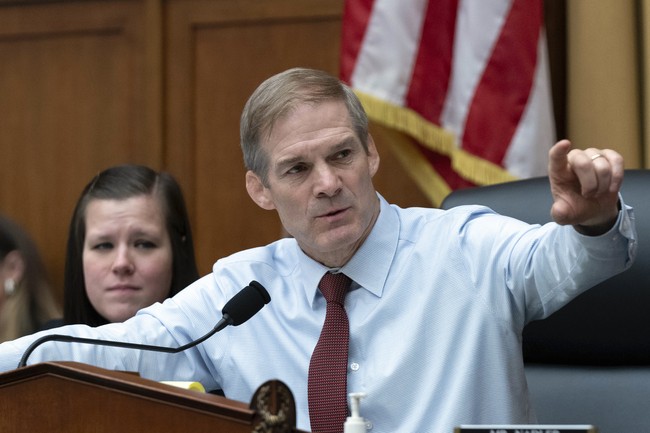
House Judiciary Committee Chairman Jim Jordan has issued a subpoena to Philadelphia District Attorney Larry Krasner after months of resisted records requests about local prosecution policies that may shield noncitizens from federal immigration consequences, setting up a high-stakes clash over congressional oversight and sanctuary city practices.
Jim Jordan, chairing the House Judiciary Committee, moved to compel documents he says Krasner has refused to provide since May. The subpoena demands materials the committee sought in early May and gives Krasner a firm deadline at the end of July to turn over records that could show whether local charging and plea policies are being used to frustrate immigration enforcement.
The investigation focuses on whether Krasner’s office has declined to prosecute or reduced charges and sentencing recommendations for noncitizens to help them avoid deportation or other immigration consequences. That line of inquiry picks up on statements attributed to the district attorney’s office encouraging prosecutors to consider alternatives when immigration status could be affected, and language suggesting low-level, nonviolent offenses should not lead to deportation.
Jordan’s team says it requested communications and policies dating back to January 2018, including correspondence with Immigration and Customs Enforcement, internal rules on bond and charging for noncitizens, case files handled by immigration counsel, and exchanges with local law enforcement. The committee argues those records are relevant to federal oversight because local practices that effectively nullify immigration consequences implicate Congress’s authority over immigration and could inform national legislation.
Krasner’s initial response to the committee reportedly characterized the request as baseless and said his office was retaining counsel to respond. Jordan says those assurances did not materialize into the requested documents, and instead Krasner sent a second letter that included personal attacks on committee members and conditions for cooperation. Jordan characterized the response as a refusal to comply, prompting the compulsory process.
“More than two months have passed since the Committee requested material from you and you have failed to produce even a single responsive document. Accordingly, the Committee is issuing compulsory process to obtain the relevant materials.”
The committee frames the dispute as more than a paperwork fight. It maintains that if local prosecutors are deliberately under-prosecuting foreign nationals to avoid immigration consequences, that practice could obstruct federal law and potentially run afoul of civil rights statutes if citizens and noncitizens receive different treatment. Jordan cited Supreme Court precedent recognizing Congress’s broad investigative powers when lawmakers consider potential legislation.
Krasner has defended his office’s discretion on charging, plea offers, and sentencing as matters for state and local officials, not for congressional inquiry. In previous correspondence he attacked lawmakers for what he called “legal errors” and accused them of embracing unrelated ideological positions, while noting that neither had passed the bar. He also pushed back publicly, calling the subpoena “yet another step in authoritarian efforts to do dirt in the dark” and framing the investigation as political pressure on state prosecutors.
“We have always complied with the law and will continue to do that. That makes us different from Trump, who spends all day, every day, violating the law of the U.S. Constitution ― and morality.”
The clash arrives amid a broader pattern in Philadelphia of limiting cooperation with federal immigration authorities. City leaders passed measures intended to restrict ICE’s ability to operate locally, though some of those actions have been checked by federal courts. From the committee’s perspective, local ordinances and prosecutorial guidelines that hinder federal enforcement require scrutiny, especially if they inspire copycat policies elsewhere.
Jordan’s office said the subpoenaed materials could directly inform legislation aimed at curbing sanctuary policies. Lawmakers are already considering measures such as the Shut Down Sanctuary Policies Act and proposals that would let federal officials consider admissions of guilt, not just convictions, when assessing deportability and eligibility for immigration benefits. Those potential changes elevate the stakes for the documents Jordan seeks.
The deadline set by the subpoena gives Krasner until July 29 to produce documents first requested in May, and the committee left open the possibility of further enforcement steps if compliance is not forthcoming. That standoff will determine whether Congress escalates the matter, potentially bringing testimony, enforcement motions, or legislative responses tied to sanctuary jurisdictions nationwide.
Beyond the immediate production fight, the episode highlights a broader philosophical split between local prosecutors asserting discretion over charging priorities and federal actors insisting on the primacy of immigration law. For Republicans in Congress, the concern is that permissive local policies can undermine national borders and federal authority, requiring oversight and possible legislative correction to ensure consistent enforcement across jurisdictions.
https://x.com/JudiciaryGOP/status/2077554028632825881
The coming weeks will reveal whether Krasner turns over the requested communications and files or maintains his resistance, and whether the committee will pursue contempt or other remedies. Either outcome will feed into the national debate over sanctuary policies, the balance between local discretion and federal power, and how Congress exercises oversight when public-safety and immigration enforcement collide.
Like many others, Krasner deserves jail time for his policies.