
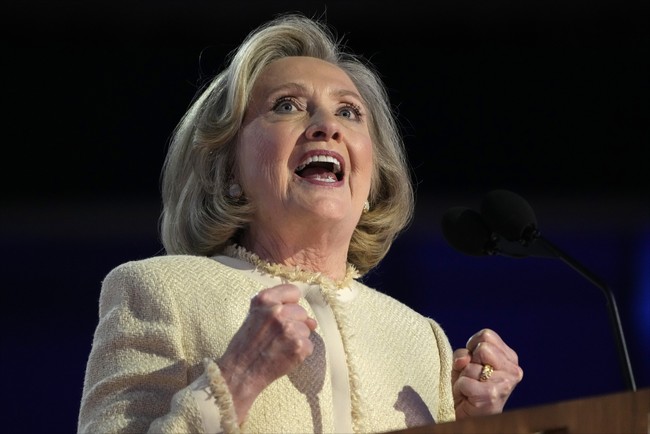
Hillary Clinton criticized voter ID and redistricting efforts, arguing they block certain voters, and in doing so she provoked reactions from conservatives who say the data clearly shows widespread public support for voter ID and that her remarks insult ordinary Americans. This piece examines the polling behind voter ID support, quotes Clinton’s comments exactly as made, and responds from a Republican perspective about why those comments miss the mark. The article also highlights specific polling figures and a sharp media line about ballot counting to put the dispute in context. Embedded media tokens from the original reporting are retained in their original positions.
Voter ID is popular across the country, and that popularity is not limited to one party. CNN data analyst Harry Enten has been clear about the numbers, showing consistent and broad support for basic election security measures among the electorate. These figures challenge the narrative that voter ID is a partisan or exclusionary demand pushed only by conservatives. The plain fact is most Americans want some form of identification required at the polls.
Enten pointed out long-running majorities in favor of voter ID and related policies, and those numbers are striking when you break them down by party and race. The stated figures show overall support hovering “north of 75 percent” for years, with a 2025 measure at 83 percent. Those same polls show Democrats at 71 percent and Republicans at 95 percent, while white respondents registered 85 percent, Latino respondents 82 percent, and Black respondents 76 percent.
https://x.com/JasonJournoDC/status/2018700411079626822
In that light, Democratic political resistance to reforms like the SAVE America Act looks less like defending voting access and more like defending the status quo. Politicians who oppose common-sense verification measures often do so for strategic reasons rather than because those measures lack public backing. The disconnect between elected Democrats and their voters on this issue invites scrutiny of motives and messaging.
Enter Hillary Clinton, who recently reemerged to accuse Republicans of trying to “undermine voting” and to make claims about who supposedly lacks identification. That intervention was predictable, and it landed poorly with many voters who don’t appreciate being talked down to. From a conservative perspective, her comments reinforced the sense that some prominent Democrats are detached from everyday Americans.
Enten said support for voter ID has been “north of 75 percent” for years. Indeed, in 2025, it was 83 percent. I don’t think you have 83 percent agreement on almost anything, so that’s phenomenal support.
Democrats also largely support it, he explained, polling at 71 percent. Republicans are at 95 percent.
Even if you break it down by race, the majority still support it, with white people at 85 percent, Latinos at 82 percent, and black people at 76 percent.
Clinton’s language framed voter ID and redistricting as deliberate forms of suppression aimed at older, rural, or minority Americans. She warned that Republicans are “trying to kick people off of voter rolls” and force “forms of identification that most real people don’t have.” Those were not mild accusations; they are direct and inflammatory claims about voters’ capabilities and access. From a Republican standpoint, such claims ignore the reality that IDs like driver’s licenses and passports are already common and do not impose an unreasonable burden.
“They’re trying to demand, you know, forms of identification that most real people don’t have, and most older people, and most rural people don’t have.
They are certainly redistricting to make it difficult to elect black representatives, or Latino representatives, or Democrats. So that means that we have to be even more intentional in showing up and voting.”
Those exact words are inflammatory because they suggest vast swaths of Americans are systematically excluded from basic identification, which contradicts the polling. Saying “most real people” do not have IDs is a sweeping claim that runs headlong into the hard numbers cited by analysts. Conservatives see this as the same elitist attitude that once led to the “deplorables” controversy, only now aimed even wider.
Critics also point to procedural complaints about ballot counting and administrative competence where Democrats run elections. One sharp media line captured that sentiment bluntly: “California’s ballot counting timeframe was abhorrent to the point of making Kim Jong Un blush.” That quote underscores frustration with how some jurisdictions handle counting and transparency when Democratic officials oversee the process. For many voters, practical concerns about election administration matter more than partisan talking points.
The underlying debate is about trust and common sense. Republicans argue that reasonable verification helps protect every voter’s ballot by maintaining the integrity of the system. Democrats who portray modest security measures as wholesale disenfranchisement risk alienating voters who support commonsense rules. That political calculation explains why these discussions get so heated whenever national figures wade in.
Clinton’s return to the fray shows how polarizing language from senior Democrats can shape the conversation, often by elevating worst-case allegations instead of engaging with data and ordinary voters’ concerns. Conservative observers will keep pressing for policies that balance access with verification, insisting that the public’s overwhelming support for voter ID matters more than partisan narratives. The debate is far from over, but the numbers already speak for themselves.


Add comment