
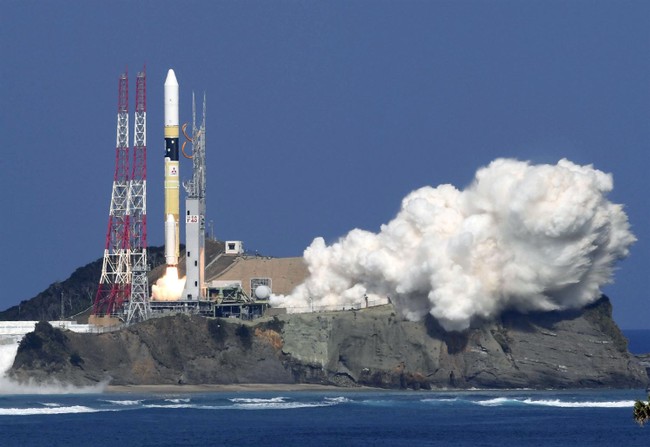
Japan’s space agency, JAXA, recovered from a December H3 failure with a successful H3 launch that reached its target orbit and carried a dummy payload plus six small secondary satellites, signaling a major step in restoring confidence in the rocket and advancing Japan’s civilian space capabilities.
Rockets are hard, and recent weeks have shown that even experienced programs face steep technical challenges. Japan’s H3 program suffered a second-stage failure in December, grounding flights and prompting a careful investigation and redesign. The latest launch put Vehicle Evaluation Payload-5 and several small university-built satellites into orbit to validate fixes and gather performance data.
Japan successfully launched its flagship H3 rocket Friday morning, marking the resumption of the rocket’s flights roughly six months after a failed mission in December and the first flight of a new low-cost configuration intended to strengthen the country’s competitiveness in the global launch market.
H3 Launch Vehicle No. 6 lifted off from the Tanegashima Space Center in Kagoshima Prefecture at 9:53 a.m., according to the Japan Aerospace Exploration Agency (JAXA). It reached its target orbit approximately 16 minutes later.
This was a test flight, so the rocket didn’t carry a commercial communications satellite or a heavy payload. Instead, it carried VEP-5, the Vehicle Evaluation Payload-5, a dummy satellite designed purely to record flight telemetry and verify the corrected second-stage performance. Alongside VEP-5, six small satellites developed by universities and organizations were deployed successfully, giving multiple teams valuable low-cost access to orbit.
Unlike some previous H3 missions, No. 6 did not carry a large operational satellite. Instead, it carried JAXA’s Vehicle Evaluation Payload-5, or VEP-5, a dummy satellite designed to collect flight data and verify the rocket’s performance. Six small secondary satellites developed by universities and other organizations were also carried aboard the rocket and successfully placed into orbit.
Technical recovery like this matters for national prestige and market competition. Japan has been angling to offer a lower-cost H3 configuration that can compete internationally, and proving reliability is the obvious first step. Commercial and scientific customers watch these test flights closely before committing valuable payloads and schedules to a particular launcher.
JAXA’s charter remains civilian: satellite launches, Earth observation, and exploration tasks like lunar missions and technology demonstrations. The agency is developing crew-capable systems and maintains astronauts in training, but it has not yet carried humans on a JAXA-launched vehicle. Given the recent technical hiccup last year, extra caution is understandable before moving to crewed missions.
The mission was closely watched after the previous launch of the H3 No. 8 failed in December while carrying Michibiki No. 5, a quasi-zenith satellite that forms part of Japan’s satellite positioning system, sometimes described as the Japanese version of GPS. During that launch, the rocket’s second-stage engine stopped burning earlier than planned, preventing the satellite from reaching its intended orbit.
Japan’s technological ecosystem and industrial base are strong, so another solid H3 flight will likely accelerate further launches this year. JAXA has a slate of missions planned, including cargo and science runs and a lunar probe, all of which depend on consistent launch performance. Each successful flight reduces risk for future missions and reassures international customers and partners.
From a strategic perspective, Japan’s success is good for allies who rely on trusted, reliable partners in the Indo-Pacific. A robust commercial launch capability in Japan offers additional options for satellites that serve civilian, commercial, and alliance needs. Reliable access to space increases resilience for observing and communicating across the region.
There’s still work to do: investigations into the December failure informed the adjustments made for the recent flight, and engineers will comb through the VEP-5 data to validate long-term fixes. But restoring flight rhythm matters as much as any single correction, and getting back to regular launches builds the experience curve teams need to mature the vehicle. Japan’s move back into orbit with H3 No. 6 is a practical, measurable sign their program is moving forward.



Add comment