
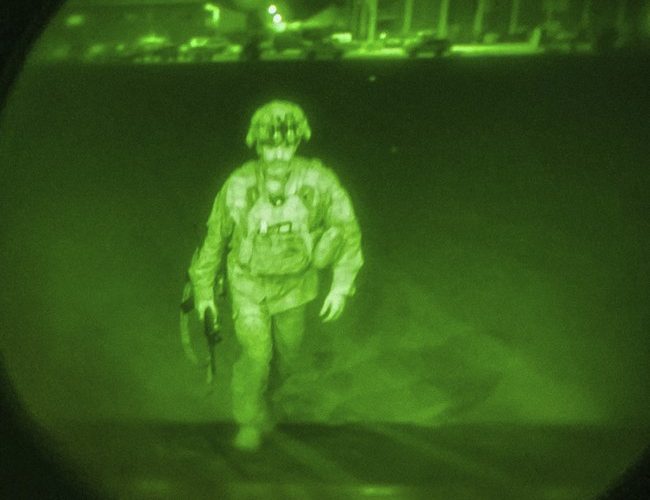
The recent forced retirement of General Chris Donahue and the backlash that followed show why Secretary Pete Hegseth was right to act, and why reshaping senior military leadership matters to national security and civilian control of the armed forces.
The uproar over Donahue’s ouster has been loud and dramatic, with comparisons to historic firings and a steady drip of outrage from political and media corners. I do not claim personal knowledge of Donahue beyond public reports, but as a former infantry officer and longtime observer I can weigh the facts and institutional responsibilities at stake. Two key points tend to get lost in the noise: the civilian leader’s duty to shape senior ranks, and the consequences of keeping officers who openly resist policy direction. Those points matter more than the social-media fandom or op-ed parades that have followed.
Secretaries of defense and service secretaries are charged with managing the officer corps, particularly those in General and Flag Officer ranks, because these officers execute policy on behalf of elected leaders. Promotion to GOFO rank is a political and institutional process that ends with civilian approval and Senate confirmation, not a detached, apolitical coronation. If a senior officer cannot be trusted to carry out the commander-in-chief’s policies, the civilian leader has both authority and obligation to act to preserve unified command and accountability.
Hegseth is moving fast to remake the Pentagon after years of policies many Republicans view as compromised or directionless during the Austin era. That overhaul requires senior leaders who buy into the administration’s priorities and will execute them without covert resistance. Where there is doubt about an officer’s alignment with the new direction, the responsible move is replacement. The list of recent changes is notable for how many high-profile names have been affected, and that turnover underscores the scale of the management task before Hegseth.
- Gen. Charles Q. Brown Jr. — Chairman of the Joint Chiefs of Staff.
- Adm. Lisa Franchetti — Chief of Naval Operations.
- Gen. James Slife — Air Force Vice Chief of Staff.
- Gen. Timothy Haugh — Commander of U.S. Cyber Command and NSA Director.
- Lt. Gen. Jeffrey Kruse — Director of the Defense Intelligence Agency.
- Rear Adm. Milton Sands — Commander of Naval Special Warfare Command.
- Gen. David Allvin — Air Force Chief of Staff.
- Vice Adm. Nancy Lacore — Chief of Navy Reserve.
- Lt. Gen Joseph B. Berger III — Judge Advocate General of the Army.
- Lt. Gen. Charles Plummer — Judge Advocate General of the Air Force.
- Lt Gen. Jennifer Short — Senior Military Assistant to the Secretary of Defense.
- Vice Adm. Shoshana Chatfield — United States Military Representative to the NATO Military Committee.
- Gen. Randy George — Army Chief of Staff.
- Gen. David Hodne — Commander of Army Transformation and Training Command.
- Maj. Gen. William Green Jr. — Army Chief of Chaplains.
Holding high rank is not a personal perk; it is a trust to serve the Constitution and follow lawful orders from civilian leadership. Loyalty to the institutions that appoint you matters more than popularity or the sentimental “most-admired” labels that pundits throw around. As one veteran leader advised subordinates, “Guys, I’ll never ask you to like a single thing I tell you to do. But I will demand that you do it to the best of your ability.”
Public reports about Donahue include serious allegations from the Afghanistan withdrawal that undermine claims of unimpeachable character. One account alleges he ordered passengers off a C-17 so a Taliban vehicle could be loaded as a “war trophy,” leaving dozens behind. Another account asserts he blocked American passport holders from entering evacuation zones and that working dogs were abandoned. Those are not small procedural mistakes; they are decisions with moral and operational consequences for people on the ground.
In a number of articles penned in the following days, Donahue is characterized as “uniquely qualified” for that moment in time and generally depicted as a humble, understated leader of his division.
https://x.com/YAppelbaum/status/2069560901615645054
Unfortunately, everything isn’t quite as it may seem. During the last hours of the evacuation, according to troops under his command and as documented by photographs and witness statements, Donahue ordered all of the passengers aboard a C-17 transport plane to disembark so he could have a souvenir loaded onto the plane. That souvenir, or “war trophy,” was an inoperable Taliban-owned Toyota Hilux with a fully operational Russian ZU-23 anti-aircraft autocannon mounted in the bed. Once the Hilux was loaded passengers were allowed back on the plane, but, of course, there wasn’t room for all of them. According to troops on the scene, at least 50 people and perhaps as many as 100 people were left at Kabul to make room for the Hilux.
Congressional holds and public scrutiny followed those revelations, and the promotion block introduced further details that complicated Donahue’s record. Critics have pointed to photo-op choreography, borrowed gear for a staged “last man” image, and decisions that allegedly left Americans and their animals behind. These reports are central to why a civilian leader would balk at advancing such an officer into greater authority.
How this story exploded is also telling. The narrative didn’t originate from neutral defense outlets but from opinion-driven venues and retired flag officers who only recently discovered their political voices. That sequence suggests a partisan campaign to shape the public narrative rather than a narrowly focused institutional review. The provenance of the outrage matters when judging motive and credibility.
At the end of the day, a president gets to choose his team, and his cabinet-level managers get to shape the ranks that will carry out policy. The officer corps must be loyal to civilian direction or be replaced, and history is full of capable officers who were indispensable once, then replaced when times and priorities changed. The removal of any one general will always provoke controversy, but the broader task of ensuring civilian control and operational alignment is the point Hegseth is making by acting decisively.



Add comment