
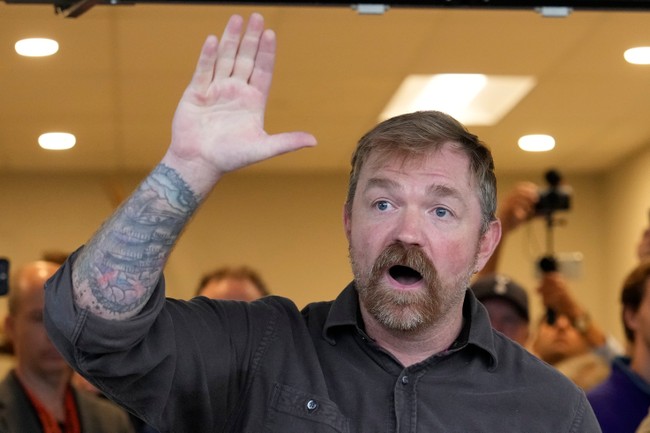
Graham Platner has suspended his Maine Senate campaign amid public disputes with the state Democratic Party and controversy over allegations against him, prompting the party to plan a nominating convention to pick a replacement before the July 27 deadline.
The decision to suspend campaign operations came after a period of sharp public disagreement between Platner and Maine Democratic Party officials. The conflict reportedly centered on demands and conditions tied to his stepping aside, which Platner framed as undermining campaign structures. His announcement marks a sudden pause in what had been a competitive Senate contest.
Platner released a statement explaining the suspension and posted an 11-minute video to outline his reasoning. He insisted the move was not an admission of guilt and said the choice was forced by the loss of essential campaign personnel and support. He stressed a sense of responsibility to the staff and volunteers who built the campaign infrastructure.
“We are suspending campaign operations,” Platner said. “This is incredibly difficult, because I know that some will think it’s admission of guilt, and most certainly is not. We’re not doing it because of the allegations, we’re doing it because of the structures that are being taken away from us by those talented people, and I also feel an immense amount of responsibility to everyone who has worked so hard to get us to where we are.”
https://x.com/grahamformaine/status/2075009677495058687
Platner was clear that the suspension did not stem from the rape allegation that has circulated in recent days. He framed the problem as organizational and political rather than legal, pointing fingers at internal maneuvers within the party. Whether voters will accept that distinction remains an open question heading into the summer.
Reports indicate the Maine Democratic Party will convene a nominating convention to select a replacement candidate for the ballot. State law allows parties to replace a nominee on the ballot up until July 27, and the party plans to provide timing details soon. That creates a tight window for any hopefuls to organize and secure the nomination.
Several potential candidates have already indicated interest in replacing Platner, but the rules and the exact process for the convention remain murky. Party insiders and activists are now jockeying for position while trying to avoid further public spectacle. The scramble could reshape the general election dynamics in a state where margins can be slim.
From a Republican perspective, this development underscores how internal party turmoil can hand advantage to the opposition. A suddenly chosen nominee will face compressed time to fundraise, message, and consolidate support, all of which can be exploited by a disciplined challenger. Savvy GOP operatives will likely push an austere, contrast-driven campaign that highlights the Democrats’ instability.
Political fallout will extend beyond just the campaign. Donors who backed Platner will have to decide whether to transfer support to a new nominee or redirect resources elsewhere. Activists and volunteers may feel disillusioned after the intense effort invested in a campaign that now halts suddenly; that can depress turnout or leave organizing holes.
Media coverage of the suspension and the surrounding allegations will continue to shape public perceptions, and the narrative battle is far from over. Republicans can expect to emphasize themes of accountability and transparency while Democrats will scramble to present a unified front. The party’s ability to move quickly and coherently will determine whether they can avoid further damage.
Timing is a critical variable: with the July 27 deadline looming, the Democrats must pick someone who can both excite the base and appeal to independents in a short window. That candidate will need rapid vetting and a clear pitch to voters, otherwise the seat could slip away. For Republicans, the urgency creates an opportunity to define the race early and pin responsibility for chaos on the other side.
Legal implications related to the allegations remain separate from the party’s internal decisions, but they will not be ignored by voters or the press. Platner’s insistence that the suspension is organizational rather than legal may satisfy some, but skeptics will remain focused on unanswered questions. Courts, investigators, and public opinion may all play roles as this story develops.
Grassroots engagement will be tested now more than ever: volunteers pressured to stop work or pivot quickly face burnout and confusion. Field programs and voter contact plans could be disrupted, making every contact and conversation more valuable. Republicans should recognize the chance to capitalize on disarray by amplifying a consistent, no-nonsense message to voters.
Expect more developments in the days ahead as the Maine Democratic Party sets the convention date and potential nominees surface. The compressed timeline means choices made this week could have outsized impact on the November outcome. For now, the suspension is a pivotal moment that reshapes the competitive landscape and hands momentum to those who can act decisively.


Add comment