
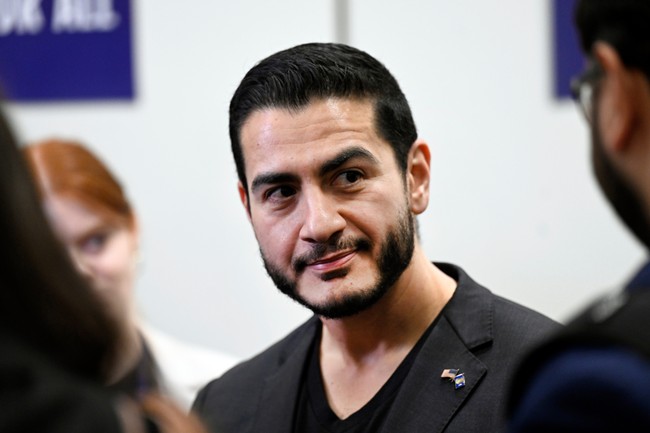
The Michigan Senate primary has burst into controversy as former Wayne County health director Abdul El-Sayed faces renewed scrutiny over claims he made about defunding the police and repeatedly calling himself a “physician” despite lacking a state medical license, and even friendly media pushed back on his explanations. This article walks through the key moments: Mallory McMorrow suspending her campaign, CNN and others fact-checking El-Sayed’s past statements, Politico’s findings on his licensing, a direct exchange with Mehdi Hasan, and what conservatives see as a larger pattern of Democrat tolerance for misrepresentation and extremism.
The collapse of Mallory McMorrow’s campaign changed the shape of the Michigan Democratic primary, leaving Rep. Haley Stevens and Abdul El-Sayed as the main contenders. McMorrow chose not to endorse either opponent, saying “Whoever wins this primary on Aug. 4 will have my full support.” Even with that neutrality, the field is now focused on El-Sayed and the questions dogging his record.
El-Sayed has spent years insisting he did not support defunding the police, but reporting and archived interviews tell a different story. Major outlets pointed out that his past remarks endorsed defunding in 2020, and one media fact-check found multiple examples where his language and policy positions aligned with that movement. That contradiction matters to voters who want clarity on public safety and law enforcement policy.
An even more consequential issue for a candidate touting medical chops is his use of the term “physician.” El-Sayed graduated from Columbia University College of Physicians and Surgeons with a Doctor of Medicine degree, but state records show he has not been granted a medical license in Michigan or New York. State law prohibits anyone who is not licensed “to induce the belief” that they have a license or are registered to practice medicine, which makes his repeated self-description risky and misleading.
When this licensing discrepancy came to light, El-Sayed tried to minimize it in interviews, framing it as irrelevant to the substance of his public service. Reporters and fact-checkers pushed back, pointing to his past campaigns where the “physician” label was used repeatedly, including during his 2018 gubernatorial bid. Repeating a title that implies an active medical practice creates an appearance of misrepresentation, and it raises legitimate concerns for Michigan voters.
El-Sayed’s exchange with former MSDNC host Mehdi Hasan got to the heart of this issue and shows how even sympathetic interviewers can press him on factual claims. The back-and-forth captures both the candidate’s deflection and the persistent question about truthfulness, and it preserves the exact language used during the interview. The transcript below is presented verbatim.
Hasan: You got attacked by your rivals for calling yourself a physician, not just a doctor, even though you don’t have a valid state medical license in New York or Michigan, which apparently is what you need legally to call yourself a physician. Do you wish you’d just stuck to calling yourself a doctor, which you are, to avoid all of this controversy and attacks on your physician status?
El-Sayed: You know, at the end of the day, it’s not about whether or not I’m a physician or a doctor. The question is, can you see a doctor? It’s not about my education; it’s about whether or not your kid gets to get an education. So, I’m just not spending time…
Hasan: Well, that’s a good line, but people would say it’s also about – did you tell the truth?
El-Sayed: Well, I would say that I was the health director for the city of Detroit, and I’ve done more to provide more people health care or eliminate medical debt than most doctors have done in their practice career.
Watch:
If a candidate insists the label “physician” is irrelevant, why keep using it in campaign materials and public remarks where the implication is a licensed clinical practice? Repeating that claim across multiple campaigns — his 2018 run and his current Senate bid — suggests either careless messaging or deliberate misrepresentation. Either way, voters deserve straight answers.
The pattern of being called out by media friendlies and still pressing forward speaks to a broader issue conservatives highlight about Democratic primaries: a willingness to tolerate or downplay serious red flags when it helps achieve partisan goals. From policy flip-flops to misleading personal claims, the tolerance for ambiguity grows when the objective is to win at almost any cost.
Beyond the “physician” debate, there are wider concerns about El-Sayed’s record on law enforcement and his stance during periods of national unrest. Supporters argue his public health work and advocacy are credible, while critics counter that unclear or contradictory statements on major issues like policing and public safety disqualify him from earning unreserved trust.
Michigan voters now face a choice where credibility, clarity, and honesty matter as much as ideology. When a campaign is riddled with fact checks and debates over basic claims about a candidate’s qualifications, it shifts the conversation from policy solutions to trust. Republicans will use these contradictions to make the case that Democrats are nominating candidates who prioritize partisan advantage over transparent records.
https://x.com/RNCResearch/status/2074878971146125423

Add comment