
I will explain the Spokane fires and recent arrest, detail the suspect’s criminal history, present investigators’ findings and quoted reports, note the human impact on local families, and argue how policy around criminal justice played a role.
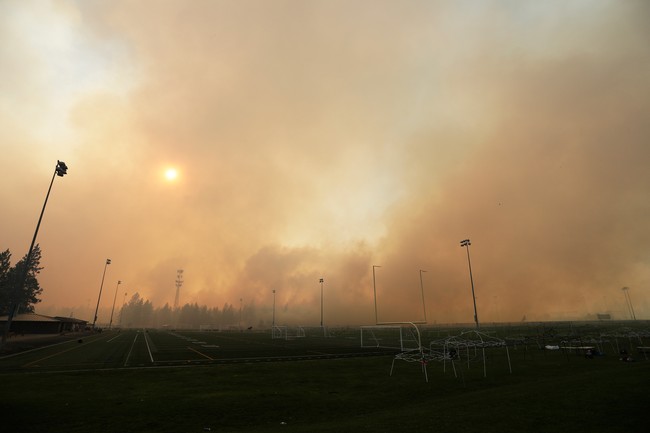
Huge swathes of Eastern Washington around Spokane have been scorched, with hundreds of buildings destroyed and tens of thousands of residents evacuated. Local authorities say at least 700 structures burned and roughly 65,000 people were forced to leave their homes as blazes raced through dry grass and suburbs. The scale of the damage is staggering and communities are dealing with sudden displacement and loss.
Law enforcement officials are pointing away from broad climate narratives and toward a specific human cause for at least one of the fires. They allege a 37-year-old man, Aaron Farinacci, intentionally set at least one of three separate fires that helped spread the catastrophe. Farinacci is now in custody on a first-degree arson charge and held on $1 million bond after a witness spotted him acting suspiciously in a grassy area north of the city.
Farinacci’s past, officials say, is troubling and relevant to how this situation unfolded in the first place. He pleaded guilty in 2012 in Arizona to manslaughter and aggravated assault following an incident that left his father dead when Farinacci was 21. He was released from custody in 2020, and critics are arguing that his freedom after that conviction contributed directly to the risk he allegedly posed to the Spokane community.
Police and investigators have shared specific details about how at least one blaze began, and those findings point to deliberate ignition. Authorities reported that the Old Trails fire appeared to have been started with a match or butane lighter used to ignite dry grass, and they say similar methods were implicated in two other nearby fires. Sheriff officials also noted that Farinacci had waterproof matches and a butane lighter when he was taken into custody.
https://x.com/EricLDaugh/status/2084612897854943493
Here’s Farinacci’s troubled past, as detailed in a 2010 report:
Police says [sic] a 21-year-old Arizona man fatally shot his father then turned the gun on himself after they argued about the son doing the dishes.
Mesa police found Aaron Farinacci (fehr-ihn-AH’-chee) blocks from his parent’s house with a gunshot wound to his chest. He was in critical condition Tuesday.
Police say the incident began just after 6 p.m. Monday when Aaron Farinacci argued with his father, Jeffrey Farinacci, then ran into his parent’s bedroom and locked the door. Jeffrey Farinacci got a key and unlocked the door, and his wife then heard two shots. She told police her son pointed the gun at her as she went to investigate.
Investigators later described how the wildfire activity in Spokane included at least three named blazes: Old Trails, Autumn Lane, and Fairview. Officials say those fires ignited rapidly and merged in spots, overwhelming local first responders and forcing mass evacuations across neighborhoods. The combination of intentionally set blazes and tinder-dry conditions turned a dangerous but containable situation into a regional emergency.
Another quoted report laid out investigators’ observations about matches and lighters being used to start grass fires and noted items found with the suspect at arrest. The official account reads:
Fire investigators reported that the Old Trails fire appeared to be intentionally set by using a match or a butane lighter to ignite grass, the sheriff said. That blaze was one of the three — along with the Autumn Lane and Fairview fires — that ravaged parts of Spokane on Saturday and Sunday.
Mr. Farinacci was carrying waterproof matches and a butane lighter when he was arrested, Sheriff Nowels said at a Monday evening news conference.
The human cost is real: families displaced, homes lost, and a community left to pick up the pieces. Spokane is a region many people love for its outdoors and neighborhoods, and watching whole blocks burn leaves a lasting scar on residents and first responders alike. Personal ties make this feel immediate for many; those who grew up or sent kids to school there know the area well and are heartbroken by the destruction.
This case raises tough questions about criminal justice policies and public safety. When someone with a history of violent crime returns to the community and is later accused of allegedly starting destructive fires, people naturally ask whether our systems did enough to protect neighbors. The argument from local critics is blunt—if repeat offenders are roaming free, the public pays the price in lost homes and shattered lives.
Officials continue to investigate the fires, press charges where they allege criminality, and support residents in recovery efforts. As inquiries proceed, the Spokane fires are a stark reminder of how criminal acts, not just environmental conditions, can trigger sudden disaster and long-term trauma for communities.
We know what happened next:



Add comment