
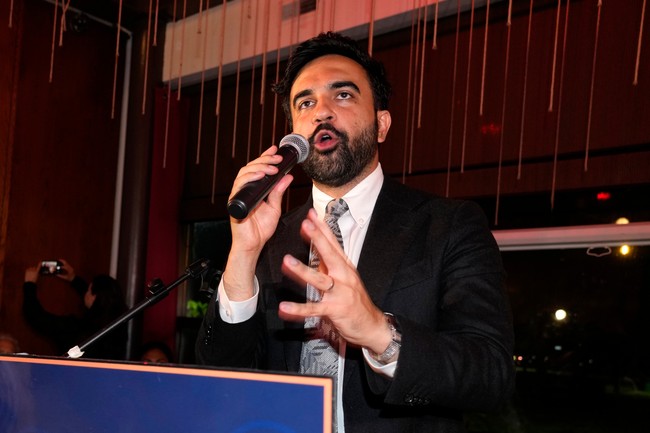
Zohran Mamdani vowed that New York would “do everything that we can” to protect Haitian and Syrian Temporary Protected Status holders after a 6-3 Supreme Court decision allowed the Trump administration to proceed with ending those TPS designations, and his words set up a direct clash between a city mayor-in-waiting and federal immigration authority.
New York’s Democratic socialist mayoral nominee, backed by the DSA, spoke to a crowd of concerned Haitian New Yorkers shortly after the Court ruled that most statutory challenges to TPS decisions cannot be heard in federal court. The Court’s decision removes a major legal hurdle to the administration’s effort to end protections for Haiti and Syria, and it puts local leaders on the spot about how far they’ll push back.
City officials can offer services, counsel, and logistical help, but TPS is a federal designation administered by the Department of Homeland Security. The Supreme Court made clear that, absent a constitutional violation, choices about TPS largely rest with the executive branch and Congress, not municipal governments.
Still, Mamdani framed the issue as moral and immediate, saying the city would stand in solidarity with Haitian and Syrian residents. “We saw today the Supreme Court make a decision that is putting so many people’s lives in jeopardy,” he said, insisting that civic words must be matched by “actions of solidarity.”
He directed those worried to City Hall resources, pointing to the Mayor’s Office of Immigrant Affairs hotline as a first line of assistance. For critics, that move looked more symbolic than structural, a reminder that municipal tools are limited when federal law and enforcement determine who stays or goes.
“We saw today the Supreme Court make a decision that is putting so many people’s lives in jeopardy,” Mamdani said. “This city has been built by so many from so many different parts of the world — that includes our Haitian brothers and sisters, our Syrian brothers and sisters — and we stand here ready to be in solidarity with all of those who are concerned by today’s decision, and beyond just language of solidarity, actions of solidarity.”
https://x.com/VickieforNYC/status/2070377790948385182
Republicans and other opponents in New York slammed his remarks as defiant and unrealistic. NYC Councilwoman Vickie Paladino accused Mamdani of treating New York like an independent city-state that refuses to accept federal authority, warning that such stances risk creating jurisdictional conflict rather than constructive solutions.
Mamdani spoke of a normalized cruelty he believes the Court and the administration have allowed, arguing that a nation “who taught the world about freedom” should not put people’s freedom in jeopardy. He repeated the theme of civic identity and immigrant heritage: “Many of you know this is a city of eight and a half million people. More than 3 million of us were born elsewhere. I’m one of them.”
“Many of you know this is a city of eight and a half million people. More than 3 million of us were born elsewhere. I’m one of them. We’re a city that’s proud of our immigrant heritage.”
From a Republican perspective, the exchange exposes a familiar tension: local political theater confronting federal law. When a mayoral candidate promises resistance but points first to a hotline and city services, critics see priorities that favor symbolism over the levers that actually govern immigration policy.
Practical limits are clear. New York can expand legal clinics, provide municipal identification, shelter assistance, and coordinate with nonprofits to give people time and counsel, but the city cannot override federal determinations about TPS status. Ultimately, Congress writes statute and the executive branch enforces it, which means local declarations carry political weight more than legal authority.
Whether Mamdani follows through with measures that test federal responses or whether his actions remain largely rhetorical will define the next phase of this debate. If he moves beyond city services into policies that obstruct federal enforcement, the conflict could invite legal challenges, federal pushback, and broader political consequences for New York.
“We have seen a cruelty that has become normalized, and to have people who taught the world about freedom have their own freedom put in jeopardy by the actions of a Supreme Court and a federal administration — it is not only cruel, it’s something that we will not ever accept.”
The Supreme Court’s 6-3 decision reshuffles the battleground: it narrows judicial oversight while shifting ultimate responsibility back to lawmakers and the president. For citizens and advocates on both sides, that means the fight will move into the political arena—Capitol Hill and the White House—where statutes and executive policy are made and changed.
In the meantime, the immediate fallout will play out on city streets, in municipal offices, and in courtrooms if anyone attempts a direct legal challenge based on constitutional grounds. For now, New Yorkers watching the dispute will see a mayoral hopeful promising action and opponents warning about the limits and risks of a city trying to substitute for federal authority.

Add comment