
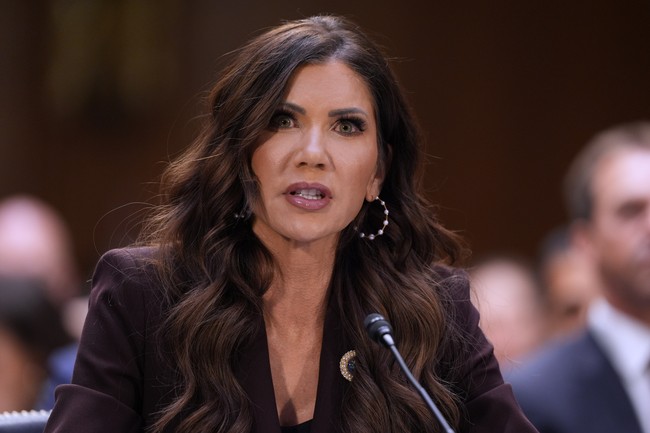
The Department of Homeland Security stands accused of blocking watchdog access to critical investigations, according to a letter from Inspector General Joseph Cuffari, and those allegations came to light just as Kristi Noem’s tenure at DHS unraveled. The claim is stark: DHS leadership “systematically obstructed” audits, inspections, and probes tied to the department, including one tied to the assassination attempt on former President Trump. Noem denies any intentional obstruction and says requests simply needed clearer scope. The conflict raises real national security questions about transparency and accountability inside a major federal agency.
Joseph Cuffari, a Trump-appointed inspector general, sent a letter to Congress asserting repeated denials of access for his office. He detailed 11 instances in which his team could not obtain records or entry to systems they believed were essential to oversight. From a Republican viewpoint, any pattern of obstruction within DHS is alarming because it weakens our ability to hold government operations to account and to protect Americans. The IG’s central claim is not a partisan talking point; it targets procedural barriers that could impede national security work.
The letter singles out an alleged refusal by the Office of Intelligence and Analysis to permit OIG personnel into a compartmented intelligence program. Cuffari wrote that, despite authorization from the data owner, “I&A (Office of Intelligence and Analysis) refuses to conduct the purely ministerial act of indoctrinating OIG personnel into a compartmented program; the data owner has authorized OIG’s access.” If true, that’s a procedural blockade preventing oversight of intelligence functions tied to Homeland Security. Republicans should be especially concerned when oversight mechanisms are curtailed, since strong oversight protects civil liberties and security alike.
The IG also linked the access problems to an OIG review connected to the July 13, 2024, attempt to assassinate then-former President Donald Trump in Butler, Pennsylvania. Cuffari warned, “I&A’s intransigence is impeding an OIG review related to the July 13, 2024, attempt to assassinate then-former President Donald Trump in Butler, PA.” That connection elevates this beyond internal squabbling; it touches on the department’s response to threats against a former president and potential intelligence gaps. Republicans view investigation integrity as nonnegotiable when lives and national stability are on the line.
The inspector general told congressional leaders the obstruction appears systematic, not accidental. “This is particularly troubling given the other reported attempts on President Trump’s life coupled with the present worldwide conflict,” Cuffari wrote to congressional leaders, stressing the broader security environment. From the Republican angle, an agency that restricts access to its own watchdog during heightened global tensions invites suspicion. The claim demands a clear, transparent answer from department leadership about why standard oversight was denied.
Cuffari also described DHS declining access to a department-controlled database last April in connection with a criminal inquiry that had national security implications. He called DHS’s refusal to cooperate “particularly egregious.” Those words matter; a Republican response typically treats such language from an independent investigator with urgency and a presumption that the matter merits congressional attention. If policies or personnel choices are preventing timely investigations, reforms or accountability actions should follow.
Kristi Noem has denied blocking oversight and insists the inspector general must narrow or scope requests for classified material. During a Senate hearing she said, “He can have access to anything at the Department of Homeland Security; he can. He just needs to provide a scoping memo. He just hasn’t done that. He wants unfettered access to every single thing in the department, and that’s not the process.” Those remarks underline a procedural dispute: access versus process. Republicans generally favor clear rules that allow independent oversight while protecting genuinely sensitive intelligence, but they also reject blanket denials that shield missteps from scrutiny.
Questions about why DHS leadership resisted or delayed OIG access now overlap with political fallout around Noem’s confirmation hearing and her eventual removal. Reports say President Trump was frustrated by her testimony, and headlines about a $220 million ad campaign and other controversies swirled as her tenure ended. Republicans watching this want to ensure personnel decisions are based on competence and security considerations, not just optics or internal politics. The more urgent issue remains whether obstruction, if it occurred, disrupted an inquiry tied to a direct threat against a former president.
Public trust in homeland security institutions depends on transparent answers and proper oversight. The IG’s letter, with its list of denied requests and pointed language, creates an obligation for Congress to press for clarity on access and classification procedures. Republicans who prioritize both liberty and safety will push for reforms that preserve necessary secrecy while preventing the department from blocking independent reviews. This affair is a test of whether DHS will accept routine oversight or continue to raise questions about its internal accountability.

Add comment