
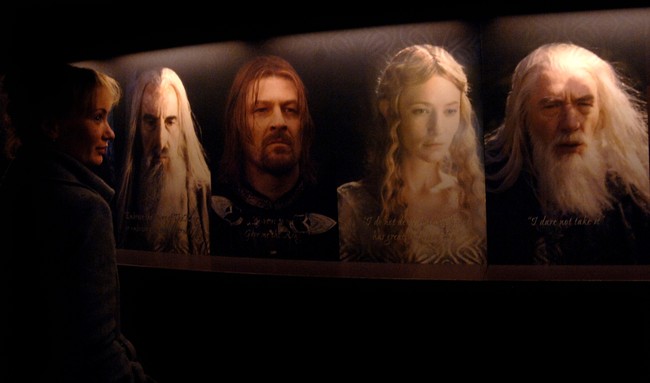
I’ll explain why Andy Serkis’ upcoming film The Hunt for Gollum aims to stick close to Tolkien’s world, why preserving source material matters more than chasing modern culture-war trends, and what his comments about diversity signal for casting and storytelling in this new Lord of the Rings film.
Reboots and reinterpretations can be thrilling when they honor what made the original work resonate, but they often go off the rails when politics override craft. Some contemporary retellings insert modern agendas that clash with the historical and cultural contexts of the originals, and that tendency risks weakening powerful stories instead of strengthening them. Audiences notice when a production prioritizes messaging over storytelling, and box office and critical reaction reflect that reality.
Andy Serkis, the actor who famously embodied Gollum, is stepping into the director’s chair for The Lord of the Rings: The Hunt for Gollum, slated for December 2027. That fact alone raises expectations for a film that respects Tolkien’s tone, mythology, and narrative logic because Serkis helped define one of the series’ most memorable characters. His involvement suggests a clear connective thread to the earlier adaptations that fans care about.
In remarks to the BBC, Serkis made it clear he plans to respect Tolkien’s influences and the world those influences produced, rather than reshaping characters to suit a modern diversity checklist. He acknowledged criticisms about diversity but framed his response around relevance to the story, not box-ticking. That approach signals a director who wants authenticity and internal consistency above satisfying external cultural demands.
Andy Serkis has said his Lord Of The Rings film The Hunt For Gollum will address concerns about diversity “where relevant” and without just “ticking boxes” during an interview with the BBC.
The BBC asked the veteran actor and director about what they described as a “lack of diversity” in the Lord Of The Rings film franchise and asked Serkis why his LoR film The Hunt For Gollum has so far only announced white actors as its main cast.
“Tolkien himself was influenced a lot by Norse mythology; there’s a lot of that feeling,” Serkis told the BBC. “The Shire feels very, very much like a very, a very white, you know…”
Serkis continued: “They’re not very concerned about what goes on beyond the borders of The Shire, but they know they don’t want people coming in.”
He then conceded that there “have been criticisms” and added that: “This particular film is somewhat acknowledging that. But we don’t think we will be doing a politically correct just-casting-for-the-sake-of-casting-and-ticking-boxes version of the film. So, it’s only where relevant basically.”
Those quotes deserve attention because they sketch a production philosophy: fidelity to source plus selective, story-driven diversity rather than ideological casting. That distinction matters. When filmmakers force contemporary angles onto a mythic landscape without narrative justification, the result can feel jarring and hollow. Fans who love Tolkien are not asking for exclusion; they want coherence and respect for the invented cultures that populate Middle-earth.
There is a bigger pattern here worth noting. Some in Hollywood treat classic material like a blank slate for experimenting with identity politics, often disregarding historical texture or authorial intent. That approach risks turning classics into vehicles for transient trends, instead of preserving them as cultural touchstones that teach and entertain across generations. Creators who keep the work’s integrity intact usually produce the most enduring films.
Serkis’ stated intent to avoid “casting for the sake of casting” echoes a conservative argument about art and craftsmanship: good storytelling should come first, and political objectives should not override the logic of the work. This perspective isn’t about shutting anyone out; it’s about making choices that serve character, setting, and plot. For a world as carefully constructed as Tolkien’s, those choices must feel organic.
Practical production choices will always invite debate, especially with a franchise as beloved as Lord of the Rings. Still, the presence of Ian McKellen and Elijah Wood reprising their roles reassures viewers that the project seeks continuity, not reinvention for its own sake. Retaining familiar faces while expanding the story can provide both fan service and narrative depth when handled correctly.
At bottom, Serkis seems to be betting that audiences want authenticity and mythic truth more than current cultural signaling. If he stays true to that instinct, the film can deliver a classic-feeling adventure that honors Tolkien’s influences and the world built on them. That is a straightforward, audience-first approach that many viewers will welcome.
Whether The Hunt for Gollum ultimately satisfies hard-core Tolkien fans will depend on how faithfully it captures tone, voice, and internal logic, not how loudly it proclaims ideological alignment. Serkis’ comments set expectations in that direction, and now the production’s choices will determine if those expectations are met. The hope from this point of view is for a film that returns to storytelling fundamentals and lets the story, not a political agenda, lead the way.


Add comment