
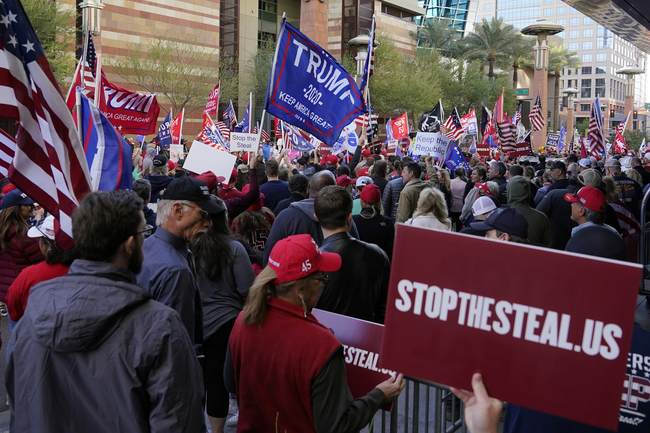
The White House’s chief of protocol, Monica Crowley, says the administration will soon unveil evidence that President Trump won the 2020 election, and Republican observers are watching closely as federal and local probes press forward. This article reviews Crowley’s claim, the legal and political context around grand jury activity in Florida, and what plausible outcomes might mean for future elections and Republican strategy.
We live in a period where partisan fights turn into long legal battles, and the 2020 election remains a live debate for many conservatives. Monica Crowley’s recent comments revive questions about how deeply investigations might reach and whether fresh evidence could shift public understanding. Republicans see any credible proof of wrongdoing as important not just for accountability but for defending election integrity going forward. The stakes include public trust in institutions and political leverage in the upcoming midterms and beyond.
Ambassador Monica Crowley, the U.S. government’s chief of protocol, said the administration will “soon” produce evidence that proves President Trump won the 2020 election.
Ms. Crowley, speaking Wednesday at an event hosted by Breitbart News, didn’t reveal more about the evidence but expressed confidence in what it would show.
“He did win in a landslide, and we will soon be able to give evidence about that,” she said.
That matches comments by other high officials, including FBI Director Kash Patel, who have talked about evidence of a conspiracy to subvert the 2020 vote, which made President Joseph R. Biden the victor over Mr. Trump’s vehement objections.
The claims that were raised during and immediately after the election were all rejected by courts and Congress, which confirmed Mr. Biden’s victory.
We should be clear: courts and Congress did reject the major legal challenges after 2020, and that outcome shaped public policy and institutional responses. Still, Republican legal teams and some federal actors have continued to pursue leads and new inquiries that they say were not fully investigated. A federal grand jury in Florida is reported to be examining components of the 2020 vote, and high-profile figures have been brought into those inquiries. For conservatives, renewed scrutiny feels like overdue oversight rather than partisan theater.
If prosecutors develop concrete evidence, the usual path is indictments and the chance to subpoena witnesses and records. But history tells us prosecutions often target mid-level officials while sparing top political leaders, and skeptics on our side expect similar patterns unless the evidence is truly damning. That reality tempers optimism, but it does not erase the potential value of new facts for voters and future election safeguards. Republicans argue that even partial revelations can instruct better chain-of-custody rules, voter-roll audits, and ballot security measures.
Legal action alone won’t rewrite 2020. The constitutional and political systems move slowly when it comes to reversing or nullifying past presidencies. Still, documenting errors or intentional misconduct could reshape how Americans approach upcoming contests. For conservatives focused on election integrity, the goal is forward-looking: use any proven lessons to prevent repetition and ensure future results reflect actual votes. This is a long game that requires both legal diligence and grassroots mobilization.
Practical politics matters too. Republicans worry that if proof of wrongdoing is ignored or minimized, the left will treat it as a green light for repeated tactics. Conversely, solid evidence of misconduct could energize voters and justify tougher election reforms at state levels where Republicans currently control many secretaries of state and legislatures. The short-term effect would be media battles and legal wrangling, while the lasting effect could be procedural safeguards that make cheating harder and detection easier.
Republican strategists emphasize turnout as the most reliable defense against any attempt to tilt results. Winning decisively removes doubt and reduces opportunities for manipulation or misreporting. That’s why messaging from leaders ties legal developments to practical action: show up and vote. The combination of legal pursuit, institutional reform, and relentless voter engagement forms the conservative playbook for ensuring free and fair contests going forward.
The coming disclosures Crowley promised will be judged on evidence, chain of custody, and legal merit, not on sound bites. If what emerges is credible, it will generate subpoenas, depositions, and courtroom fights that conservatives will use to push for transparency. If the evidence is weak, it will still remind Republicans of the need to harden election systems and keep voters engaged. Either way, this episode underscores how much the future depends on accountability and participation.

Add comment