
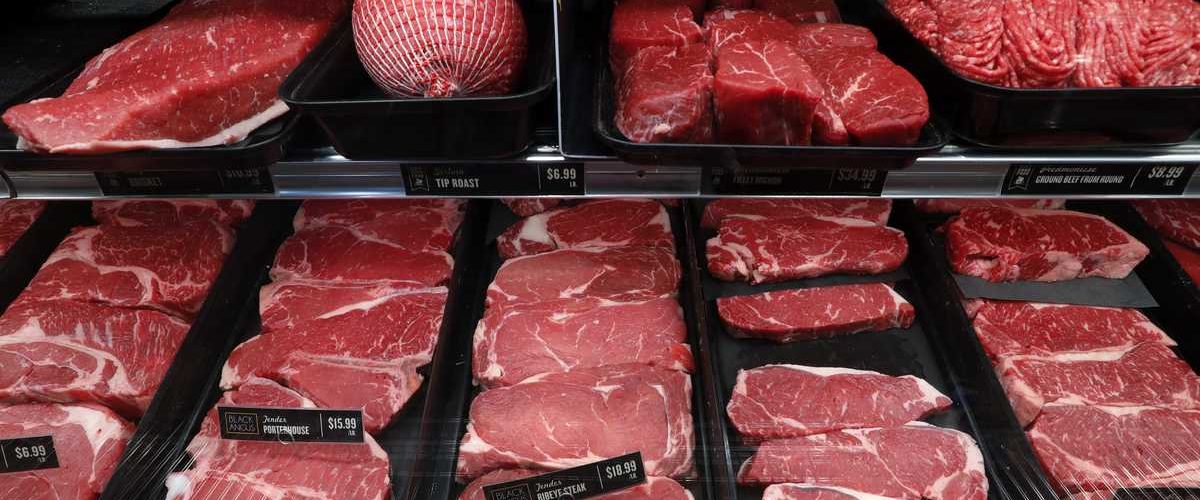
President Trump announced a plan to challenge the meat industry’s concentration by authorizing documents that would let farmers and ranchers process more of their own animals, claiming the “Big Four” processors form a nasty monopoly with significant foreign ownership; this article explains what he said, why the move matters to rural producers and consumers, and the practical questions left unanswered about how such a policy would work.
Inflation has eased since the Biden years, but grocery bills still bite many families and hit farm country hard. President Trump used his Truth Social platform to call out four dominant meat processors and promised action to shift control back toward producers. He framed the move as support for ranchers and farmers who he says have long struggled against concentrated corporate power. The announcement raises immediate curiosity about the scope and timing of the proposed legal steps.
The president writes:
https://x.com/RapidResponse47/status/2093316942555718037
Ranchers and Farmers have always been a number one priority for me. They work very hard, are smart, efficient, and immaculately CLEAN, but for years I have heard that they have had a tremendous problem with the Big Processors, who many say are a nasty Monopoly. There are, essentially, 4 of them, a very non competitive number, and they make life miserable for our wonderful Farmers and Ranchers, and I can’t let that happen, can I? So, in order to break this powerful monopoly, with much of its ownership based outside of the U.S., I am authorizing legal documents to be drawn in order to allow Farmers and Ranchers to be given the right to PROCESS THEIR OWN FOOD. This should move quickly. Thank you for your attention to this matter! President DONALD J. TRUMP
Trump’s language promises the “right to process their own food,” but it does not lay out details such as regulatory changes, inspection standards, liability rules, or market access for any product sold beyond a farm’s direct customers. Are these rights limited to personal consumption, or would they allow farmers to operate as processors for commercial sale? The distinction matters hugely, because legal and sanitary frameworks differ depending on whether meat enters interstate commerce.
For decades many rural communities had local meat lockers and family-run processing operations that kept production local and supported small-scale sales. Over time, the sector consolidated into a handful of large processors that benefit from scale, centralized logistics, and bargaining power over producers. Reversing that trend would shift economic dynamics, potentially benefiting smaller producers but also changing cost structures and supply chains across the industry.
Allowing more on-farm or local processing could increase competition and give ranchers and farmers more negotiating leverage with the large processors. It could also raise costs per unit, since small-scale processing typically lacks the economies of scale of giant plants. Consumers might pay more per pound in some cases, but more competition and local options could also put downward pressure on certain margins, depending on how markets respond.
There are serious practical hurdles to consider: USDA inspection regimes, state-level rules, food safety liability, waste handling, and transport logistics all shape who can legally and affordably process meat. If regulators loosen rules to permit broader on-farm processing for sale, they must balance public health protections with easing burdens on producers. The design of any new legal documents will determine whether changes actually empower farmers or simply create regulatory confusion.
Another constraint is herd size. The U.S. beef herd sits at historically low levels, a fact that will limit supply availability regardless of processing options. Herd rebuilds take years, so even if more producers can process and sell meat locally, total production will not surge overnight. That longer-term supply picture is critical when forecasting price impacts for cattle and beef in retail markets.
From a policy perspective, targeting foreign ownership and cartel-like market power plays well with voters who care about national control of key food systems. A Republican framing emphasizes restoring independence for American producers and breaking up concentrated corporate power to help rural economies. But lawyering the change into workable rules that protect consumers and open bona fide market opportunities will be the test of whether the announcement becomes meaningful policy.
Ranchers and small processors will watch for the exact text of whatever legal documents the president authorizes. Those details will determine if the plan simply offers rhetorical support or actually restructures who controls meat processing in America. Until then, the promise signals a clear political priority and a push to shift leverage back to producers in farm country.


Add comment