
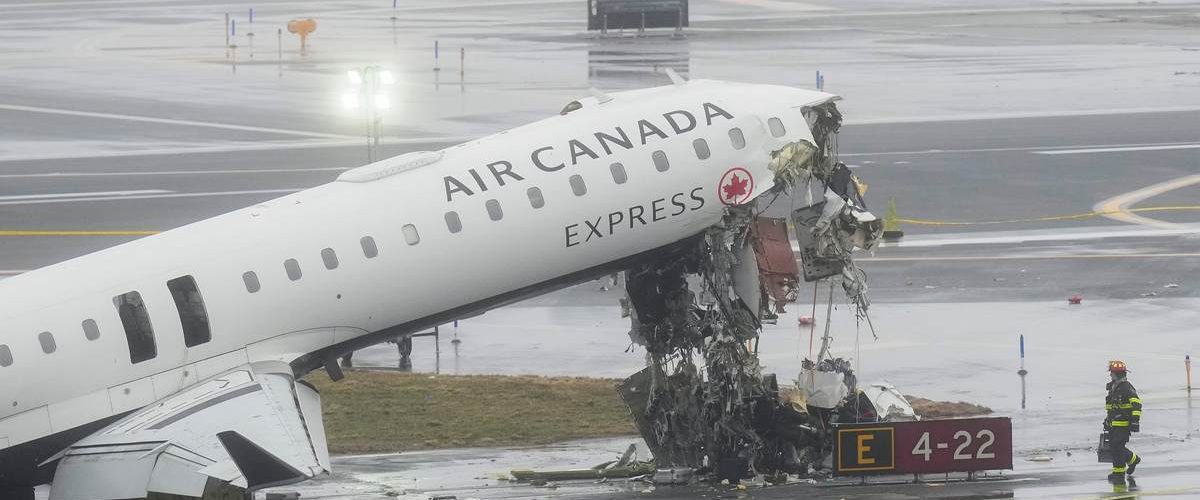
The story reports that two air traffic controllers left their shifts early the night an Air Canada Express jet struck a fire truck while landing at LaGuardia, prompting leaves, possible discipline, and an ongoing federal investigation into the March 22 runway collision that killed two pilots and injured many passengers.
The crash at LaGuardia on March 22 remains a central focus for federal investigators and airport authorities. Details keep emerging about staffing and timing inside the control tower on the night the Air Canada Express flight arrived from Montreal. The collision with an airport fire truck has prompted scrutiny of procedures and whether proper tower oversight was in place during critical minutes. Officials are looking at who was on duty, who left early, and how those decisions affected runway safety that night.
A source familiar with the investigation told reporters that two controllers reportedly left work early the evening of the accident. That assertion has pushed the FAA to consider disciplinary measures and to place both controllers on leave while investigators sort out the timeline of events. The National Air Traffic Controllers Association has acknowledged discussions with FAA leadership and has not confirmed punitive action. Meanwhile, airport operations and flight crews continue to seek answers about the chain of events that led to the deadly impact.
Two LaGuardia Airport air traffic controllers in the control tower left work early the night an Air Canada Express flight collided with an airport fire truck on the runway, according to a source familiar with the investigation into the March 22 crash.
The crash itself was sudden and devastating: the arriving jet struck a fire truck that had been crossing a taxiway. The aircraft carried 72 passengers and four crew for a one-hour flight, and dozens of people were injured in the collision and subsequent chaos on the runway. Two pilots were killed in the impact, a human cost that anchors every procedural and administrative question being raised. Investigators are reconstructing radio transmissions, tower logs, and vehicle movements to map exactly what happened in the moments before the collision.
Authorities say the fire truck had been responding to an incident elsewhere on the airfield when it crossed a taxiway used by arriving aircraft. That movement intersected tragically with the Air Canada Express jet’s landing roll, leading to the fatal collision. Airport emergency crews were present quickly, treating the injured and securing the scene, while investigators began the meticulous work of documenting evidence and interviewing witnesses. The checklists and watch logs from the control tower are likely to receive intense scrutiny as part of the broader probe.
The two pilots of Air Canada Express Flight 8646 were killed when the jet collided with an airport fire truck just after landing. The fire truck had been crossing the taxiway to respond to an incident across the airport. The plane had 72 passengers and four crew members on board for the one-hour flight from Montreal to New York’s LaGuardia, dozens of whom were injured.
The FAA reportedly is weighing disciplinary steps related to the controllers who left early, and both are currently on leave. The agency faces pressure to show it will hold individuals accountable if staffing lapses contributed to the accident. Union officials say they are in talks with agency leadership, suggesting the situation is contested and will be handled through established labor and administrative channels. Any formal sanctions would follow a review of evidence and applicable regulations governing controller duty and relief procedures.
Both FAA controllers are currently on leave, according to the source, and are not currently responsible for controlling air traffic.
…
The union which represents air traffic controllers, the National Air Traffic Controllers Association, would not confirm that controllers were being disciplined, but said the union is “actively discussing these allegations with FAA leadership.”
Transportation leadership issued a statement underscoring a zero-tolerance stance toward misconduct that compromises the traveling public. That statement framed potential enforcement as necessary to protect airspace integrity and ensure fairness among controllers who follow rules and schedules. Investigators from the NTSB continue their on-site work and evidence collection, a process that can take months as they evaluate human factors, communications, and vehicle movements. The NTSB’s ongoing role will inform any regulatory or operational changes recommended after the final report.
The National Transportation Safety Board is still investigating the crash. The investigation will determine the factual sequence and propose safety recommendations as warranted, and federal agencies will decide whether disciplinary or policy actions follow. This remains an active story as officials and unions review records, interview personnel, and evaluate how to prevent a similar tragedy in the future.


DEI?