
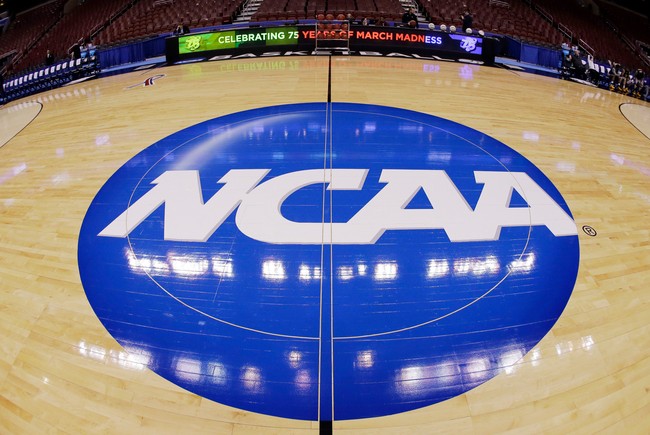
President Trump led a White House roundtable focused on the future of college athletics, convening conference leaders, legendary coaches, sports executives and media figures to address how NIL, the transfer portal, and legal fights are reshaping the landscape and threatening smaller programs and women’s sports.
Trump chaired the meeting with Florida Governor Ron DeSantis and New York Yankees executive Randy Levine as vice chairs, signaling the federal government would push for concrete fixes. The gathering aimed to confront the consequences of unchecked name, image, and likeness deals and transfer activity that have concentrated resources with a few elite programs. The president pledged swift action, including a follow-up executive order to protect men’s and women’s sports and shore up Olympic disciplines. That kind of high-level attention shifts the debate from slow-moving governance to urgent public policy.
Universities across the country have already felt the fallout, with a string of program cuts illustrating the stakes. Cleveland State moved to eliminate women’s golf and softball after the 2024–25 season while smaller schools like Purdue Fort Wayne and ULM have axed softball and tennis programs in 2025. Legal battles have sometimes reversed cuts, as happened when a federal judge ordered Stephen F. Austin’s women’s programs reinstated after a Title IX challenge. These are not abstract problems; they are roster sheets and scholarship offers that vanish when budgets are rebalanced around a few cash-generating teams.
The NCAA’s inability to set enforceable, nationwide rules has left a vacuum filled by outside money and private collectives that act like shadow boosters. Those collectives, backed by alumni and donors, funnel huge sums tied to recruiting and performance, creating an arms race only the richest schools can win. Mid-major programs lack the revenue streams and TV deals to keep pace, putting their very existence at risk. When the system rewards concentrated spending and permissive transfer behavior, non-revenue sports and women’s teams are the first to suffer.
Conferences and commissioners attended the summit because the problem threatens every level of the system. Power conferences with lucrative media rights continue to grow wealthier while others scramble to survive, which undermines competitive balance and the traditional role of college sports as a civic institution. Without guardrails, antitrust litigation and financial instability could lead to conference collapses and the loss of scholarships that lock out students from affordable paths to degrees and careers. Strong federal action can force transparency and set national standards where voluntary compliance has failed.
Proposed fixes discussed at the meeting lined up with conservative principles: preserve merit, protect tradition, and require transparency. Practical steps include capping NIL payouts tied to school loyalty and team performance rather than pure bidding wars, and tightening transfer rules to discourage mercenary movement that undermines team cohesion. Mandating public reporting for NIL collectives would expose secret buyouts and reduce pay-for-play schemes that dodge Title IX and tax scrutiny. Those measures aim to defend the commons of college athletics without upending what makes the game meaningful.
The summit highlighted how leadership can work when existing institutions fail to adapt. Trump’s business background and negotiating style were presented as assets for brokering compromises among rival stakeholders. Critics will call any intervention meddling, but the alternative is letting judicial rulings and private money dictate outcomes that hollow out smaller programs. Bringing parties to the table and laying out concrete proposals forces accountability in a system that has drifted toward cronyism and uneven enforcement.
Protecting women’s and Olympic sports was a recurring theme because those programs are disproportionately vulnerable. Budget cuts often fall first on sports with less media exposure and lower ticket revenue, which disproportionately affects female athletes. A national framework that values fairness and parity would prioritize those teams for sustained support and guard against shortsighted cuts motivated purely by shifting revenue models. Ensuring equitable access to competition preserves not just teams but opportunities for scholarship and personal development.
Participants noted the absence of rank-and-file athletes in many of the conversations, a gap any durable reform must address. Policies crafted in conference rooms need mechanisms that bring athletes’ voices into governance and ensure changes actually reach the teams and students affected. Transparency, athlete representation, and enforceable rules could reduce the sense that decisions are made above or around those who matter most: the players themselves. That practical inclusion would also undercut claims that reforms favor administrators over athletes.
There is no nostalgia in the push for straightforward rules; it is about sustaining an American institution that connects towns and campuses coast to coast. Rivalry weeks, March upsets, and the path from campus to the pros depend on predictable structures that reward development and commitment. If reforms like clearer NIL limits, transfer safeguards, and collective transparency pass, they could stabilize the system while preserving competition. In an age of outsized spending by a few, restoring simple, common-sense governance is overdue.
The summit drew NCAA leadership and major conference officials, showing the issue cuts across the sport’s power centers. Any remedies will require buy-in from Congress, regulators, conferences, and schools to be effective and durable. That coalition-building is precisely the kind of decisive public leadership conservatives argue is necessary to protect institutions that strengthen communities. Addressing these problems now gives college athletics a chance to remain a ladder of opportunity rather than a marketplace of the wealthy.
Editor’s Note: Do you enjoy RedState’s conservative reporting that takes on the radical left and woke media? Support our work so that we can continue to bring you the truth.

Add comment