
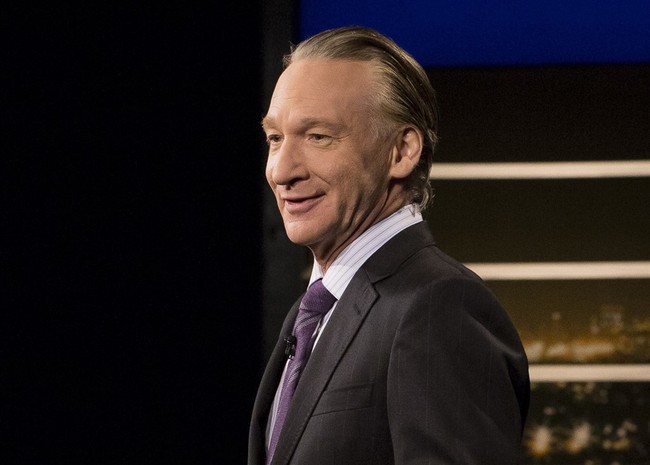
I’ll show how Bill Maher’s response to Operation Epic Fury exposes a predictable anti-Trump reflex on the Left, how Democrats’ opposition tracks their candidate-based instincts, and how Maher used moments on his show to corner figures like Kamala Harris and Adam Schiff into proving that point.
On his Friday show, Bill Maher didn’t dance around Operation Epic Fury against Iran—he called out the regime’s long record of violence and noted that many Iranians appeared to welcome the strike. Maher framed the action as a decisive move against a hostile theocracy, and he pointed out that people in Iran seemed to react with relief rather than outrage. His tone made it clear he saw the strike as a justified step after decades of provocation.
Warning for graphic language:
This week, war. Did you hear about that thing?
We bombed Iran, and it’s going on now. If you expected me to say I hate it, I don’t. Sorry.
Sorry. And you cannot name one horrible thing that has happened in the Middle East in the last 50 years and not connect it to this fascist theocracy.
Iranians all over the world are doing the Trump dance.
Maher didn’t stop with Iran’s record; he moved quickly to take aim at the Democratic reaction. He called out the predictable chorus that denounced the strike not on its merits but because President Donald Trump ordered it. He argued that too many on the Left evaluate actions through a single lens: did Trump do it or not?
“Kamala Harris made a statement. She said, ‘This is a war the American people don’t want,'” Maher noted, then asked rhetorically, “And who knows more about what the American people don’t want?”
That line is meant to underline a pattern. Democrats like Kamala Harris often denounce a policy immediately if Trump is connected to it, regardless of whether the measure addresses a real threat. If the roles were reversed, Maher suggested, the same actors who call Trump reckless would hail the action as strong leadership. The larger point is that partisan reflex can trump sober assessment.
Maher also set a verbal trap for Sen. Adam Schiff to make this point vivid. In a short exchange, Maher quoted a line about vague executive authority and revealed it came from a previous Democratic administration. Schiff took the bait and landed on the wrong decade, proving Maher’s claim that the debate often lacks historical consistency.
MAHER: “This statement from the administration: ‘The president had the constitutional authority to direct the use of military force because he could reasonably determine that such use of force was in the national interest.’ That’s too vague for you?”
SCHIFF: “Totally vague.”
MAHER: “Okay. Because that’s from Obama about Libya.”
Schiff’s scrambling showed how quick opponents are to recite talking points without tracing precedent. Maher used that moment to argue that what passes for principled outrage is often selective memory. If the same standard were applied evenly, the conversation would be different, but consistency rarely drives the rhetoric.
The broader case Maher made is simple: when political allegiance replaces policy analysis, Americans lose the ability to weigh risks and benefits clearly. That’s the critique Republicans have leveled for years—partisan theater displaces hard choices, and national security ends up hostage to political scoring. Maher’s smackdown of Democratic responses is a rare instance of a left-leaning commentator calling out that tendency.
Beyond the TV heat, this debate matters because the decision to use force has real consequences for both American interests and regional stability. The public deserves debates rooted in history, law, and strategy, not reflexive oppositions based on who holds the Oval Office. Maher framed the strike as a moment to cut through tribalism and ask whether the action actually protects the country.
The exchanges on Maher’s show also underscore a second point: media narratives can amplify partisan instincts rather than interrogate them. When commentators keep repeating the same partisan script, nuance gets lost and voters are offered slogans instead of substance. That leaves space for adults of all political stripes to push for clearer, more consistent reasoning about when force is justified.
If nothing else, Maher’s segment forced Democrats to confront their own inconsistency in real time. Whether you agree with the strike or not, the show highlighted a persistent problem for one side of the aisle: a reflex that makes policy about personality, not principle.

Add comment