
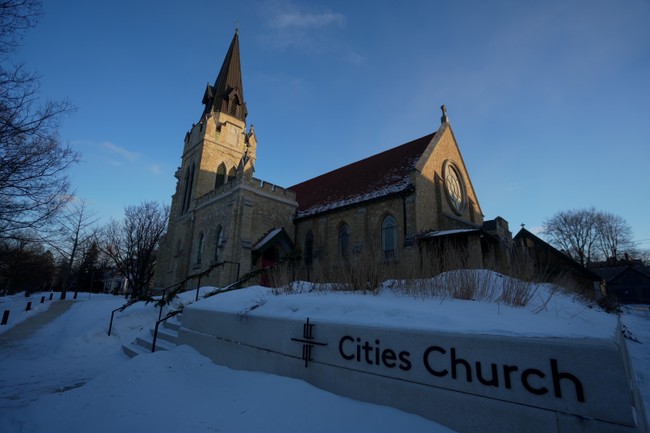
The St. Paul incident in January, when anti-ICE activists entered a church and livestreamed the confrontation, has left Minnesota prosecutors and federal authorities on different tracks, with local officials saying evidence falls short for state charges while the Department of Justice pursues federal cases against dozens, including Don Lemon.
In January a group of protesters entered a service at Cities Church, claiming one of the pastors worked with Immigration and Customs Enforcement during a local operation. The scene was recorded and broadcast, prompting outrage from church leaders and conservative commentators who called the disruption an assault on religious liberty. Many conservatives view the episode as emblematic of lax local enforcement and selective prosecution in Minnesota.
The St. Paul City Attorney announced that state-level charges would not be pursued, citing insufficient evidence to meet Minnesota’s criminal statutes. That decision stunned church members and supporters who say the incident was clearly documented and witnessed by congregants. From a Republican perspective, that choice looks like a pattern of protecting protesters while leaving victims without recourse.
OUTRAGEOUS: Dozens of anti-ICE protesters WON’T face state charges after STORMING Cities Church in St. Paul in January after St. Paul City Attorney Irene Kao determined “current evidence is insufficient to meet that standard for criminal charges under Minnesota state statutes.”
Fox & Friends: “At least 39 people still face civil rights charges on the federal level, that includes former CNN journalist Don Lemon.”
https://x.com/RedWavePress/status/2062547823120289929
Those frustrated by the local decision point to the footage and eyewitness accounts as straightforward proof of criminal behavior and intimidation in a house of worship. The church’s pastor and congregants described being interrupted and intimidated while children and families were inside for a service. For many conservatives, the lack of state action is not about legal nuance but about political will.
The federal government, by contrast, has charged numerous people connected to the incident and intends to hold some accountable for potential civil rights violations and other offenses. Federal agents arrested several individuals and federal prosecutors have signaled a commitment to pursue cases where local authorities decline to act. That split—local inaction and federal response—reinforces the sense among Republicans that state officials are abdicating responsibility.
Lemon, who was livestreaming the protest and has claimed press credentials, is among those federally charged, and the Department of Justice has argued that some participants coordinated to disrupt the church. Lemon insisted he was acting as a journalist, but DOJ statements allege a different, activist-driven role by some who filmed and promoted the disruption. Republicans argue that claiming journalism should not shield deliberate, coordinated interference with worship.
The church’s pastor called out the city attorney’s decision as biased and troubling, asking whether protections for religious people extend equally to evangelical Christians. Those remarks reflect broader anxieties on the right about cultural and legal double standards that appear to favor protestors aligned with left-leaning causes. Conservatives see this as part of a trend where politically preferred actors escape consequences while ordinary citizens and religious institutions are left vulnerable.
Critics of the local decision also note legal precedents and federal statutes that make certain targeted disruptions prosecutable, especially when motivated by suspicions about immigration enforcement. The protestors claimed the pastor collaborated with ICE, which itself raises complex legal and moral questions, but it does not give license to storm a sanctuary. From a law-and-order Republican viewpoint, property rights and safe worship spaces deserve protection equal to any other civil right.
The episode has become a flashpoint for debates over prosecutorial discretion, the limits of protest, and when the federal government should step in after state inaction. Conservatives argue that state officials should not reflexively decline charges where evidence—video and witnesses—exists. They contend that failing to prosecute emboldens similar conduct and erodes confidence in local justice systems.
Earlier this month [January], Lemon livestreamed left-wing agitators who stormed St. Paul’s Cities Church under the suspicion that its pastor had collaborated with U.S. Immigration and Customs Enforcement (ICE). Lemon told viewers that “the freedom to protest” is what the First Amendment is all about, but Justice Department officials have been working to hold the participants accountable.
Attorney General Pamela Bondi , “At my direction, early this morning federal agents arrested Don Lemon, Trahern Jeen Crews, Georgia Fort, and Jamael Lydell Lundy, in connection with the coordinated attack on Cities Church in St. Paul, Minnesota.”
For people who prioritize order and religious liberty, the episode is a warning sign: when local prosecutors decline to act, federal authorities must fill the gap to protect citizens and places of worship. That approach risks more federal involvement in cases that might otherwise be local, but many Republicans see it as a necessary corrective. The dispute over charges here highlights why voters on the right emphasize strong enforcement of laws regardless of the political sympathies of those accused.
Editor’s Note: The American people overwhelmingly support President Trump’s law and order agenda.

Add comment