
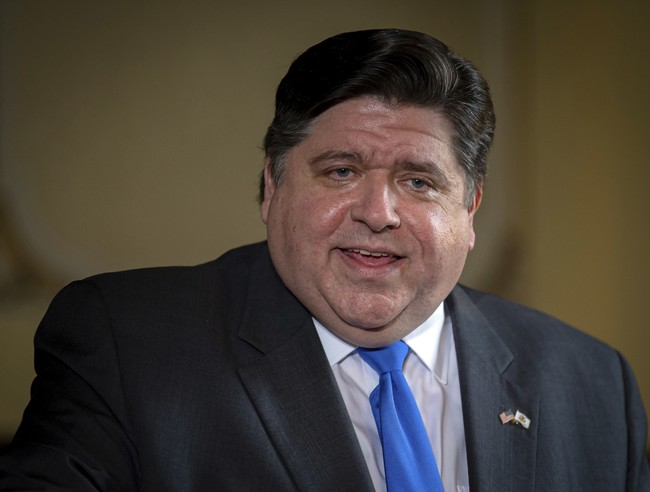
This article examines Illinois Governor JB Pritzker’s response to the murder of Loyola student Sheridan Gorman and critiques his remarks blaming national immigration policy, placing that reaction in the context of ongoing debates over illegal immigration, public safety, and political accountability.
Shameless: Now Illinois Gov. JB Pritzker Blames Lakefront Murder On… Trump
The shock over Sheridan Gorman’s killing has been made worse by political theater from the top of Illinois government. Governor JB Pritzker issued comments that link the crime to national immigration policy and the federal government rather than focusing solely on the victim and local law enforcement efforts.
Sheridan Gorman, an 18-year-old freshman at Loyola University Chicago, was reportedly shot on March 19 while walking near Lake Michigan with friends. The arrest of a 25-year-old man identified in reports as Jose Medina (sometimes Medina-Medina) has raised immediate questions about border enforcement, detention, and the decisions that let certain migrants into the interior of the country.
Pritzker has long supported sanctuary policies and has taken public positions that favor more relaxed enforcement and services for migrants. Instead of addressing local safety measures and the community’s grief, his public comments shifted responsibility to the federal level and to former President Donald Trump’s approach to immigration.
“This has been a terrible tragedy, and I know that the Gorman family has suffered mightily… There have been real failures. Those failures, of course, extend beyond the borders of Illinois. That’s their national failures, a failure to have comprehensive immigration reform, a failure of the president to follow his own edict to go after the worst of the worst,” Pritzker said Tuesday.
Pritzker made the comments as homes in Yorktown Heights, New York, where Gorman is from, were lit up in green on Tuesday night in honor of the slain Loyola University Chicago student. Green is one of Yorktown’s school colors, according to CBS News.
The quoted passage appears to try to split blame between Washington and local authorities, asserting a need for both federal enforcement and state-level prosecution. That balancing language rings hollow for critics who point to a long record of policy choices by local leaders and state executives that they argue have undermined law enforcement efforts and public safety.
Many observers have noted the irony in a governor who has championed policies critics call permissive on immigration now pointing fingers outward. Critics say this rhetoric obscures a larger pattern: officials who favor sanctuary approaches often resist tougher enforcement measures and then cast blame when a violent crime occurs.
Public reaction to the governor’s remarks has been swift and sharp. Voices across the political spectrum have called for a focus on the victim, for faster, clearer communications from officials, and for actionable steps to prevent similar tragedies. Local residents and family members want answers and accountability rather than partisan talking points.
Further complicating the debate is the Department of Homeland Security timeline that shows the suspected assailant was encountered and processed in previous interactions with federal authorities. That fact has become central to calls for examining how federal policies were applied and whether releases, parole decisions, or transfer policies contributed to the suspect’s presence in the area.
“And in my view, we have a lot of work that we need to continue to do,” he added. “But it is the job of the federal government to go after immigration enforcement, and it is the job of our local and state law enforcement to prosecute or catch violent criminals and prosecute them, and we should continue to do that both on the state level and the national level.”
The governor’s claim that responsibility is split raises questions about execution: who enforces what, how agencies coordinate, and what practical reforms would actually reduce violent crime. It also highlights a familiar political posture that blames federal policy while defending state or local choices.
For many onlookers, the human cost of the incident is inescapable: a young life ended, a family grieving, and a community stunned. Those realities drive calls for better protection, clearer accountability, and policies that actually keep dangerous individuals from re-entering the public unchecked.
Conversations about immigration and public safety will keep unfolding in courts, legislatures, and community meetings. Meanwhile, residents and students in Chicago and across the country expect public officials to prioritize preventing future tragedies and to avoid politicizing loss at the expense of clarity and action.


Add comment