
I’ll explain why María Corina Machado is pitching Venezuela as a major U.S. energy partner, note the geopolitical and economic stakes for America, evaluate the risks of relying on Venezuelan oil even after Maduro’s ouster, and highlight the need for transparent elections and U.S. energy independence while preserving Machado’s exact statements.
María Corina Machado has stepped into the spotlight promising to turn Venezuela’s oil wealth into prosperity and regional influence. After years of misrule under Chavez and Maduro, the political landscape looks different, and Machado is widely seen as a plausible national leader. Her pitch in Houston to oil and energy executives was blunt: Venezuela can be a major partner for the United States and a generator of hemispheric wealth. That message lands differently for Americans who want secure energy supplies and stable markets.
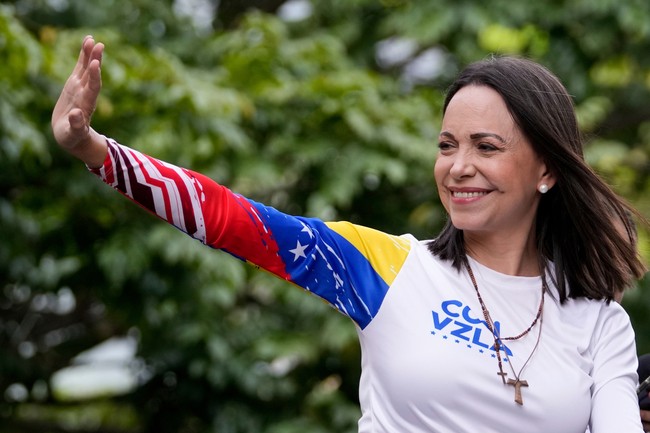
Venezuelan political leader María Corina Machado is pitching her country as a top U.S. oil partner and “beacon of hope and wealth creation for this hemisphere” after she said the Trump administration’s arrest of former dictator Nicolás Maduro has opened up a “new era” of free markets.
Addressing several thousand oil and energy executives at the CERAWeek conference in Houston, Machado, who until recently lived in the U.S. as a political exile, predicted that Venezuela will soon be a critical contributor to U.S. prosperity.
The basic fact everyone cites is simple: Venezuela sits on tremendous hydrocarbon resources, long estimated to be among the largest proven oil reserves on the planet. That reality creates opportunity and temptation. From a Republican perspective, it’s wise to welcome new suppliers while protecting American energy independence. We should celebrate any move that frees Venezuelans from socialist disaster and opens markets, but we must not let enthusiasm blind us to practical risks.
Energy is fungible; more barrels in global supply tend to blunt spikes and push prices downward. American consumers and manufacturers benefit when markets are stable and supplies plentiful. At the same time, the U.S. should not cede strategic leverage by neglecting domestic production and infrastructure. A two-track approach — partnering internationally while keeping America the world’s premier energy producer — makes sense politically and economically.
She thanked President Donald Trump and Energy Secretary Chris Wright for laying the groundwork for a “new chapter” in Venezuela, which she said will greatly benefit the U.S. She touted Venezuela’s energy potential, calling its reserves the “largest proven oil reserve in the world” and its natural gas supply the seventh-largest globally.
Machado’s gratitude toward U.S. policy moves is politically useful and resonates with conservatives who favor strong energy diplomacy. The Trump administration’s pressure on Maduro changed facts on the ground, and Republicans can point to that as proof of effective, principled action. Still, converting political change into reliable oil exports requires institutions, contracts, and transparent governance. That takes time and consistent oversight.
Crucially, Venezuela needs honest, verifiable elections before any long-term trade or investment deals should be cemented. Machado herself insists a legitimate election is necessary and expects a transition period before free ballots are possible. From a Republican lens, free and fair elections are the only credible way to reset Venezuela’s relationships with the U.S. and global investors. Without clear legitimacy, any commercial arrangement will face political and moral questions.
Though current Venezuelan President Delcy Rodríguez is a lieutenant of Maduro, Machado predicted that the next election, which she said will likely be at least nine months away, will show “overwhelming” support for democratic free-market capitalism. She vowed that the government would “get out of the way,” saying, “We have learned the cost of socialism… We want open markets.”
“It takes at least nine months, or 40 weeks, from a technical perspective to have perfect, free and fair elections. But they will take place. And when they do, you will see the awakening of a country that will turn into the beacon of hope and wealth creation for this hemisphere.”
Those are bold claims and should be held to scrutiny. Transitioning from kleptocratic rule to a functioning market state is messy and slow, even with good-faith leaders. Republicans should press for safeguards: clear property rights, enforceable contracts, and anti-corruption measures that make foreign investment viable. That approach protects American firms and ensures Venezuelan wealth benefits ordinary citizens.
If Machado’s vision holds, Venezuela could become a productive partner and a political success story for the hemisphere. For now, prudent U.S. policy means encouraging free markets, insisting on transparent elections, and preserving American energy strength. That balance promotes prosperity, defends national interest, and supports Venezuelans seeking a stable, free future.

Add comment