
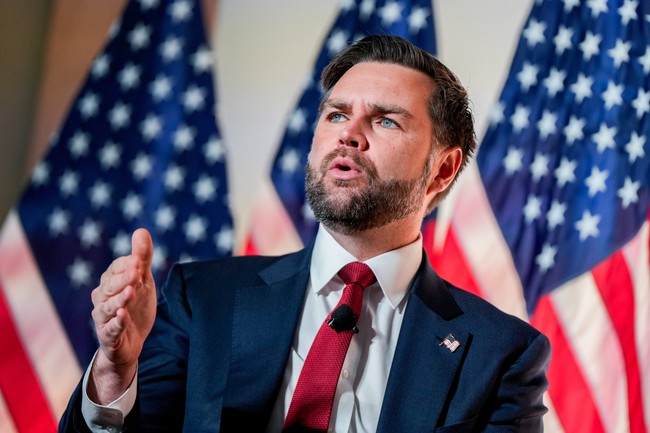
The Biden administration’s anti-fraud offensive, led publicly by Vice President JD Vance and backed by CMS and DOJ officials, has launched a sweeping set of measures targeting Medicaid and hospice fraud, including a $1.34 billion deferral against California, a nationwide moratorium on new hospice and home health licenses, a real-time Medicaid War Room, and a 50-state demand for evidence of active prosecutions or face the loss of federal anti-fraud funding.
Vice President JD Vance announced aggressive actions that put blue-state governors squarely on notice, arguing the federal government will not tolerate states that allow Medicaid and Medicare to be siphoned by fraudsters. The centerpiece actions include the California deferral and a pause on new hospice and home health licenses while investigations proceed. Officials also described a substantial suspension of payments tied to outlier billing and suspicious personal care spending that has ballooned beyond expected norms.
CMS Administrator Dr. Mehmet Oz provided a numerical breakdown of the California deferral: $630 million from the top 5 percent of outlier providers, $500 million linked to personal care spending growing at twice the national rate, and $200 million tied to questionable immigration-related expenditures. He labeled it “the largest deferral we’ve ever made.” Those figures underscore the scope of the problem and the administration’s willingness to use hard numbers to justify intervention.
The hospice picture is startling and ugly. Federal investigators flagged that one-third of all U.S. hospice providers are concentrated in Los Angeles, and they suspect a large share of those operations are fraudulent. That suspicion led to 800 suspensions, and fewer than 20 of the suspended providers contested the action, a fact Vance used to emphasize institutional noncompliance and indifference.
This is just basic good government, pushing back on anyone who would frame the crackdown as partisan. “We want to protect Medicaid. We want to protect Medicare. But we can’t do that if the states that are administering those programs are allowing those programs to be fleeced by fraudsters.
Vance did not mince words about state performance. He singled out Hawaii, New York, and California for failing to bring prosecutions proportional to the size of their Medicaid programs, noting Hawaii produced zero indictments and New York only nine on a program worth roughly $100 billion. Indiana, with a fraction of New York’s population, delivered a far stronger prosecution record and is being cited as an example of serious enforcement.
Letters went out simultaneously to all 50 state Medicaid programs demanding proof of active fraud prosecutions or face potential loss of federal anti-fraud funding. The move effectively places governors and state officials on a clock: show results, or the federal government will escalate enforcement and oversight. That ultimatum aims to force action where state prosecutors and agencies have been slow, ineffective, or politically reluctant to pursue bad actors.
Task force executive director Andrew Ferguson framed part of the problem as resource misallocation, accusing some states of turning anti-fraud dollars into a jobs program for lawyers rather than punishment for fraud. From a Republican perspective, that critique lands hard because it links taxpayer waste to political priorities and lax enforcement in certain blue states. The message is clear: accountability matters more than partisan posture when federal funds are on the line.
The new Medicaid War Room is meant to be a real-time, cross-agency surveillance and intervention hub that pairs CMS with DOJ, the Office of the Inspector General, and cooperating state partners. Its Medicare predecessor has reportedly stopped over $2 billion since 2025, and officials say similar tools can prevent payments before they go out the door. The administration is pitching this as practical governance that protects both beneficiaries and the solvency of trust funds.
Vance also raised the stakes by saying the administration is examining whether governors who ignored fraud reports could face criminal exposure, invoking specific scrutiny of Gavin Newsom and Tim Walz. Minnesota challenged an earlier deferral in court and lost its bid for a restraining order, signaling that the feds are ready to stand by their enforcement decisions. The political heat around this issue is palpable, and blue-state leaders are on the defensive.
Officials warned that improper Medicare and Medicaid payments remain massive, with an estimated $94 billion in improper payments for 2025 alone. The administration insists this crackdown is the start of a sustained effort to recover funds and close holes in program integrity. With new enforcement tools and a public will to act, the coming months are likely to see intensified federal scrutiny and pressure on states to prove they are taking fraud seriously.
Vance summed up the moral argument bluntly: “We are not going to have a generous country if Americans think that they’re paying their taxes not to needy people, but to fraudsters.” The line captures the administration’s justification for tough measures and frames the fight as protecting taxpayers and vulnerable beneficiaries alike while restoring program credibility.



Add comment